Constitutional Reform Act creates UK supreme court
On 24 March 2005, the Constitutional Reform Act (CRA) received royal assent. The Act, a landmark piece of Tony Blair’s Labour government’s constitutional reform programme, aimed to modernise the state by creating a clearer separation of powers between the judiciary, the government and parliament.
For the first time in the UK’s constitutional history, the reform enshrined the independence of the judiciary in statute law.
***
The rights-based discourse that arose in the decades preceding the Constitutional Reform Act and the expansion of judicial review with the Human Rights Act 1998 provided the impetus for further reform.
The July 2003 government consultation that resulted in the CRA, entitled Constitutional Reform: A Supreme Court for the United Kingdom, set out to “redraw the relationship between the judiciary and the other branches of government and put it on a modern footing”.
Lord Falconer, the lord chancellor, set out the government plans in a statement to the House of Lords. He said reform was needed to ensure Britain’s “judges and our legal system are able to meet the challenges of the 21st century.”
Falconer called for “arrangements which embed existing independence in a way which does not depend on one Minister, and which ensures that we have not just a quality judiciary, not just an independent judiciary, but also a diverse one that reflects our community.”
He declared that now was the time “to take the final court of appeal out of the legislature.”
The lord chancellor concluded: “In reaching our conclusions we are determined to ensure that we enhance the transparency of our legal system, increase public confidence and bolster the independence of the judiciary from both the executive and the legislature.
“In this way we create a modern legal system which builds on its current independence and quality, ensuring a better justice system serving the public.”
The Constitutional Reform Act ultimately introduced three major changes.
Its centrepiece was the creation of a new, independent supreme court to serve as the UK’s final court of appeal, a role historically held by the appellate committee of the House of Lords, whose judges (the law lords) sat as members of the legislature.
The act therefore ended the historic judicial function of parliament.
Secondly, the act radically reformed the ancient office of the lord chancellor, removing the post’s judicial functions and its role as speaker of the House of Lords. Previously, the lord chancellor was a member of every branch of government – as an executive officer and head of a government department; as a judge that presided over the Lords appellate committee and effective head of the judiciary; and as speaker in the House of Lords, the upper legislative chamber.
Finally, the act established an independent judicial appointments commission (JAC) – an independent body responsible for selecting candidates for judicial office in England and Wales. The previous system saw the sovereign appoint judges on the advice of the lord chancellor. The Constitutional Reform Act therefore sought to counter accusations of political influence in judicial appointments.
By separating the country’s highest court from parliament and ensuring a more independent process for appointing judges, the act embraced the principle of judicial independence – thus reckoning with the historical mixture of legislative, judicial and executive power in the UK’s constitutional settlement.
***
The Ministry of Justice (MoJ), created in May 2007, has responsibility for courts, prisons, probation and constitutional affairs. Under the 2005 act, the secretary of state for justice also officially holds the office of lord chancellor, which is now a largely ceremonial role.
In its original form, the Constitutional Reform Bill proposed the abolition of the position of lord chancellor. However, the bill underwent considerable modification during the legislative process. In the end, the lord chancellor’s role was retained under the terms of a “concordat”. Such is the nature of constitutional change: it is often pragmatic and piecemeal.
The UK supreme court, provided for by the act, officially began its work in October 2009. It is an independent institution that serves as the final court of appeal for all civil cases in the UK, and for criminal cases in England, Wales, and Northern Ireland. The court is composed of 12 independently appointed judges, known as justices of the supreme court, and is led by a president.
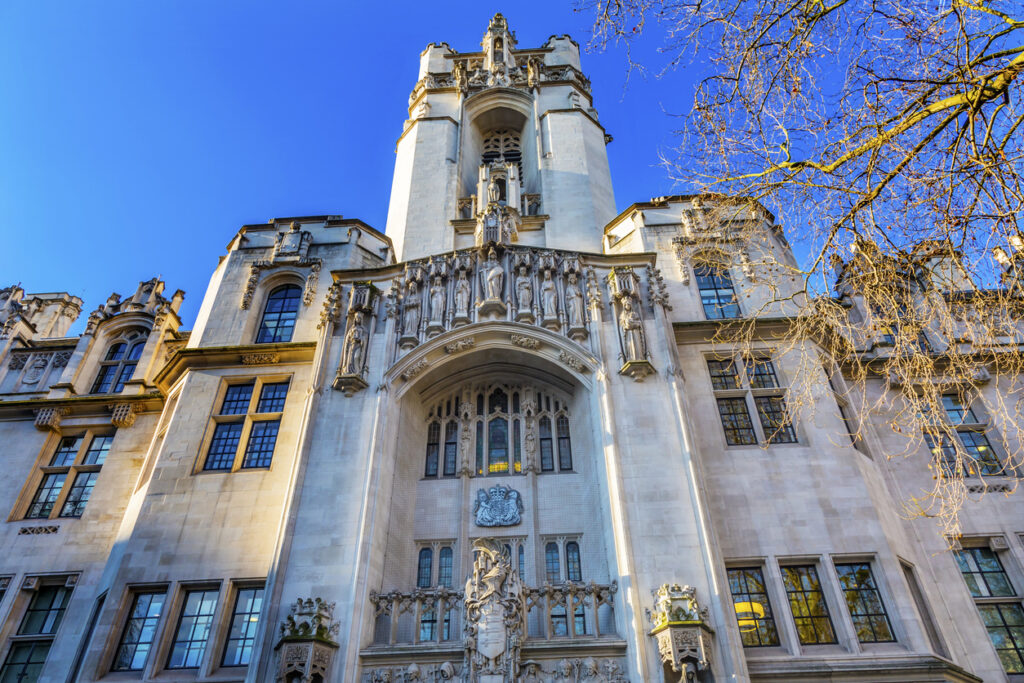
Symbolically and physically, the court is separate from parliament, occupying its own building, the former Middlesex Guildhall, on Parliament Square.

Politics.co.uk Newsletters
DAILY
Politics@Lunch
WEEKLY
Week in Review
