Labour Representation Committee founded in London
On 27 February 1900, the body that would become the British Labour Party was founded at a conference in the Memorial Hall on Farringdon Street, London. Over 120 delegates, representing a broad coalition of trade unions and socialist groups, gathered at a special conference to establish the Labour Representation Committee (LRC).
The formation of the LRC was driven by a growing belief that neither the Conservative nor the Liberal parties adequately represented the interests of workers. Trade unions in particular felt increasingly vulnerable to legal challenges against the right to strike and picket, a fear that was soon realised with the Taff Vale case in 1901. That judgement ended with the Amalgamated Society of Railway Servants (ASRS) union being ordered to pay £23,000 damages for a strike.
The Taff Vale case served to boost support for the LRC.
***
The special conference in February 1900 was convened after a resolution from the Amalgamated Society of Railway Servants was passed at the 1899 Trades Union Congress (TUC), not without objections, calling for an organisation that could secure labour representation in parliament.
The historic resolution, carried by 546,000 votes to 434,000, read: “That this Congress, having regard to its decisions in former years, and with a view to securing a better representation of the interests of Labour in the House of Commons, hereby instructs the Parliamentary Committee to invite the co-operation of all Co-operative, socialistic, trade unions, and other working class organisations to jointly co-operate on lines mutually agreed upon, in convening a special congress of representatives from such of the above-named organisations as may be willing to take part to devise ways and means for securing the return of an increased number of labour members to the next parliament.”
On 27 February 1900, this special congress passed Keir Hardie’s motion to establish “a distinct Labour group in Parliament, who shall have their own whips, and agree upon their policy, which must embrace a readiness to cooperate with any party which for the time being may be engaged in promoting legislation in the direct interests of labour.”
The LRC was effectively a federal body, uniting the financial and organisational power of the trade unions, the intellectual heft of the Fabian Society and the activist base of the Independent Labour Party (ILP) – among other socialist groupings.
The committee marked something of a tactical retreat for Hardie. Having long-sought to form some manner of socialist party, ILP representatives limited the LRC’s platform to secure an alliance with the more cautious trade unions. The committee included two members from the Independent Labour Party, two from the Social Democratic Federation (a Marxist grouping that later disaffiliated), one member of the Fabian Society and seven trade unionists.
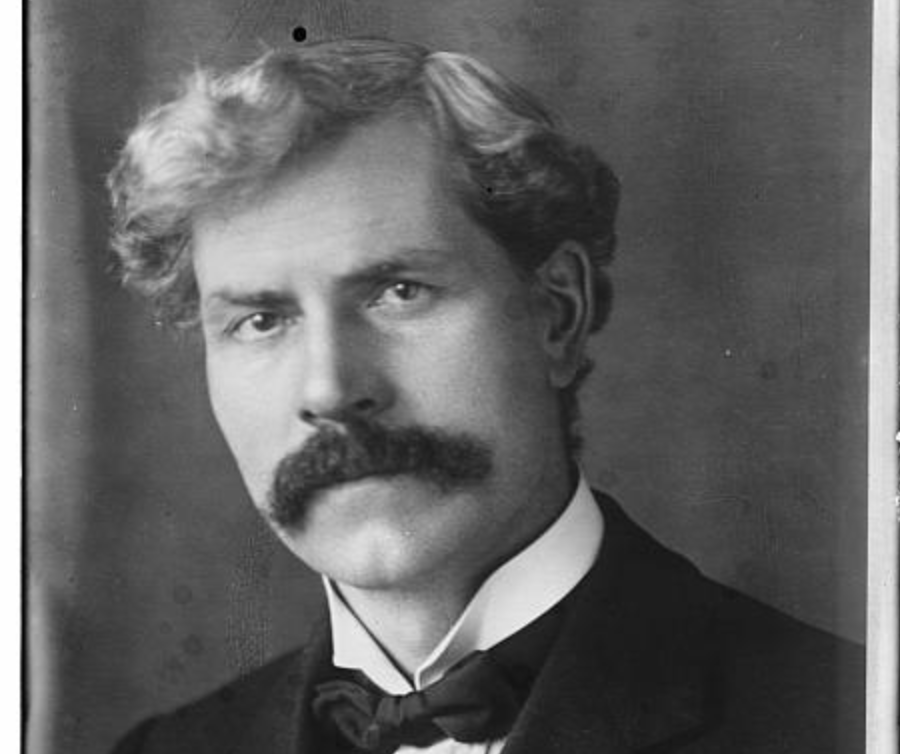
Ramsay MacDonald was elected as the committee’s first secretary. The LRC’s initial electoral impact was modest. It supported 15 candidates in the 1900 general election, winning 62,698 votes (1.3%) and two MPs (Hardie and Richard Bell).
Hardie was first elected to parliament in 1892 with the support of the Liberal Party as a Lib-Lab MP.
Between 1902 and 1903, the LRC acquired three additional MPs across a series of by-elections. Notably, the future Labour leader and founding delegate of the LRC, Arthur Henderson, won the 1903 Barnard Castle by-election with 3,370 votes (35.4%) – a majority of 47 over the Conservative candidate.
Henderson was the first candidate to win against both Conservative and Liberal candidates.
Labour candidates David Shackleton and Will Crooks won the Clitheroe (1902) and Woolwich (1903) by-elections respectively. Both were elected as Lib-Lab MPs.
***
These by-election campaigns and increased tension between the LRC and Liberal Party were crucial factors behind the formation of the secret Gladstone-MacDonald pact in 1903.
Under the terms of this informal arrangement, agreed between Ramsay MacDonald and Liberal chief whip Herbert Gladstone, Liberal candidates would not stand against LRC candidates in 50 constituencies at the 1906 general election.
The pact greatly aided the political and electoral development of the LRC.
One senior Liberal realised the inherent risk of such an arrangement. The chairman of the Northern Liberal Association likened the idea behind the pact as akin to “nursing into life a serpent which would sting our party to death”.
Critically, Labour faced no obligation to stand down its candidates in seats on behalf of the Liberal Party.
The LRC secured 29 MPs at the 1906 general election. The Gladstone-MacDonald pact had provided organised labour with a crucial bridgehead in parliament. In the wake of the contest, the LRC was reconstituted as the Labour Party and Hardie was narrowly elected as its chairman.
The Labour Party was formed as an entirely distinct entity from the Liberals, who were returned to government under Henry Campbell-Bannerman as prime minister.
The December 1910 general election increased the Labour Party’s representation to 42.
The Labour Party was also aided by the introduction of a salary for MPs in 1911. This followed the 1909 ‘Osborne Judgment’, which declared it illegal for trade unions to use their political levy to fund Labour MPs and threatened the financial viability of working-class representation in parliament.
Labour MPs went on to support David Lloyd George’s famous People’s Budget and the Liberal Party’s consequent crusade against the House of Lords.
The Labour Party’s development was bolstered by disputes within the Liberal Party and the expansion of suffrage under the 1918 Representation of the People Act.
MacDonald led Labour into government following the 1923 general election, becoming the party’s first prime minister.
Labour entered into an electoral pact with the Co-operative Party in 1927. The parties agreed not to stand against each other; candidates endorsed by both parties stand in elections under a joint description of “Labour and Co-operative Party.”

Politics.co.uk Newsletters
DAILY
Politics@Lunch
WEEKLY
Week in Review
