Wilkes publishes North Briton No 45, attacking king’s speech
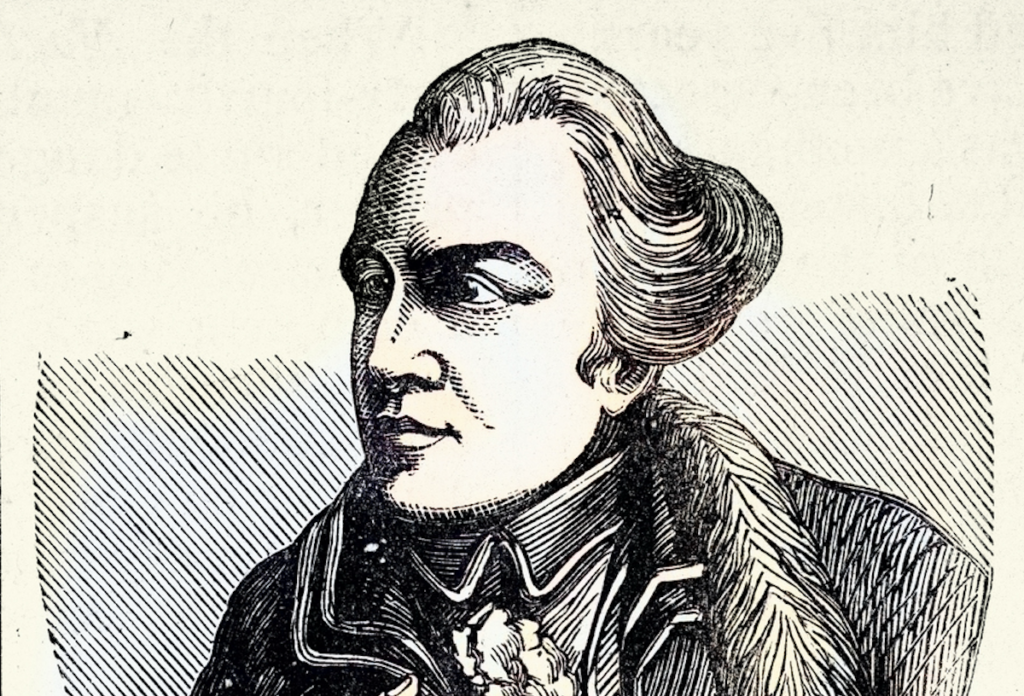
On 23 April 1763, the radical journalist and MP John Wilkes published issue number 45 of his political newspaper The North Briton – an act that would provoke a major political crisis.
The paper attacked a recent speech delivered by George III in parliament. In it, the king had praised the Treaty of Paris, which upon its ratification by Britain on 10 February 1763 brought the Seven Years’ War to an end.
***
The North Briton expressed particular contempt for the prime minister, John Stuart, 3rd Earl of Bute (a Scot – hence a “North Briton”). Issue No 45 dismissed the royal address as merely “the speech of the minister.
Wilkes opened his broadside with a direct attack on Bute: “The North Briton has been steady in his opposition to a single, insolent, incapable, despotic minister and is equally ready, in the service of his country, to combat the tripled-headed, Cerberean administration.”
Wilkes condemned what he called “the most abandoned instance of ministerial effrontery ever attempted to be imposed on mankind”, arguing that Bute had misled both the monarch and the nation. Ministers, he wrote, had manipulated the king into placing his “sacred name to the most odious measures, and to the most unjustifiable, public declarations, from a throne ever renowned for truth, honour, and unsullied virtue.”
Turning to the peace settlement, Wilkes insisted that “all our most valuable conquests were agreed to be restored” and that the treaty had “drawn the contempt of mankind on our wretched negotiators”. He further suggested that parliament’s approval of the settlement had been secured through patronage and financial influence.
Wilkes also rejected the king’s appeal for national unity. “A nation as sensible as the English”, he wrote, “will see that a spirit of concord, when they are oppressed, means a tame submission to injury, and that a spirit of liberty ought then to arise.”
He warned against the dangers of excessive royal power, noting that earlier monarchs had been tempted by doctrines of “absolute, independent, unlimited power of the crown”. But the “English nation”, he wrote, had always been “too spirited to suffer the least encroachment on the ancient liberties of this kingdom”.
Royal authority, he added, must be exercised “not of blind favour and partiality, but of wisdom and judgment”.
Wilkes concluded with a famous declaration: “Freedom is the English subject’s Prerogative.”
***
Bute’s government treated the article as a direct attack on the monarch. On 30 April 1763 Wilkes was arrested – along with 49 others – on charges of seditious libel and briefly imprisoned in the Tower of London.
Wilkes challenged the legality of the general warrant used for his arrest and claimed parliamentary privilege. On the latter point, the lord chief justice, Charles Pratt, ruled in his favour.
The case sparked widespread demonstrations, and Wilkes’ defiance gave rise to the popular cry “Wilkes and Liberty!”. The number “45” was subsequently adopted as a symbol of free speech and opposition to arbitrary government.
In November 1763, parliament considered Wilkes’ case.
Samuel Martin, an ally of George III, argued that a “man capable of writing in that manner without putting his name to it and thereby stabbing another in the dark, is a cowardly rascal, a villain, and a scoundrel.” Days later Martin and Wilkes fought a duel in which Wilkes suffered a serious stomach wound.
Parliament also examined other works attributed to Wilkes, including his outrageous and pornographic Essay on Woman – an obscene satire on Alexander Pope’s Essay on Man. The House of Lords condemned it as a “most scandalous, obscene, and impious libel, a gross profanation of many parts of the Holy Scriptures, and a most wicked and blasphemous attempt to ridicule and vilify the person of our most blessed Saviour.”
On 23 November, parliament determined that parliamentary privilege did “not extend to the case of writing and publishing seditious libels, nor ought to be allowed to obstruct the ordinary course of the laws in the speedy and effectual prosecution of so heinous and dangerous an offence.”
Some days later on 3 December, a pro-Wilkes crowd prevented the public burning of No 45 outside the Royal Exchange. The government’s response underlined the danger facing Wilkes if he remained in London.
Still recovering from his duelling wound, Wilkes fled to Paris on Christmas Day.
On 19 January 1764, Wilkes was formally expelled from the commons. In his absence, the radical journalist was tried, convicted and quickly replaced as MP for Aylesbury.
***
Heavily indebted, Wilkes returned from France in the spring of 1768. Upon landing in Britain, he presented himself to the authorities to serve out his sentence. But first he appealed for a royal pardon. In a letter to the king he claimed he had been the “victim of revenge” by former ministers for exposing their “ignorance, insufficiency, and treachery”.
Wilkes wrote: “I have been the innocent and unhappy victim of revenge. I was forced by their injustice and violence into exile, which I have never ceased to consider, for many years, as the most cruel oppression; because I could not longer be under the benign influence of your Majesty in this land of liberty.”
This letter was ignored.
Wilkes was finally released in April 1770. By then his reputation as a populist hero and martyr for liberty was firmly established – a status that proved crucial as MPs attempted to block his return to parliament during the Middlesex election affair.

Politics.co.uk Newsletters
DAILY
Politics@Lunch
WEEKLY
Week in Review