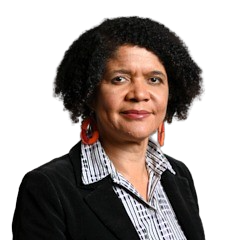
Chi Onwurah is the Labour MP for Newcastle upon Tyne Central and West, having first been elected for the predecessor seat of Newcastle upon Tyne Central in 2010. She currently chairs the Science, Innovation and Technology Select Committee.
In the 2024 general election, Onwurah received 18,875 votes, representing 45.6% of the vote share. The Reform UK candidate, Ashton Muncaster, received 7,815 votes (18.9%) and the Conservative candidate received 4,228 votes (10.2%). Onwurah was duly re-elected with a majority of 11,060 votes.
The Newcastle upon Tyne Central and West constituency covers the central and western parts of the city of Newcastle upon Tyne in North East England. It was created for the 2024 general election, combining most of the former Newcastle upon Tyne Central seat with parts of the former Newcastle upon Tyne North constituency. The area contains a large student population associated with Newcastle University and Northumbria University. The predecessor Newcastle Central seat was a safe Labour seat, held by the party for most of the last century.
Onwurah was appointed a dame commander of the order of the British empire (DBE) in the 2025 birthday honours for political and public service.
Political Career
Onwurah is chair of the House of Commons science, innovation and technology select committee (since September 2024) – the committee responsible for examining the expenditure, administration and policy of the Department for Science, Innovation and Technology and associated its public bodies.
In November 2024, Onwurah called on Elon Musk, the tech billionaire and owner of the X social media platform, to give evidence to her committee. This request came as part of the committee’s inquiry into social media, misinformation and harmful algorithms.
In an article for Politics.co.uk, Onwurah wrote: “X is one of the most relevant social media platforms to our inquiry.
“We want to hear from senior figures at X so that we can gather the best evidence possible. And Mr Musk is the most senior representative of X, with strong views on misinformation as well as freedom of expression, an important subject in its own right.”
By virtue of her role as science, innovation and technology committee chair, Onwurah sits on the liaison committee – the so-called “super committee” composed of the cross-party chairs of all the other commons select committees. It has a broad oversight role, but is best known for its questioning of the prime minister in sessions that take place two or three times a year.
Prior to the 2024 general election, which saw Labour returned to power after 14 years in opposition, Onwurah held a series of shadow ministerial positions. Most recently, she was shadow minister for science, research and innovation from April 2020 until the July 2024 election. She held the position of shadow minister for culture media and sport from April 2020 to November 2021.
Under Jeremy Corbyn, Onwurah served as shadow minister for industrial strategy (October 2016 – April 2020), and jointly as shadow minister for business, innovation and skills and shadow minister for culture media and sport (September 2015 – 10 October 2016).
In July 2016, Onwurah wrote an article for LabourList arguing that the party was at war with itself after the Brexit referendum. She explained her decision to vote against Corbyn in an unofficial vote of “no-confidence” among Labour MPs.
Onwurah argued that a “combination of ineptitude and arrogance, added to the experience of the past 10 months, determined my vote.” She called for Labour to “choose the leader that can best unite the party to realise [radical, progressive] policies”.
During this time, there was some confusion over Onwurah’s shadow ministerial responsibilities, which she voiced publicly.
In August 2016, while serving as a shadow minister, Onwurah claimed that part of her portfolio was handed over to another MP, Thangam Debbonaire, in a recent reshuffle, and that “when he realised what he had done, he gave the role back to me without telling Thangam”.
In an article for the New Statesman, Onwurah stated: “Jeremy then went on for the next two months refusing my insistence that he speak to Thangam, indeed refusing to speak to either of us, whether directly or through the shadow cabinet, the whips, or his own office. No one knew what he wanted us to do, no one was clear on what we should be doing.”
Onwurah claimed that in any other profession, Corbyn’s approach could have landed him in an employment tribunal.
She said: “If this had been any of my previous employers in the public and private sectors, Jeremy might well have found himself before an industrial tribunal for constructive dismissal, probably with racial discrimination thrown in – given that only 5% of MPs are black and female, picking on us two is statistically interesting to say the least.”
A spokesperson for Corvyn responded: “Chi Onwurah’s comments relate to a discussion about the delineation of shadow cabinet roles last January, as is not uncommon in both shadow cabinets and cabinets. Chi was appointed by Jeremy Corbyn to be shadow minister for culture and the digital economy last September.
“When Thangam Debbonaire was appointed as a dedicated shadow minister for the arts in January, there was a negotiation about the division of responsibilities with Chi and Thangam, but at no point was anyone sacked. We regret that Chi feels she was singled out, but this was clearly not the case.”
During Ed Miliband’s tenure as leader, Onwurah served as shadow minister for the Cabinet Office (January 2013 – September 2015) and previously as a shadow minister for business, innovation and skills (October 2010 – January 2013).
Onwurah briefly sat on the science, innovation and technology committee in 2020 and the business, innovation and skills select committee in 2010.
Onwurah is listed as a member of the all-party parliamentary groups (APPGs) for Africa, engineering, jazz and space.
Onwurah delivered her maiden speech on 8 June 2010 during a debate on economic affairs and work and pensions.
In it, she said: “I know that I should not touch upon controversial subjects, which is why I am so glad that what I am going to say is entirely uncontroversial. During the election, all parties were in agreement that the economy needs to be rebalanced in favour of manufacturing.
“Newcastle, with our great universities, specialising in medicine, design and engineering, our industrial heritage and strategic assets, has an essential role to play. We can help the UK to meet two of the great challenges that face us – securing sustainable energy resources and supporting an ageing population.”
She added: “With this history and community, it is no wonder that I felt a huge sense of privilege growing up in Newcastle. Yes, we were a one-parent family on a poor working-class estate, North Kenton, but good local schools, great public services, great housing and the health service.”
Political Views
Leadership elections and loyalty
Labour deputy leadership 2025: Onwurah was one of 175 Labour MPs who nominated Bridget Phillipson for the party’s deputy leadership in September 2025. The election followed the resignation of Angela Rayner, who stepped down as deputy prime minister and deputy party leader after an investigation into her tax affairs. It marked the first time since 2007 that Labour had held a deputy leadership contest while in government.
Phillipson, the serving education secretary, was widely viewed as the candidate favoured by Downing Street and the party leadership. She secured 175 nominations from the Parliamentary Labour Party (PLP), comfortably exceeding the 80 required to reach the final ballot. She was ultimately defeated by Lucy Powell.
Labour leadership 2020: Onwurah was one of 22 Labour who nominated Emily Thornberry for the party’s leadership in early 2020. The election was triggered by the resignation of Jeremy Corbyn following the party’s defeat in the 2019 general election, which resulted in Labour’s fewest seats in the House of Commons since 1935.
Thornberry, then the shadow foreign secretary, was one of five candidates to reach the second stage of the contest. However, she was eliminated from the race on 15 February 2020 after failing to secure the required 33 nominations from Constituency Labour Parties (CLPs) or three affiliated groups. This left Keir Starmer, Rebecca Long-Bailey, and Lisa Nandy as the three candidates on the final membership ballot.
Labour leadership 2015: Onwurah was part of a group of MPs who lent their nominations to ensure Corbyn, a veteran backbencher, reached the threshold of 35 required to appear on the ballot, intending to “broaden the debate.” Following Corbyn’s landslide victory with 59.5% of the vote, several of these MPs expressed regret.
In a June 2016 article for LabourList, Onwurah wrote: “I nominated Jeremy Corbyn because I didn’t want the debate to within the party to continue as it had. I was tired of pussyfooting around the fabled centre ground of politics which seemed to be defined as anywhere a tad to the kinder side of Tory policies. I wanted a party whose deep Labour roots fed a passion and commitment to making a better country for all of us.
“And when Jeremy was elected with his huge mandate I welcomed the opportunity to change the economic narrative, to grow our party and champion real, radical change.”
Corbyn loyalty list: In March 2016, Onwurah was labelled as “core group plus” by the Corbyn leadership in a leaked list which categorised Labour MPs by their perceived loyalty. This label suggested the Corbyn leadership viewed Onwurah as a reliable supporter.
Labour leadership 2016: Onwurah was one of 162 Labour MPs who nominated Owen Smith for the party’s leadership in July 2016. The election was triggered by a challenge to Jeremy Corbyn following the EU referendum, which led to a wave of shadow cabinet resignations and a vote of no confidence supported by 172 MPs. Smith, the former shadow work and pensions secretary, was ultimately defeated by Corbyn, who won with an increased mandate of 61.8% of the vote.
Labour leadership 2010: Onwurah was one of 33 Labour MPs who nominated Diane Abbott for the party’s leadership in May 2010. The election followed the resignation of Gordon Brown, who stepped down as prime minister and Labour leader after the 2010 general election.
Abbott, a member of the Socialist Campaign Group (SCG), secured the minimum 33 nominations from the Parliamentary Labour Party (PLP). It came after several senior figures, including Harriet Harman and David Miliband, lent her their support to ensure a ideologically diverse ballot. She finished fifth in the contest with 7.4% of the vote.
Onwurah went on to support Ed Miliband’s candidacy.
In a statement at the time, Onwurah said: “As a party we are fortunate, then, to have real choices in this leadership election – and to choose in the knowledge that each one of the candidates would make an important contribution to the future of the party.
“They all have strengths. The perfect leader would have Diane’s ability to communicate, Ed Balls’ forceful articulation, Andy Burnham’s grass roots conviction, David Miliband’s global authority and Ed Miliband’s passionate belief in the future of the party.”
She added: “I believe Ed Miliband is the best person to lead the party and the country in meeting the difficult challenges ahead, building a sustainable economic future whilst remaining consistent with core Labour Party values and extending democratic participation.”
Factional identity and party tradition
Tribune group (2017): Onwurah was listed among the supporters of the Tribune parliamentary group – a caucus generally described as representing the party’s “soft left”.
The Tribune group was initially formed in 1964 to support the newspaper of the same name. It served as a prominent forum for those parliamentarians situated on the left of the Labour Party – but it split over Tony Benn’s campaign for the deputy leadership in 1981. Benn’s supporters founded the Campaign group – which evolved into the Socialist Campaign Group (SCG). Today, the Bennite SCG is strongly associated with the Labour left tradition.
During the 1980s, the Tribune group emerged as a more natural home for those on Labour’s “soft left”.
In 2017, Efford officially re-launched the group with a new mission statement calling for “opportunity and aspiration” to be placed at the heart of the party’s programme. Efford said he had reformed the group to ensure that the centre-left of the Parliamentary Labour Party (PLP) “have a space in which to put forward ideas and debate which has not been there under successive leaders”.
He added: “The view of Labour MPs at the moment tends to be that too much are just Blairites who want to stab Jeremy Corbyn in the back. We want to show that is not where we are, and that we want to develop our own ideas that represent the centre-left of the party.”
Brexit and Europe
Brexit referendum: Onwurah supported Remain in the 2016 Brexit referendum, and therefore agreed with a majority of her constituents, 52% of whom also voted to Remain.
Article 50: In February 2017, Onwurah voted in favour of the European Union (Notification of Withdrawal) Bill. The legislation empowered the prime minister to notify the Council of the European Union of the UK’s intention to withdraw, formally triggering the process set out in Article 50 of the Treaty on European Union. MPs supported the bill by 498 votes to 114 at second reading.
Left-wing ‘people’s vote’: In March 2019, Onwurah was among 20 signatories to a cross-party letter published in the Guardian that called for a second referendum and rubbished Brexit as a “massive assault” on working-class people.
The letter read:“We are campaigning to transform society, not for the status quo. We are against Brexit because it is a massive assault on working-class people, on the environment, on migrants and on the communities that the left aims to represent.”
Remain pledge: During the 2019 general election campaign, Onwurah was one of 193 Labour candidates to sign the anti-Brexit “Remain pledge”, drawn up by the campaign group Remain Labour.
It stated: “Labour is committed to a confirmatory referendum, to give you the final say on Brexit. If elected as your Labour MP, I pledge to campaign to Remain in the EU.”
Electoral reform
Proportional representation bill: In December 2024, Onwurah voted in favour of the Elections (Proportional Representation) Bill – introduced by Liberal Democrat frontbencher Sarah Olney under the 10-minute rule procedure. The bill sought to “introduce a system of proportional representation for parliamentary elections and for local government elections in England”.
A total of 138 MPs supported the bill – with 136 opposed. Notably, 59 Labour MPs backed Olney’s bill.
Introducing the bill, Olney told the House: “First past the post is a broken and unfair system. This summer, the Labour party won a landslide election victory, securing 63% of seats in the House of Commons in return for just 34% of the vote.
“The system leaves millions of voices unheard and creates a divisive, adversarial political climate where collaboration is discouraged and accountability is often sidestepped.”
Welfare
Welfare vote (July 2025): Onwurah voted in favour of the government’s flagship welfare bill at second reading. The vote came after ministers agreed to significant concessions to avoid defeat via a mass rebellion of Labour MPs on 1 July 2025.
Assisted dying
Onwurah voted against the Terminally Ill Adults (End of Life) Bill, better known as the assisted dying bill, at both second reading (November 2024) and third reading (June 2025).
In a statement setting out her position, issued ahead of the bill’s second reading debate, Onwurah described the bill as “flawed”.
She wrote: “The authors of the bill have gone to great lengths to ensure appropriate safeguards, guidance and processes are in place. But it is not enough. Detail on the implementation and the resources is lacking and there is no impact assessment.
“This is often the case at second reading of a [private members’ bill] but given the importance of this PMB I would have to have absolute confidence the flaws will be rectified at the committee stage. I do not.
“This is particularly true because the bill will have to work not in a theoretical world with great palliative care, a well-resourced NHS and great respect and emotional support for the dying and terminally ill but in the real world with patchy palliative care, an under resourced NHS and where the dying may lack emotional support or even be subject to coercion.”
Social values and conscience issues
Abortion decriminalisation (2025): Onwurah voted in favour of a backbench amendment to the Crime and Policing Bill that sought to decriminalise abortion in England and Wales in June 2025. The amendment, which was passed by a majority of 242 votes, removed women from the threat of prosecution for ending a pregnancy at any stage. As an issue of conscience, MPs were allowed to vote according to their personal beliefs.
Same-sex marriage (2013): In February 2013, Onwurah voted in favour of the Marriage (Same Sex Couples) Bill at its second reading. The landmark piece of legislation, which received its second reading by 400 votes to 175, legalised marriage for same-sex couples in England and Wales.
Foreign policy and security
Trident renewal (2016): Onwurah voted in favour of a government motion calling for the renewal of the Trident nuclear deterrent system in July 2016. The motion, which was passed by 472 votes to 117, committed the UK to constructing a new fleet of submarines to carry the nation’s nuclear weapons. Labour was split over the issue with 140 of its 230 MPs going against leader Jeremy Corbyn and backing the motion.
Syria airstrikes (2015): Onwurah voted against a government motion to extend UK airstrikes against Isis from Iraq into Syria in December 2015. The motion, which was passed by 397 votes to 223 after a ten-hour debate in the House of Commons, authorised the RAF to conduct strikes against Isis targets in Syria.
Syria airstrikes (2013): Onwurah voted against the government’s motion on the principle of military intervention in Syria in August 2013. The government motion was defeated by 285 votes to 272, a move which effectively ruled out UK participation in any US-led military strikes.
Palestine
LFPME: Onwurah has been listed as a member of Labour Friends of Palestine and the Middle East (LFPME). The organisation’s stated aim is to promote peace and justice in the region through the application of international law and respect for human rights.
Palestinian recognition vote (2014): In October 2014, Onwurah was one of 192 Labour MPs who voted in favour of recognising Palestine as a state. The motion, passed by 274 votes to 12, called on the government to “recognise the state of Palestine alongside the state of Israel as a contribution to securing a negotiated two-state solution”.
Before Politics
Born Chinyelu Susan Onwurah in Wallsend, Northumberland on 12 April 1965, her family moved to Awka, Nigeria, shortly after her birth. Onwurah’s mother, my brother and sister returned to Newcastle upon Tyne when she was a child following the Biafran Civil War. Her father stayed and fought in the Biafran army.
On her official website, Onwurah comments: “This early experience of the impact of war on ordinary families left me with a strong sense of my own good fortune in living in a peaceful parliamentary democracy where it is possible to bring about change without taking up the gun or the sword.”
Onwurah grew up in Newcastle and attended Kenton comprehensive school, where she was elected the school’s “MP” in mock elections at age 17.
She joined the Labour Party aged 16.
Onwurah studied electrical engineering at Imperial College London. She later obtained an MBA from Manchester business school. She is a chartered engineer.
Before entering parliament, Onwurah worked in the private sector in hardware and software development, product management, market development and technology strategy for various telecoms companies.
Onwurah was also active in the Anti-Apartheid Movement, serving on its national executive committee and that of its successor organisation, ACTSA (Action for Southern Africa).
Onwurah’s last role before becoming an MP was head of telecoms technology at the UK communications regulator, Ofcom.
Personal Life
Onwurah lists her interests as music, reading and long walks in the countryside.
Trivia
Onwurah is a long-standing supporter of Newcastle United Football Club.
She is an honorary fellow of the British Science Association.





Chi Onwurah MP: ‘My bill will ban tech companies from turning you into an algorithm’
4 September 2026