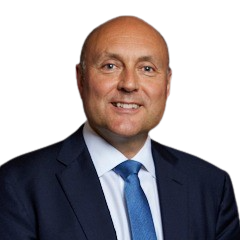
Dame Priti Patel is the Conservative MP for Witham, having first been elected to parliament at the 2010 general election.
In the 2024 general election, Patel received 18,827 votes, representing 37.2% of the vote share. The Labour candidate, Rumi Chowdhury, came second with 13,682 votes (27.0%), while the Reform UK candidate, Timothy Blaxill, secured 9,870 votes (19.5%). Patel was duly elected with a majority of 5,145.
Priti Patel: frontline political career
Patel left the Conservative frontbench as part of the August/September 2026 shadow cabinet reshuffle conducted by Kemi Badenoch. She served as shadow foreign secretary from November 2024 to August 2026.
Patel stood as a candidate in the 2024 Conservative leadership election. The contest was triggered by the resignation of Rishi Sunak following the party’s defeat in the 2024 general election. Patel was eliminated in the first parliamentary ballot on 4 September after receiving 14 votes. She secured the support of Conservative MPs including Wendy Morton, Alec Shelbrooke and John Whittingdale.
Announcing her ill-fated campaign, Patel said it was time to “put unity before personal vendetta, country before party, and delivery before self-interest”.
She added: “We must now turn our Conservative values into strong policies to bring about positive change for people across our country.”
Prior to the 2024 general election, which saw the Conservatives ejected from government, Patel held a series of senior ministerial posts. Most notably, she was home secretary from July 2019 to September 2022, serving for Boris Johnson’s full term as prime minister. In this role, Patel oversaw the implementation of a points-based immigration system following Brexit and steered the Police, Crime, Sentencing and Courts Act 2022 through parliament.
Patel also spearheaded the controversial policy to deport asylum seekers to Rwanda to deter Channel crossings. The so-called Rwanda scheme included an “asylum partnership arrangement” under which the UK could ask Rwanda to assume responsibility for individuals arriving in the UK via “illegal, dangerous or unnecessary methods” to Rwanda. Under the terms of the agreement, those relocated would have their asylum claims processed in Rwanda, not the UK; if successful, they would be granted refugee status and allowed to stay in the East African country, with no legal route to return to Britain.
The policy faced significant political and legal challenges from its inception; the inaugural deportation flight, scheduled for 14 June 2022, was grounded at the eleventh hour after an intervention by the European Court of Human Rights (ECtHR). The ECHR issued an interim measure (or ‘Rule 39 order’), which are only produced in “exceptional circumstances” where there is an “imminent risk of irreparable harm”.
In November 2020, an investigation into allegations of bullying found evidence that Patel’s conduct towards civil servants had breached the ministerial code. The inquiry, conducted by Sir Alex Allan as the independent adviser on ministers’ interests, followed the resignation of Sir Philip Rutnam as permanent under-secretary of state at the Home Office (a senior civil service role).
The report added: “Her approach on occasions has amounted to behaviour that can be described as bullying in terms of the impact felt by individuals.
“To that extent her behaviour has been in breach of the ministerial code, even if unintentionally.
On 20 November 2020, Johnson publicly backed Patel, stating that he had “full confidence” in the home secretary. He urged Tory colleagues in a WhatsApp message to “form a square around the Prittster”.
In immediate response to Johnson’s decision, Allan resigned as independent adviser.
In a public statement, Sir Alex noted: “I recognise that it is for the prime minister to make a judgment on whether actions by a minister amount to a breach of the ministerial code. But I feel that it is right that I should now resign from my position.”
In June 2022, Patel publicly declared their loyalty to the prime minister, Boris Johnson, ahead of a Conservative “no-confidence” in his leadership. The vote was triggered by discontent within the parliamentary party following the “partygate” scandal and the publication of the Sue Gray report. While the prime minister ultimately won the vote, the scale of the rebellion against him, with 148 of his own MPs voting to remove him, severely weakened his authority and presaged his resignation the following month.
At the time, Patel, a loyal Johnson ally, called the campaign against the then-prime minister a “sideshow”.
She stated: “We need to concentrate on doing our jobs. Our job is to deliver on the people’s priorities. They won’t thank the Conservative Party for talking about itself at a time when people have anxieties, concerns, apprehensions.”
Patel resigned as home secretary in September 2022 following Liz Truss’ election as Conservative leader.
In her resignation letter addressed to Johnson, the outgoing prime minister, Patel said it had been an “honour and privilege” to serve as home secretary.
She wrote: “Under your leadership, we have made our country safer, strengthened law and order, delivered our manifesto commitments, and laid strong foundations for our successors at No 10 and in the Home Office to build on. I congratulate Liz Truss on being elected our new leader, and will give her my support as our new prime minister.
“It is my choice to continue my public service to the country and the Witham constituency from the backbenches, once Liz formally assumes office and a new home secretary is appointed.
“From the backbenches, I will champion many of the policies and causes I have stood up for both inside and outside of government. Thank you for the great honour you have given me, not only in making me home secretary, but in supporting me throughout.”
Priti Patel: rise to prominence (2010-2019)
Before her tenure as home secretary, Patel served in cabinet as secretary of state for international development from July 2016 to November 2017.
In November 2017, Patel resigned as secretary of state for international development after it emerged she had held a series of undisclosed meetings with Israeli government officials during a private holiday without informing the Foreign Office.
Previously, Patel served as minister of state for employment from May 2015 to July 2016, attending cabinet, and exchequer secretary to the Treasury from July 2014 to May 2015.
Patel, a eurosceptic, was among the “gang of six” Conservative cabinet ministers who, following a rare Saturday cabinet meeting on 20 February 2016, broke ranks to join the Vote Leave campaign. She went on to play a leading role in the Vote Leave campaign during the 2016 Brexit referendum.
In 2012, Patel co-authored the book Britannia Unchained with fellow Conservative MPs Kwasi Kwarteng, Dominic Raab, Chris Skidmore and Liz Truss. The book advocated for deregulation and free market policies.
Patel was a member of the House of Commons foreign affairs committee (2018-2019) and the public administration committee (2011-2014).
Patel delivered her maiden speech on 27 July 2010.
In it, she said: “I believe that our country is at its strongest when it promotes the spirit of enterprise, the values of hope and aspiration, and the desire to get on in life.
“That is why I am certain that this government’s priority of lower corporation tax, providing incentives for small business, abolishing Labour’s tax on jobs, and ending the over-zealous bureaucracy that has strangled our small businesses will enable this country to flourish again.”
In the 2005 to 2010 parliament, Patel was added to the Tory “A-List” of prospective parliamentary candidates (PPCs), drawn up by Conservative Central Office at the behest of then-party leader David Cameron. The A-List was a centrally-approved priority list of around 100-150 PPCs created as part of Cameron’s bid to modernise the party’s image. The primary goal was to increase the diversity of Conservative MPs by fast-tracking more women and candidates from ethnic minority backgrounds into safe and winnable seats.
Political Views
Leadership elections and loyalty
Tory leadership 2022 (II): Patel supported Johnson’s explored candidacy in the Conservative Party’s October 2022 leadership election. The contest was triggered by the resignation of Truss after just 45 days in office, following the financial and political tailspin triggered by her “mini-budget”.
Johnson, who had resigned as prime minister only months earlier, initially sought a return to office and claimed to have secured the 100 nominations required to proceed. However, he announced his withdrawal on 23 October, stating that “you can’t govern effectively unless you have a united party in parliament.” Sir Graham Brady, chair of the 1922 committee of Tory backbenchers, later confirmed that Johnson had indeed secured the 100 MPs necessary to force a ballot of the Conservative membership – which he could well have won.
Patel went on to support Rishi Sunak’s candidacy. Sunak, the former chancellor, had finished second to Truss in the July-September 2022 contest. Unlike the summer contest, this election featured an expedited process requiring each candidate to secure at least 100 nominations from MPs to proceed. Sunak, having emerged as the clear frontrunner, was declared leader of the Conservative Party unopposed on 24 October.
Tory leadership 2019: Patel supported Boris Johnson for the party’s leadership in 2019. The election was triggered by the resignation of Theresa May following her inability to secure a Brexit deal acceptable to the Conservative Party.
Johnson, the former foreign secretary and mayor of London, campaigned on the central pledge to “deliver Brexit” by 31 October 2019, “deal or no deal”. He thereby positioned himself as the candidate best-placed to break the parliamentary deadlock. Johnson secured 114 votes in the first parliamentary ballot, and reached 160 votes in the final MP round. In the subsequent ballot of the party membership, Johnson won a decisive victory with 92,153 votes (66.4%).
Tory leadership 2016: Patel supported Theresa May for the party’s leadership in July 2016. The contest was triggered by the resignation of David Cameron following the UK’s vote to leave the European Union.
May, the then-home secretary, secured a commanding lead in the parliamentary stages, receiving 165 votes in the first ballot and 199 in the second. Following the withdrawal of her final rival, Andrea Leadsom, on 11 July, May was declared leader unopposed and was appointed prime minister two days later.
Factional identity and party tradition
Free Enterprise Group: Patel was a member of the Free Enterprise Group (FEG) of Conservative MPs – a parliamentary caucus, founded in 2011 by Liz Truss, that championed free-market, libertarian economic policies. The group, seen as a standard-bearer for the Thatcherite wing of the party, is most notable for the political ascent of its founding members. Key figures in the FEG included Truss, Kwasi Kwarteng, Dominic Raab and Chris Skidmore. The 2012 book, Britannia Unchained, served as the group’s unofficial manifesto for radical free-market reform. It was effectively succeeded by the Free Market Forum, which was launched in 2021.
The Free Market Forum: Patel has been listed as a supporter of the Free Market Forum (FMF) of Conservative MPs and peers. The group, co-chaired by Dehenna Davison and Greg Smith in the 2019-2024 parliament, set out to “encourage free market thinking, winning over the unpersuaded and providing intellectual firepower and a public platform to proponents of classical liberalism.” Founded in 2021, the forum, associated with the Institute of Economic Affairs (IEA), was seen as aligned with the economic policies of the Liz Truss government.
European Research Group: Patel has been associated with the European Research Group (ERG). During the Conservative Party’s last stint in government, the ERG emerged as a highly influential Tory faction composed of staunchly eurosceptic MPs. Founded in 1993, the group played a pivotal role in shaping the UK’s exit from the European Union, consistently advocating for a “hard” Brexit.
Its members were generally and often stridently critical of the withdrawal agreement negotiated by Theresa May. Chaired variously by Mark Francois, Jacob Rees-Mogg, Steve Baker and Suella Braverman, the group proved instrumental in May’s downfall as prime minister.
Tax pledge Tories: In November 2023, Patel signed the “tax pledge” – which committed supportive MPs to not vote for any further increases in the overall tax burden. The initiative was associated with the Conservative Growth Group (CSG), a faction within the party that advocated for lower taxes and supply-side reforms to stimulate economic growth. The group was formed by allies of the former prime minister Liz Truss. The “tax pledge” was spearheaded by Jake Berry, who served as Conservative chair in Truss’ short-lived government.
Blue Collar Conservatives: Patel was previously listed as a member of the Blue Collar Conservatives group. This faction within the Conservative party was founded in 2012 by the former cabinet minister Esther McVey, but came to greater prominence following the 2019 general election. The group aimed to “champion working people and develop a conservative agenda to benefit the voters and communities most neglected by Labour”. In October 2022, McVey was succeeded by Lee Anderson as the group’s chair.
Cornerstone Group: Patel was a member of the Cornerstone Group, a highly traditionalist and socially conservative faction of Conservative MPs. Its political philosophy was summarised by its motto: “Faith, Flag, and Family”. In July 2005, the group published a pamphlet that accused the-leader Michael Howard of running a general election campaign that was too “timid” about tax cuts, public service reform and family values.
Brexit and Europe
Brexit referendum: Patel supported Leave in the 2016 Brexit referendum, and therefore agreed with a majority of her constituents, 60.5% of whom also voted to Leave.
During the campaign, Patel claimed that the suffragettes’ efforts were being undermined by the EU. She argued that “Pankhurst and the suffragettes did not fight to have the right to vote on who governs them only to then see those decisions squandered to the EU’s undemocratic institutions and political elite.”
Article 50: In February 2017, Patel voted in favour of the European Union (Notification of Withdrawal) Bill. The legislation empowered the prime minister to notify the Council of the European Union of the UK’s intention to withdraw, formally triggering the process set out in Article 50 of the Treaty on European Union. MPs supported the bill by 498 votes to 114 at second reading.
Brexit spartan: Patel was one of the 28 so-called “Brexit spartans”, a group of hardline Eurosceptic Conservative MPs who voted against then-prime minister Theresa May’s Brexit withdrawal agreement on all three occasions it was put to parliament in 2019. The so-called “spartans” argued that May’s deal did not represent a genuine departure from the European Union. Their steadfast opposition was a critical factor in May’s resignation as prime minister.
Customs union vote (2025): In December 2025, Patel voted against the UK-EU Customs Union (Duty to Negotiate) Bill. The bill, introduced under the ten-minute rule procedure by Liberal Democrat Europe spokesperson Al Pinkerton, sought to mandate the government to enter into negotiations with the European Union to establish a bespoke customs union.
Assisted dying
Patel voted against the Terminally Ill Adults (End of Life) Bill, better known as the assisted dying bill, at both second reading (November 2024) and third reading (June 2025).
Social values and conscience issues
Abortion decriminalisation (2025): Patel voted against a backbench amendment to the Crime and Policing Bill that sought to decriminalise abortion in England and Wales in June 2025. The amendment, which was passed by a majority of 242 votes, removed women from the threat of prosecution for ending a pregnancy at any stage. As an issue of conscience, MPs were allowed to vote according to their personal beliefs.
Same-sex marriage (2013): In February 2013, Patel was one of the 139 Conservative MPs to vote against the Marriage (Same Sex Couples) Bill at its second reading. The landmark piece of legislation, which received its second reading by 400 votes to 175, legalised marriage for same-sex couples in England and Wales.
Foreign policy and security
Trident renewal (2016): Patel voted in favour of a government motion calling for the renewal of the Trident nuclear deterrent system in July 2016. The motion, which was passed by 472 votes to 117, committed the UK to constructing a new fleet of submarines to carry the nation’s nuclear weapons.
Syria airstrikes (2015): Patel voted in favour of a government motion to extend UK airstrikes against Isis from Iraq into Syria in December 2015. The motion, which was passed by 397 votes to 223 after a 10-hour debate in the House of Commons, authorised the RAF to conduct strikes against Isis targets in Syria.
Before Politics
Born in London on 29 March 1972, Patel grew up in Hertfordshire. Her parents were Ugandan-Indian immigrants who came to the UK in the 1960s, before the expulsion of Asians from Uganda by Idi Amin. They established a chain of newsagents.
Patel attended Watford Grammar School for Girls, a comprehensive school. She studied economics at Keele University, and then completed a postgraduate degree in British government and politics at the University of Essex.
Inspired by Margaret Thatcher, Patel joined the Conservative Party in 1991.
After university, Patel worked as an intern at Conservative Central Office.
From 1995 to 1997, Patel headed the press office for the Referendum Party, before rejoining the Conservative Party staff to work in William Hague’s press office (1997-2000).
Patel subsequently worked in corporate public relations, initially for Weber Shandwick, where her work included advising British American Tobacco (BAT). She then worked in corporate relations for the drinks company Diageo (2003-2007) before returning to Weber Shandwick as a director in 2007.
Personal Life
Patel is married to Alex Sawyer, a marketing consultant who has also served as a Conservative councillor. They married in 2004 and have one son.
Patel’s father, Sushil, stood as a UK Independence Party (Ukip) candidate in a Hertfordshire County Council election in 2013.
Trivia
Patel briefly worked for the single-issue Referendum Party, led by Sir James Goldsmith, before returning to the Conservative Party fold in 1997.
The Referendum Party stood candidates in 547 constituencies at the 1997 general election, winning 811,849 votes (2.6%). Campaigning for a referendum on the United Kingdom’s relationship with the European Union, it acted as a “spoiler” option in many constituencies Conservative candidates were defending. Notably, Goldsmith’s party only stood against those it deemed ‘europhiles’, including Major and chancellor Kenneth Clarke.
The Referendum Party’s decline after Goldsmith’s death in 1997 created space for Ukip’s political and electoral development.
Priti Patel has not written for Politics.co.uk.