What is NHS 111?
NHS 111 is a nurse-led telephone information service, which provides basic healthcare advice to callers and directs those with more serious complaints to the appropriate part of the wider NHS.
111 is a free to call single non emergency number for those in England, Scotland and parts of Wales. It is accessible 24 hours a day, seven days a week, and is one of the largest telemedicine services in the world.
The service also operates a website: www.111.nhs.uk
NHS 111 replaced the previous NHS Direct service in 2014, with a singe easier to remember 111 number. Although a telemedicine offering, NHS 111 is a triage and signposting service for “urgent” problems, whereas NHS Direct offered a nurse led advice line.


NHS Direct was launched in 1998, as a means of extending public access to healthcare services, to relieve pressure on GPs and accident and emergency departments, and to iron out regional inequalities in service provision. It formed a key part of the Labour government’s ‘The New NHS’ White Paper.
Background
NHS Direct was first established in March 1998, as part of the New Labour government’s plans to reform the Health Service. It was originally launched in three pilot areas: Newcastle, Preston and Milton Keynes. The concept of a complementary online service was introduced under the 1998 NHS Information Strategy, with the objective of providing a companion website for the telephone service by autumn 1999. The website was fully operational by December 1999.
In November 2000, NHS Direct was expanded to cover the whole of England, following the success of the pilots, which had been gradually extended throughout 1998 and 1999. NHS Direct Wales was launched in April 2001.
NHS Direct was originally organised on a local basis, with individual sites (there were 24 in England and Wales in 2002) and staff located within ‘Host Trusts’, which were mainly Ambulance Trusts.
In April 2004, NHS Direct in England was consolidated into a single national provider, a Special Health Authority. Local NHS bodies commission services directly from the SHA.
The change to NHS Trust in 2007 established NHS Direct as an integral part of NHS frontline services.
In August 2010, the Department of Health announced the launch of a new NHS non-emergency 111 number. The NHS 111 service was piloted in four areas in 2010 prior to national roll-out.
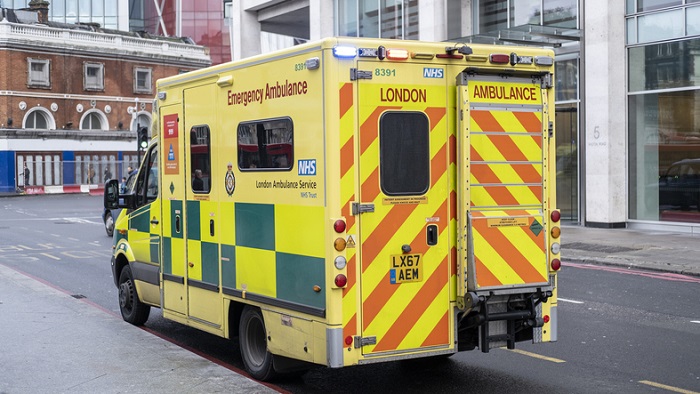
13.5% of calls triaged by NHS 111 are referred to the ambulanceservice.
Controversies
At its launch, concerns were voiced that NHS Direct was designed to keep patients away from overburdened doctors’ surgeries and emergency departments, offering them a ‘call centre’ service instead. The qualification of nurses to give medical advice was also questioned in some quarters.
Much of this criticism stemmed from the Government appearing not to take into consideration some of the concerns raised by stakeholders during the extensive consultations that preceded implementation.
However, public satisfaction with the service is reported to be high. The NHS has reported that between two and three per cent of its callers are unaware of the severity of their symptoms and are immediately referred to emergency services. Critics of the clinical service provided have suggested that diagnoses err on the side of caution.
Statistics
There were 1,503,318 calls offered to the NHS 111 service in England in January 2020, an average of
48.5 thousand per day
Of calls answered by NHS 111 in January 2020, 85.2% were answered within 60 seconds. In January
2019 the figure was 80.7%.
The proportion of calls triaged that received any form of clinical input in January 2020 was 52.5%. The
corresponding figure for January 2019 was 53.6%
Of calls triaged in January 2020, 13.3% were referred to the Ambulance Service, 9.5% were
recommended to attend A&E, 56.2% were recommended to primary care, 6.7% were advised to
attend another service and 14.1% were not recommended to attend another service. The largest
changes compared with January 2019 were “Recommended to attend primary care”, which was 2.7
percentage points lower, and “Recommended to attend other service”, which was 1.6 percentage
points higher.
[Source – NHS Direct – January 2020]