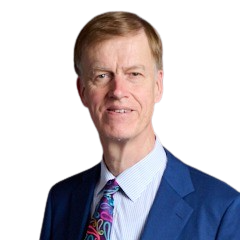
Sir Stephen Timms is the Labour MP for East Ham, having first been elected to parliament for the predecessor seat of Newham North East in a by-election on 9 June 1994.
In the 2024 general election, Timms received 19,570 votes, representing 51.6% of the vote share. The independent candidate, Tahir Mirza, received 6,707 votes (17.7%), while the Green Party candidate, Rosie Pearce, secured 4,226 votes (11.2%). Timms was duly re-elected with a majority of 12,863 votes.
The East Ham constituency is located in the London Borough of Newham in East London. It includes areas such as East Ham, Manor Park, Little Ilford, Plashet and Wall End. The seat and its predecessor Newham North East has been held continuously by Labour since 1979.
Political Career
Timms currently serves as minister of state in the Ministry of Housing, Communities and Local Government (minister for equalities) and minister of state in the Department for Work and Pensions. Timms was appointed to the former role in July 2026, following the Labour leadership contest and Andy Burnham’s elevation as prime minister.
Timms was appointed as minister of state in the Department for Work and Pensions in July 2024.
As disability minister, Timms was at the centre of the government climbdown over the Universal Credit and Personal Independence Payment Bill in July 2025. The controversy centred on the government’s proposals to reform eligibility for personal independence payments (Pip) and universal credit (UC). The measures, set out by work and pensions secretary Liz Kendall, aimed to save approximately £5 billion annually by the end of the decade.
In the days leading up to the vote, a rebel “reasoned amendment” to the Universal Credit and Personal Independence Payment Bill secured over 120 signatures from Labour MPs. The amendment called for ministers to wait for the publication of the review into Pip, chaired by Timms.
In the end, just 90 minutes before MPs were due to vote, Timms told the commons that changes to restrict Pip would be delayed until after his review of the disability benefit. Originally, the Pip changes were due to come in from November 2026.
Intervening on a backbench Labour MP’s speech, Timms said: “Others across the House during this debate have raised concerns that the changes to Pip are coming ahead of the conclusions of the review of the assessment that I will be leading.
“We’ve heard those concerns and that is why I can announce that we are going to remove the Clause V from the bill at committee [stage], that we will move straight to the wider review… and only make changes to Pip eligibility activity and descriptors following that review.”
Helen Whately, the shadow work and pensions secretary, responded that the bill had “more or less disintegrated”. She called the proposed legislation a “rushed and chaotic compromise that would harm disabled people and create a two-tier benefit system”.
Timms held a series of government positions under Tony Blair and Gordon Brown from 1997 to 2010. Most recently, Timms was a parliamentary under-secretary at the Department for Business, Innovation and Skills and jointly at the Treasury from August 2009 to May 2010. He was known as the minister for digital Britain.
Timms served as financial secretary to the Treasury on three occasions (2008-2010, 2004-2005, and 1999-2001) and a minister of state Department for Work and Pensions on two occasions (2008 and 2005-2006).
Timms attended cabinet as chief secretary to the Treasury from May 2006 to June 2007. He left this post after Gordon Brown succeeded Tony Blair as prime minister.
Timms was also a minister of state Department for Business, Enterprise and Regulatory Reform (2007-2008), a minister of state for e-commerce and competitiveness at the Department of Trade and Industry (2002-2004), a minister of state for education and skills (2001-2002), a minister of state for social security (1999), and a parliamentary under-secretary at the Department of Social Security (1998-1998).
In opposition, Timms has served as a shadow work and pensions minister (2010-2015), shadow financial secretary (2010), and shadow minister for digital Britain (2010).
Timms chose not to serve on the frontbench appointed by Jeremy Corbyn as Labour leader.
In a statement, issued in September 2015, Timms said: “I have enjoyed 17 years on Labour’s frontbench, and have been the longest-serving frontbencher for the last year or two.
“But I couldn’t carry on forever and this struck me as a good point to step down and take up a different role in parliament.”
Timms was chair of the House of Commons work and pensions committee from January 2020 to May 2024. By virtue of this role, he sat on the liaison committee across the same period.
Timms was also a member of the committee on the future relationship with the European Union (2016-2019), the education committee (2016), the public accounts committee (2004-2005 and 1999-2001) and the Treasury committee (1996-1997).
In May 2010, Timms was stabbed whilst holding a constituency surgery and seriously injured. The attacker, Roshonara Choudhry, was an Islamic extremist who stated their motive was to punish Timms for voting for the Iraq War. Choudhry was convicted of attempted murder and sentenced to life imprisonment with a minimum term of 15 years.
After Choudhry was sentenced, Timm told BBC Radio 5: “I think it’s an appropriate sentence.
“It’s obviously a worry that a very bright young woman with everything to look forward to reached the decision that she should throw it all away by attempting to murder her local MP as Roshonara did and I think it’s alarming that she seemed to have reached that conclusion simply by spending time on the internet.”
Timms was knighted in the 2022 Birthday Honours.
Timms delivered his maiden speech on 28 June 1994 during a debate on housing and urban policies.
In it, he said: “Newham combines, to a unique extent, deprivation on one hand and the potential for regeneration on the other…
“There is a massive need for regeneration, but there are also great grounds for optimism about the future. We have energy and vitality, and, despite the problems – perhaps partly because of them – we have a community that works. I am among those who want Government policies that will nurture and support our communities instead of tearing them apart, as has happened so often in the past 15 years.”
Before entering parliament, Timms served on Newham London Borough Council and was first elected in 1984. He was leader of the Council from 1990 to 1994.
Political Views
Leadership elections and loyalty
Labour deputy leadership 2025: Timms was one of 175 Labour MPs who nominated Bridget Phillipson for the party’s deputy leadership in September 2025. The election followed the resignation of Angela Rayner, who stepped down as deputy prime minister and deputy party leader after an investigation into her tax affairs. It marked the first time since 2007 that Labour had held a deputy leadership contest while in government.
Phillipson, the serving education secretary, was widely viewed as the candidate favoured by Downing Street and the party leadership. She secured 175 nominations from the Parliamentary Labour Party (PLP), comfortably exceeding the 80 required to reach the final ballot. She was ultimately defeated by Lucy Powell.
Labour leadership 2020: Timms was one of 82 Labour MPs who nominated Keir Starmer for the party’s leadership in early 2020. The election was triggered by the resignation of Jeremy Corbyn following the party’s defeat in the 2019 general election, which resulted in Labour’s fewest seats in the House of Commons since 1935.
Starmer’s 82 nominations were the highest of any candidate. The shadow Brexit secretary won a decisive victory in the first round with 56.2% of the vote, defeating Rebecca Long-Bailey and Lisa Nandy.
Labour leadership 2015: Timms was one of 41 Labour MPs who nominated Liz Kendall for the party’s leadership in June 2015. The election followed the resignation of Ed Miliband after the party’s defeat in the 2015 general election. It was the first contest held under the “one member, one vote” system, which replaced the previous electoral college.
Kendall, the shadow minister for care and older people, was viewed as the “Blairite” candidate in the race. She secured 41 nominations from the Parliamentary Labour Party (PLP), exceeding the 35 required to reach the final ballot. She ultimately finished fourth in the contest with 4.5% of the vote.
Corbyn loyalty list: In March 2016, Timms was labelled as “neutral but not hostile” by the Corbyn leadership in a leaked list which categorised Labour MPs by their perceived loyalty.
Labour leadership 2016: Timms was one of 162 Labour MPs who nominated Owen Smith for the party’s leadership in July 2016. The election was triggered by a challenge to Jeremy Corbyn following the EU referendum, which led to a wave of shadow cabinet resignations and a vote of no confidence supported by 172 MPs. Smith, the former shadow work and pensions secretary, was ultimately defeated by Corbyn, who won with an increased mandate of 61.8% of the vote.
Labour leadership 2010: Timms was one of 63 Labour MPs who nominated Ed Miliband for the party’s leadership in May 2010. The election followed the resignation of Gordon Brown, who stepped down as prime minister and Labour leader after the 2010 general election.
Miliband, the former energy and climate change secretary, was seen as the candidate of the “soft left” and secured significant backing from affiliated trade unions. He secured 63 nominations from the Parliamentary Labour Party (PLP), exceeding the 33 required to reach the final ballot. Miliband went on to narrowly defeat his brother, David, in the final round by 50.7% to 49.3%.
Factional identity and party tradition
Tribune group (2017): Timms was listed among the supporters of the Tribune parliamentary group – a caucus generally described as representing the party’s “soft left”.
The Tribune group was initially formed in 1964 to support the newspaper of the same name. It served as a prominent forum for those parliamentarians situated on the left of the Labour Party – but it split over Tony Benn’s campaign for the deputy leadership in 1981. Benn’s supporters founded the Campaign group – which evolved into the Socialist Campaign Group (SCG). Today, the Bennite SCG is strongly associated with the Labour left tradition.
During the 1980s, the Tribune group emerged as a more natural home for those on Labour’s “soft left”.
In 2017, Efford officially re-launched the group with a new mission statement calling for “opportunity and aspiration” to be placed at the heart of the party’s programme. Efford said he had reformed the group to ensure that the centre-left of the Parliamentary Labour Party (PLP) “have a space in which to put forward ideas and debate which has not been there under successive leaders”.
He added: “The view of Labour MPs at the moment tends to be that too much are just Blairites who want to stab Jeremy Corbyn in the back. We want to show that is not where we are, and that we want to develop our own ideas that represent the centre-left of the party.”
Brexit and Europe
Brexit referendum: Timms supported Remain in the 2016 Brexit referendum, and therefore agreed with a majority of his constituents, 53.7% of whom also voted to Remain.
Article 50: In February 2017, Timms voted against the European Union (Notification of Withdrawal) Bill. The legislation empowered the prime minister to notify the Council of the European Union of the UK’s intention to withdraw, formally triggering the process set out in Article 50 of the Treaty on European Union. MPs supported the bill by 498 votes to 114 at second reading. In voting against the bill, Timms defied the party whip – one of 47 Labour MPs to do so.
People’s vote support (2019): Timms signed a January 2019 statement by Labour MPs calling for a “people’s vote” or second referendum. The statement, signed by 71 Labour MPs, read: “Defeat of the Tory [Brexit] deal in a public vote would give us all a chance to campaign for the anti-austerity policies and a Labour government that deals with the true causes of the Brexit vote, and a reformed Europe that works for all people.”
Remain pledge: During the 2019 general election campaign, Timms was one of 193 Labour candidates to sign the anti-Brexit “Remain pledge”, drawn up by the campaign group Remain Labour.
It stated: “Labour is committed to a confirmatory referendum, to give you the final say on Brexit. If elected as your Labour MP, I pledge to campaign to Remain in the EU.”
Welfare
Welfare vote (July 2025): Timms voted in favour of the government’s flagship welfare bill at second reading. The vote came after ministers agreed to significant concessions to avoid defeat via a mass rebellion of Labour MPs on 1 July 2025.
Assisted dying
Timms voted against the Terminally Ill Adults (End of Life) Bill, better known as the assisted dying bill, at both second reading (November 2024) and third reading (June 2025).
Foreign policy and security
Trident renewal (2016): Timms voted in favour of a government motion calling for the renewal of the Trident nuclear deterrent system in July 2016. The motion, which was passed by 472 votes to 117, committed the UK to constructing a new fleet of submarines to carry the nation’s nuclear weapons. Labour was split over the issue with 140 of its 230 MPs going against leader Jeremy Corbyn and backing the motion.
Syria airstrikes (2015): Timms voted against a government motion to extend UK airstrikes against Isis from Iraq into Syria in December 2015. The motion, which was passed by 397 votes to 223 after a ten-hour debate in the House of Commons, authorised the RAF to conduct strikes against Isis targets in Syria.
Syria airstrikes (2013): Timms voted against the government’s motion on the principle of military intervention in Syria in August 2013. The government motion was defeated by 285 votes to 272, a move which effectively ruled out UK participation in any US-led military strikes.
Iraq War authorisation vote (2003): In March 2003, Timms voted in favour of the government motion authorising military action against Iraq. The vote, one of the most contentious in recent parliamentary history, gave the prime minister, Tony Blair, the authority to join the US-led invasion.
Sanctioned (Russia): In April 2022, Timms was among the group of MPs placed on a sanctions list by the Russian government. The measure barred them from entering Russia and was presented by Moscow as a retaliatory response to the UK’s stance on the invasion of Ukraine.
Palestine
LFPME: Timms has been listed as a member of Labour Friends of Palestine and the Middle East (LFPME). The organisation’s stated aim is to promote peace and justice in the region through the application of international law and respect for human rights.
Ceasefire vote (November 2023): Timms was among 56 Labour MPs to vote in favour of a Scottish National Party (SNP) amendment to the King’s Speech in the House of Commons calling for an “immediate ceasefire” in Gaza – defying the instruction set out by the party’s frontbench. Labour had tabled its own motion, making a more moderate appeal for a “humanitarian pause” in the conflict and ordered its representatives to support that stance.
Palestinian recognition vote (2014): In October 2014, Timms was one of 192 Labour MPs who voted in favour of recognising Palestine as a state. The motion, passed by 274 votes to 12, called on the government to “recognise the state of Palestine alongside the state of Israel as a contribution to securing a negotiated two-state solution”.
Before Politics
Born Stephen Creswell Timms in Oldham, Lancashire, on 29 July 1955, he was educated at Farnborough Grammar School in Hampshire.
He studied mathematics at Emmanuel College, Cambridge, graduating in 1977, and then obtained an MPhil degree in operational research from the same college in 1978.
Before entering politics, Timms worked in the telecommunications and IT industry for 15 years, first for the systems and software company Logica (1978-86) and then for the consultancy Ovum (1986-94), where he managed its telecommunications reports business.
Personal Life
Timms married Hui-Leng Lim in 1986.
He is an evangelical Christian.
Trivia
Timms enjoys walking and is a member of the Ramblers Association.


Why we mustn’t turn our backs on the world’s poor – Stephen Timms
7 July 2021