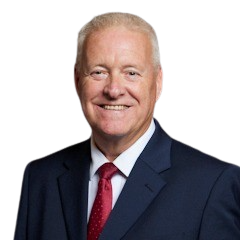
Ian Lavery is the Labour MP for Blyth and Ashington, and was first elected to parliament at the 2010 general election for the former Wansbeck constituency.
In the 2024 general election for the Blyth and Ashington constituency, Lavery received 20,030 votes, representing 49.6% of the vote share. The Reform UK candidate received 10,857 votes (26.9%), while the Conservative candidate secured 6,121 votes (15.2%). Lavery was duly elected with a majority of 9,173 votes.
The Blyth and Ashington constituency is located in south-east Northumberland in the North East of England. The constituency was newly created for the 2024 general election. It was formed primarily from parts of the abolished Wansbeck and Blyth Valley constituencies. The predecessor Wansbeck constituency, which Lavery represented from 2010 to 2024, had been held by the Labour Party since 1950, although Lavery’s majority was reduced to just 814 votes in the 2019 general election. The predecessor Blyth Valley constituency was represented by Ian Levy of the Conservative Party from 2019 to 2024.
Political Career
Ian Lavery served as chairman of the Labour party under Jeremy Corbyn’s leadership from June 2017 to April 2020. He co-chaired the Labour party’s general election campaign in 2019 (alongside Andrew Gwynne).
Lavery has held several roles on the shadow frontbench, including shadow minister without portfolio (2017-2020), shadow minister for the Cabinet Office (2016-2017), and shadow minister for trade unions and civil society (2015-2016),
Lavery was appointed as parliamentary private secretary (PPS) to Labour’s then deputy leader, Harriet Harman. However, he resigned in 2012 after he refused to withdraw an amendment seeking to prevent prison staff and psychiatric workers from having their retirement age forced up, thereby breaking the party whip.
In his resignation statement, Lavery said: “Political life is about being prepared to make your own political choices but I also understand the need for discipline within the Labour party.
“I tabled a series of amendments to the public sector pensions bill, which I was asked to withdraw because they were not in line with the front bench position. I was not prepared to withdraw them and I stand by that.
“I have therefore decided to resign my position as PPS to Harriet Harman. I’ve done this reluctantly and with great regret.”
In December 2019, Lavery said he was “seriously considering” running for the Labour leadership. He ultimately chose not to stand.
Lavery has previously served on committees including the Northern Ireland affairs committee (2010-2011), energy and climate change committee (2010-2015) and business and trade (2022-2024).
He is listed as a member of the all-party parliamentary groups (APPGs) for football supporters and occupational health and safety.
Lavery delivered his maiden speech on 16 June 2010 during a debate on industry.
In it, he said: “Wansbeck has been heavily dependent on the coal mining industry, with more than 70,000 miners being employed at one time. It was once the epicentre of the great northern coalfield, which proudly contributed to the industrial revolution from the 18th century onwards. Many people paid the ultimate sacrifice as a result.
“Many women were widowed and too many children were orphaned. However, as safety and health regulation was strengthened, with the implementation of the Mines and Quarries Act 1954 and the Health and Safety at Work, etc. Act 1974, employee safety in the industry became the envy of the entire world.”
He added: “I worked in a traditionally heavy industry – the coal industry – which, although it is now struggling for its very survival, is very strategic in terms of security of indigenous energy supplies for electricity generation in the UK. Coal still produces, on average, 33% of the electricity generated in the UK and at peak times it is not unusual for the coal that we burn to produce up to 50% of the nation’s electricity requirement.
“Sadly, as a nation we are now a net importer of energy, importing up to 40 million tonnes of coal and burning approximately 60 million tonnes per annum. Clean-coal technologies, particularly carbon capture and storage techniques, need to be implemented without further delay if we are serious about saving the planet from its own demise.”
Political Views
Leadership elections and loyalty
Starmer stand down: In May 2026, Lavery publicly called for Keir Starmer, the prime minister, to step down/set out a timetable for his departure. The move followed the 2026 local elections and devolved elections to the Scottish Parliament and Senedd Cymru.
Labour deputy leadership 2025: Lavery was one of 24 Labour MPs who nominated Bell Ribeiro-Addy for the party’s deputy leadership in September 2025. The election followed the resignation of Angela Rayner, who stepped down as deputy prime minister and deputy party leader after an investigation into her tax affairs. It marked the first time since 2007 that Labour had held a deputy leadership contest while in government.
Ribeiro-Addy, a member of the Socialist Campaign Group (SCG), was seen as the candidate on the left of the party. She secured only 24 nominations from the Parliamentary Labour Party (PLP), far short of the 80 required under rules introduced in 2021.
Labour leadership 2020: Lavery was one of 33 Labour MPs who nominated Rebecca Long-Bailey for the party’s leadership in early 2020. The election was triggered by the resignation of Jeremy Corbyn following the party’s defeat in the 2019 general election, which resulted in Labour’s fewest seats in the House of Commons since 1935.
Long-Bailey, then the shadow business secretary, was widely regarded as the continuity candidate for the party’s left/Corbynite wing. Long-Bailey finished second with 27.6% of the vote, losing to Keir Starmer, who won a decisive victory in the first round with 56.2%.
Labour leadership 2015: Lavery was one of 68 Labour MPs who nominated Andy Burnham for the party’s leadership in June 2015. The election followed the resignation of Ed Miliband after the party’s defeat in the 2015 general election. It was the first contest held under the “one member, one vote” system, which replaced the previous electoral college.
Burnham, the shadow health secretary, was initially considered the frontrunner. He secured 68 nominations from the Parliamentary Labour Party (PLP), comfortably exceeding the 35 required to reach the final ballot. He ultimately finished second in the contest with 19% of the vote, losing to Jeremy Corbyn in the first round.
Corbyn loyalty list: In March 2016, Lavery was labelled as “core group” by the Corbyn leadership in a leaked list which categorised Labour MPs by their perceived loyalty. This label suggested the Corbyn leadership viewed Lavery as among its closest allies, even as an inner circle member.
Labour leadership 2016: Lavery was one of the minority of Labour MPs who endorsed Jeremy Corbyn during his successful defence of the party leadership in September 2016. The election was triggered following a period of intense tension after the EU referendum, which saw a wave of shadow cabinet resignations and a vote of no confidence supported by 172 MPs.
Corbyn, who was automatically included on the ballot as the incumbent, was challenged by Owen Smith, the former shadow work and pensions secretary. Corbyn won the election with an increased mandate, securing 61.8% of the vote compared to 38.2% for Smith.
Labour leadership 2010: Lavery was one of 16 Labour MPs who supported John McDonnell for the party’s leadership in May 2010. The election followed the resignation of Gordon Brown, who stepped down as prime minister and Labour leader after the 2010 general election.
McDonnell, a prominent member of the Socialist Campaign Group (SCG), stood on a platform of opposition to the New Labour legacy. He withdrew from the contest on 9 June after securing only 16 nominations from the Parliamentary Labour Party (PLP), well short of the 33 required to reach the final ballot.
Lavery subsequently shifted his support to Ed Miliband’s candidacy. Miliband, the former energy and climate change secretary, was seen as the candidate of the “soft left” and secured significant backing from affiliated trade unions. He secured 63 nominations from the Parliamentary Labour Party (PLP), exceeding the 33 required to reach the final ballot. Miliband went on to narrowly defeat his brother, David, in the final round by 50.7% to 49.3%.
Factional identity and party tradition
Socialism26: In May 2026, Lavery was a signatory of Socialism26, a political initiative and pressure group launched by a coalition of Labour MPs and general secretaries from several major affiliated trade unions, including Unison, Aslef, the CWU, the TSSA and the FBU. The group described itself as advocating a “programme for change” intended to facilitate a “progressive political reset” within the Labour Party. It called for a return to traditional socialist values and greater internal party democracy.
The initiative was built upon a set of policy demands, including urging the government to “recognise the genocide in Gaza”, deliver full compensation for the “Waspi” women affected by state pension age changes, protect civil liberties and embrace intervention to lower energy bills.
Socialism26 described this programme as “the bare minimum to ensure that the public can see and feel the difference a socialist government makes to their lives.”
Socialist Campaign Group: Lavery has been listed as a member of the Socialist Campaign Group – the standard-bearer of the left wing within the Parliamentary Labour Party (PLP). Founded in 1982 by followers of Tony Benn, the group has traditionally advocated policies such as widespread public ownership, wealth redistribution and strengthened trade union rights.
Trade Union Group: Lavery is listed as the chair of the Trade Union Group of Labour MPs. This long-standing group, founded in 1926, serves as a link between the Labour party and the trade union movement, aiming to ensure that the voices of working people and their unions are represented in parliament.
Momentum endorsement: Lavery was endorsed by the left-wing campaign group Momentum in the 2024 general election. Momentum was founded in 2015 to support the leadership of Jeremy Corbyn and to campaign for socialist policies within the Labour party.
Covid passes campaign (2021): Lavery was one of over 70 MPs and peers who launched a cross-party campaign against the “divisive and discriminatory use” of Covid passes in April 2021. The campaign was triggered by government reviews into “vaccine passports”, which signatories argued would create a two-tier society and infringe upon fundamental civil liberties.
Corbyn suspension: In November 2020, Lavery was among the 32 SCG MPs to sign a statement declaring that they opposed the suspension of Jeremy Corbyn and calling for the disciplinary action to be “swiftly reversed”.
The statement read: “This decision and the division it causes severely undermines efforts to unite to defeat antisemitism and fully implement the EHRC [Equality and Human Rights Commission] recommendations and to challenge and defeat this disastrous Conservative government.”
Corbyn’s suspension came after he issued a response to the EHRC report, arguing “the scale of the [antisemitism] problem was also dramatically overstated for political reasons by our opponents”.
Spycops vote (2020): In October 2020, Lavery was one of the 34 Labour MPs to break the party whip by voting against the covert Human Intelligence Sources (Criminal Conduct) Bill at its commons third reading. The proposed legislation, often referred to as the “spycops bill”, was introduced by the Conservative government to authorise undercover agents and informants to commit crimes while on operations. The Labour Party had whipped its representatives to abstain on the bill on the basis that the legislation is “far from perfect” yet “necessary” due to “the need to provide a clear lawful framework for the use of human intelligence sources”.
Anti-austerity letter (2015): Lavery was among the 16 Labour MPs – generally associated with the party’s left wing – who signed a statement demanding then-leader Ed Miliband oppose further austerity, take rail franchises back into public ownership and strengthen collective bargaining arrangement. Jeremy Corbyn, Diane Abbott and John McDonnell were among the signatories.
The statement, issued in January 2015, read: “There is an alternative way out of endless austerity. We need public investment to kickstart the economy out of faltering growth and to generate real job creation and rising incomes.”
Brexit and Europe
Brexit referendum: Lavery supported Remain in the 2016 Brexit referendum, and therefore disagreed with a majority of his constituents, 56.3% of whom voted to Leave.
Article 50: In February 2017, Lavery voted in favour of the European Union (Notification of Withdrawal) Bill. The legislation empowered the prime minister to notify the Council of the European Union of the UK’s intention to withdraw, formally triggering the process set out in Article 50 of the Treaty on European Union. MPs supported the bill by 498 votes to 114 at second reading.
Welfare
Welfare ‘reasoned amendment’ (June 2025): Lavery was one of the over 120 Labour MPs to sign the reasoned amendment to the government’s flagship welfare bill which aimed to reject the proposed legislation.
The amendment, in the name of senior Labour MP Dame Meg Hillier, objected to the fact that the bill had not been subject to a “formal consultation with disabled people” and that “250,000 people will be pushed into poverty” as a result of it, according to a government impact assessment.
The motion also called on the government to wait for the publication of the review into the Personal Independence Payment (Pip), helmed by minister Sir Stephen Timms, and the independent review, conducted by Sir Charlie Mayfield, into how the employment of disabled people could be boosted.
In May 2025, Lavery signed a letter warning the government that the cuts were “impossible to support” and calling for a change in direction.
The letter, signed by 42 Labour MPs, read: “The planned cuts of more than £7bn represent the biggest attack on the welfare state since George Osborne ushered in the years of austerity and over 3 million of our poorest and most disadvantaged will be affected.
“Whilst the government may have correctly diagnosed the problem of a broken benefits system and a lack of job opportunities for those who are able to work, they have come up with the wrong medicine. Cuts don’t create jobs, they just cause more hardship.”
Welfare vote (July 2025): Lavery went on to vote against the bill at second reading. The vote came after ministers agreed to significant concessions to avoid defeat via a mass rebellion of Labour MPs on 1 July 2025.
Winter fuel payment EDM: In September 2024, Lavery signed an early day motion (EDM) expressing concern over the government’s proposed changes to the winter fuel payment. The motion called on the government to “postpone the ending of winter fuel payments and establish a comprehensive strategy to tackle fuel poverty, health inequality and low incomes among older people.”
Welfare vote (July 2015): Alongside almost one quarter of his colleagues, Lavery voted against the Conservative government’s Welfare Reform and Work Bill at second reading – defying the party whip which instructed Labour MPs to abstain. This decision to abstain, taken by interim Labour leader Harriet Harman, caused a furious backlash within the party, particularly from its left wing. It became a defining issue in the ongoing leadership contest. Jeremy Corbyn was the only candidate to vote against the bill. Overall, 48 Labour MPs voted against the proposed legislation.
Assisted dying
Lavery voted against the Terminally Ill Adults (End of Life) Bill, better known as the assisted dying bill, at both second reading (November 2024) and third reading (June 2025).
Social values and conscience issues
Same-sex marriage (2013): In February 2013, Lavery voted in favour of the Marriage (Same Sex Couples) Bill at its second reading. The landmark piece of legislation, which received its second reading by 400 votes to 175, legalised marriage for same-sex couples in England and Wales.
Foreign policy and security
Syria airstrikes (2015): Lavery voted against a government motion to extend UK airstrikes against Isis from Iraq into Syria in December 2015. The motion, which was passed by 397 votes to 223 after a ten-hour debate in the House of Commons, authorised the RAF to conduct strikes against Isis targets in Syria.
Syria airstrikes (2013): Lavery voted against the government’s motion on the principle of military intervention in Syria in August 2013. The government motion was defeated by 285 votes to 272, a move which effectively ruled out UK participation in any US-led military strikes.
Sanctioned (Russia): In April 2022, Lavery was among the group of MPs placed on a sanctions list by the Russian government. The measure barred them from entering Russia and was presented by Moscow as a retaliatory response to the UK’s stance on the invasion of Ukraine.
Nato-scepticism: In February 2022, following Russia’s invasion of Ukraine, Lavery was one of 11 Labour MPs on the left of the party threatened with losing the party whip after they signed a statement by the Stop the War Coalition which criticised Nato, accusing the military alliance of “eastward expansion”.
Palestine
LFPME: Lavery has been listed as a member of Labour Friends of Palestine and the Middle East (LFPME). The organisation’s stated aim is to promote peace and justice in the region through the application of international law and respect for human rights.
Palestinian recognition letter (July 2025): In July 2025, Lavery was among the over 254 MPs to sign a cross-party letter calling for the government to immediately recognise the state of Palestine. The letter called on the prime minister and foreign secretary to recognise Palestine at the UN Conference then taking place in New York.
Ceasefire vote (November 2023): Lavery was among 56 Labour MPs to vote in favour of a Scottish National Party (SNP) amendment to the King’s Speech in the House of Commons calling for an “immediate ceasefire” in Gaza – defying the instruction set out by the party’s frontbench. Labour had tabled its own motion, making a more moderate appeal for a “humanitarian pause” in the conflict and ordered its representatives to support that stance.
Palestinian recognition vote (2014): In October 2014, Lavery was one of 192 Labour MPs who voted in favour of recognising Palestine as a state. The motion, passed by 274 votes to 12, called on the government to “recognise the state of Palestine alongside the state of Israel as a contribution to securing a negotiated two-state solution”.
Before Politics
Born in 1963, Lavery grew up in the Wansbeck area. He worked in the construction industry before becoming a coal miner at Lynemouth colliery.
Lavery later undertook a National Coal Board apprenticeship while working at Ellington colliery.
He became active in the National Union of Mineworkers (NUM), initially serving as compensation secretary at Ellington colliery. He was subsequently elected to the NUM’s Northumberland executive committee and later the north east area executive committee.
Lavery served as general secretary of the NUM (Northumberland area). He was then elected national president of the NUM in 2002, succeeding Arthur Scargill, and held this position until his election to parliament in 2010.
Prior to entering parliament, Lavery also served as a councillor on the now-abolished Wansbeck district council. He has also been a trustee of the Coal Industry Social Welfare Organisation (CISWO) and the Woodhorn colliery museum.
Personal Life
Lavery is married and has two sons. One of them, Liam, has been a Labour activist since his teens.
Trivia
Lavery is a boxing fan and has been involved in greyhound racing, having owned racing greyhounds.
He clashed with Boris Johnson during the 2017 general election following the BBC’s televised leaders’ debate. Lavery called on Johnson to “stop being so rude” after the then-foreign secretary briefly squared up to the Labour MP.

Ian Lavery: ‘The damage caused by bank branch closures must end’
10 June 2025