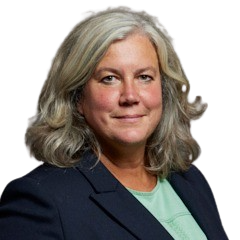
Chris Evans is the Labour (Co-op) MP for Caerphilly, first elected for the predecessor seat of Islwyn on 6 May 2010.
In the 2024 general election for the Caerphilly seat, Evans received 14,538 votes (38%). The Plaid Cymru candidate received 8,119 votes (21.2%), and the Reform UK candidate secured 7,754 votes (20.3%). Evans was duly elected with a majority of 6,419.
The Caerphilly constituency is located in the South Wales Valleys, within the County Borough of Caerphilly. It includes the towns of Caerphilly, Ystrad Mynach, Pontllanfraith, Hengoed, and Nelson. The seat was reconfigured for the 2024 election, primarily merging parts of the abolished Islwyn constituency and the former Caerphilly constituency (both held by Labour since 1918). The new seat is considered safe Labour territory.
Neil Kinnock, the former Labour leader, represented the Islwyn seat from 1983 to 1995.
Political Career
A former frontbencher, Evans served as shadow minister for tech and digital economy from November 2023 to May 2024, shadow minister for social security from September 2023 to November 2023, and shadow minister for defence procurement from May 2021 to September 2023.
In 2012, Evans was appointed as a parliamentary private secretary (PPS) within Labour’s environment, food and rural affairs (EFRA) team. A PPS acts as an unpaid assistant to a minister or shadow minister, providing a link between the senior frontbencher and backbench MPs.
In October 2013, Evans joined Labour’s shadow Treasury team as PPS to the then chief secretary to the Treasury, Chris Leslie. He became the PPS to the shadow secretary of state for defence (John Healey) in 2020.
In the 2010-2012 parliamentary session, Evans presented the Banking (Disclosure, Responsibility and Education) Bill to parliament – which aimed to boost transparency and consumer rights. The bill included a requirement for banking institutions to provide clearer, more transparent information to customers about their products and services.
Introducing the bill, under the 10-minute rule procedure, Evans told the House: “The bill aims to improve the level of disclosure within our financial system. It would improve disclosure on how banks are addressing financial exclusion as well as improve disclosure within the UK’s commodities markets in the hope that we can rebuild trust in our banking system…
“Ever since the financial crisis of 2008 it has been fashionable in all sections of society to blame the bankers for everything. The bill would seek to answer that question, first, by improving data collection within the banking system, and, secondly, by improving disclosure to regulators and the public.”
In a 2012 Westminster Hall debate, Evans said he had been the victim of a dog attack while campaigning in his constituency, which left a “one-inch scar on my middle finger” and “resulted in five stitches”.
He said: “I had become one of the more than 100 people a week in the UK who suffer injuries so severe from a dog attack that they are admitted to hospital.”
Evans has since campaigned for responsible dog ownership, calling for the compulsory microchipping of all dogs. He told MPs this would encourage owners “to take responsibility for the behaviour of their dogs”.
He added: “Banning the sale of dogs in newspapers and on the internet and introducing a list of approved breeders would help to prevent the illegal breeding of dogs. With more than 5,000 people hospitalised due to dog attacks in the past two years, it is time the government realised that the law must change.”
Evans has campaigned against fuel poverty, addressing two Westminster Hall debates on the topic in January 2011 and October 2011.
In the former session, Evans said: “It is important to remember that fuel poverty is not simply about schemes and programmes. It is a matter of life and death for the many people who are forced to live in cold and damp conditions.
“We need a new, far-sighted fuel poverty strategy to ensure that fuel-poor households have a decent income and that sustainable energy-saving measures are prioritised.”
Evans was the first person to raise the issue of inflammatory bowel disease (IBD) in parliament when he led a 2012 Westminster Hall on employment opportunities for people with the illness.
In it, he said: “Ultimately, IBD does not have to hinder someone’s work potential. People live with the condition and make a positive impact in the world of work every day. All they ask for is sensitivity and understanding. I do not think that is too much.
“Therefore, I believe that employers, health professionals and policy makers have a duty to ensure that there is a greater understanding for those with fluctuating conditions such as IBD.”
Evans was a member of the House of Commons Welsh affairs committee from October 2024 to January 2025, the petitions committee from March 2020 to July 2021, the public administration and constitutional affairs committee (Pacac) from March 2020 to September 2020, the public accounts committee from October 2015 to November 2019, the environmental audit committee from December 2012 to March 2014, and the justice committee from July 2010 to December 2012.
During his tenure as a member of the justice committee, Evans successfully lobbied his colleagues to hold an inquiry into introducing a presumption of death act. Evans had been a supporter of such proposals since meeting Rachel Elias, sister of Manic Street Preachers guitarist Richey Edwards, who went missing in 1995.
At the time, Evans said: “A change in the law would go some way to sparing families the unnecessary financial and legal bureaucracy which families are forced to go through without a death certificate.”
Evans supported the Presumption of Death Bill, which, upon receiving royal assent in 2013, established a legal framework in England and Wales for families of missing persons to obtain a declaration of presumed death from the high court.
Evans is listed as a member of the all-party parliamentary groups (APPGs) for archives and history and writers.
Evans delivered his maiden speech on 27 May 2010 during a debate on energy, the environment, food and rural affairs.
In it, he said: “In addition to the problem of financial exclusion, we find ourselves in a unique economic situation that will require us to make large cuts to public spending, which will affect all parts of the United Kingdom. In making these cuts, we must ensure that we do not hurt the poorest and most vulnerable in our society.
“Under the last government, hundreds of thousands of people were lifted out of poverty, and we must ensure we do not send those people back into it. There are some in this House who propose cutting tax credits. To do so would pass the burden for reducing the deficit on to families that are struggling to make ends meet.”
Evans previously stood unsuccessfully as the Labour candidate for Cheltenham in the 2005 general election, finishing third on 4,988 votes (11.4%).
Political Views
Leadership elections and loyalty
Oppose leadership election: In May 2026, Evans was among the over 100 Labour MPs who signed a joint statement insisting it was “no time for a leadership contest.” The letter was an intervention in the political crisis engulfing Keir Starmer’s premiership, after Labour suffered heavy losses in the 2026 local elections and devolved elections to the Scottish Parliament and Senedd Cymru. It was organised as a counterweight to a mounting rebellion that had seen high-profile figures, including some ministers, call for Starmer’s resignation.
The statement read: “Last week we had a devastatingly tough set of election results. It shows we have a hard job ahead to win back trust from the electorate.
“That job needs to start today – with all of us working together to deliver the change the country needs.
“We must focus on that. This is no time for a leadership contest.”
Labour leadership 2020: Evans was one of 82 Labour MPs who nominated Keir Starmer for the party’s leadership in early 2020. The election was triggered by the resignation of Jeremy Corbyn following the party’s defeat in the 2019 general election, which resulted in Labour’s fewest seats in the House of Commons since 1935.
Starmer’s 82 nominations were the highest of any candidate. The shadow Brexit secretary won a decisive victory in the first round with 56.2% of the vote, defeating Rebecca Long-Bailey and Lisa Nandy.
Labour leadership 2015: Evans was one of 41 Labour MPs who nominated Liz Kendall for the party’s leadership in June 2015. The election followed the resignation of Ed Miliband after the party’s defeat in the 2015 general election. It was the first contest held under the “one member, one vote” system, which replaced the previous electoral college.
Kendall, the shadow minister for care and older people, was viewed as the “Blairite” candidate in the race. She secured 41 nominations from the Parliamentary Labour Party (PLP), exceeding the 35 required to reach the final ballot. She ultimately finished fourth in the contest with 4.5% of the vote.
Corbyn loyalty list: In March 2016, Evans was labelled as “hostile” by the Corbyn leadership in a leaked list which categorised Labour MPs by their perceived loyalty. This label suggested the Corbyn leadership viewed Evans as actively and openly antagonistic.
Labour leadership 2016: Evans supported Angela Eagle for the party’s leadership in July 2016. The election was triggered by a challenge to Jeremy Corbyn following the EU referendum, which led to a wave of shadow cabinet resignations and a vote of no confidence supported by 172 MPs.
Eagle, the former shadow first secretary of state, was the first to formally launch a challenge against Corbyn. However, she withdrew from the race on 19 July after attracting fewer nominations than Owen Smith. Evans subsequently supported Smith’s candidacy.
Corbyn was ultimately re-elected with an increased mandate of 61.8% of the vote.
Labour leadership 2010: Evans was one of 81 Labour MPs who nominated David Miliband for the party’s leadership in May 2010. The election followed the resignation of Gordon Brown, who stepped down as prime minister and Labour leader after the 2010 general election.
Miliband, the former foreign secretary, was seen as closely aligned with the New Labour project – a Blairite figure. He secured 81 nominations from the Parliamentary Labour Party (PLP), comfortably exceeding the 33 required to reach the final ballot, but was narrowly defeated by his brother, Ed Miliband, in the final round by 50.7% to 49.3%.
Brexit and Europe
Brexit referendum: Evans supported the Remain campaign in the 2016 referendum on Britain’s membership of the European Union (EU), and therefore disagreed with a majority of constituents, 58.9% of whom voted to Leave.
Article 50: In February 2017, Evans voted in favour of the European Union (Notification of Withdrawal) Bill. The legislation empowered the prime minister to notify the Council of the European Union of the UK’s intention to withdraw, formally triggering the process set out in Article 50 of the Treaty on European Union. MPs supported the bill by 498 votes to 114 at second reading.
Welfare
Welfare ‘reasoned amendment’ (June 2025): Evans was one of the over 120 Labour MPs to sign the reasoned amendment to the government’s flagship welfare bill which aimed to reject the proposed legislation.
The amendment, in the name of senior Labour MP Dame Meg Hillier, objected to the fact that the bill had not been subject to a “formal consultation with disabled people” and that “250,000 people will be pushed into poverty” as a result of it, according to a government impact assessment.
The motion also called on the government to wait for the publication of the review into the Personal Independence Payment (Pip), helmed by minister Sir Stephen Timms, and the independent review, conducted by Sir Charlie Mayfield, into how the employment of disabled people could be boosted.
Welfare vote (July 2025): Evans went on to abstain over the bill at second reading. The vote came after ministers agreed to significant concessions to avoid defeat via a mass rebellion of Labour MPs on 1 July 2025.
Commenting on the unamended proposals, Evans said: “Our welfare system needs reform, that much is clear. However, the proposals before us could have a serious and detrimental impact on my constituents, particularly those with disabilities, which could drive many into further poverty.
“I am calling on the government to urgently reconsider these proposals and address the concerns that have been raised by so many people. At the very least, they must fully consult with those likely to be affected and protect them from slipping into poverty.”
Assisted dying
Evans voted against the Terminally Ill Adults (End of Life) Bill, better known as the assisted dying bill, at both second reading (November 2024) and third reading (June 2025).
In a statement setting out his position, issued ahead of the bill’s second reading, Evans said: “A major concern is the risk of terminally ill individuals feeling pressured – by family, by society, or guilt over being a burden-to end their lives prematurely.
“This creates a dangerous ‘slippery slope’, where the availability of assisted death might shift from being a carefully considered option to something chosen out of coercion or desperation. Such pressures threaten the dignity and autonomy that the bill seeks to protect.”
He added: “I believe deeply in the sanctity of life. Decisions of such profound and irreversible nature should not be left to politicians, doctors, or judges.”
Social values and conscience issues
Abortion decriminalisation (2025): Evans voted against a backbench amendment to the Crime and Policing Bill that sought to decriminalise abortion in England and Wales in June 2025. The amendment, which was passed by a majority of 242 votes, removed women from the threat of prosecution for ending a pregnancy at any stage. As an issue of conscience, MPs were allowed to vote according to their personal beliefs.
Same-sex marriage (2013): In February 2013, Evans voted in favour of the Marriage (Same Sex Couples) Bill at its second reading. The landmark piece of legislation, which received its second reading by 400 votes to 175, legalised marriage for same-sex couples in England and Wales.
Foreign policy and security
Syria airstrikes (2015): Evans voted against a government motion to extend UK airstrikes against Isis from Iraq into Syria in December 2015. The motion, which was passed by 397 votes to 223 after a ten-hour debate in the House of Commons, authorised the RAF to conduct strikes against Isis targets in Syria.
Syria airstrikes (2013): Evans voted against the government’s motion on the principle of military intervention in Syria in August 2013. The government motion was defeated by 285 votes to 272, a move which effectively ruled out UK participation in any US-led military strikes.
Palestine
Palestinian recognition vote (2014): In October 2014, Evans voted in favour of recognising Palestine as a state. The motion, passed by 274 votes to 12, called on the government to “recognise the state of Palestine alongside the state of Israel as a contribution to securing a negotiated two-state solution”.
Before Politics
Born in Llwynypia, Rhondda, Wales on 17 July 1977, Evans was educated at Porth County Comprehensive School and Pontypridd College. He graduated from Trinity College, Carmarthen with a degree in history.
Before entering politics, he worked as a bookmaker for Jack Brown Bookmakers and in personal banking for Lloyds TSB, where he was a workplace union representative. He also worked briefly at the University of Glamorgan.
From 2004, Evans worked as a full-time trade union official with the Union of Finance Staff (now part of Accord). Between 2006 and 2010, he worked as a parliamentary researcher for the then MP for Islwyn, Don Touhig.
Evans joined the Labour Party aged 15 .
Personal Life
Evans married Julia Ockenden, a former head of public affairs at the BBC, in December 2013.
He has spoken publicly about suffering a serious leg injury in a road traffic accident aged 13, and stated this experience, on top of the stress caused by his parents’ divorce, contributed to developing body dysmorphic disorder.
Speaking in February 2019, Evans stated that being inactive following the accident led to him gaining weight.
He commented: “Naturally I was inactive and I put a lot of weight on, and that, when you’re 13 and 14, makes you very self-conscious about yourself… And then suddenly, when the cast came off, I was looking around and I just didn’t feel good enough.”
Evans said he would wake up at 05:00 to take his dog for a run up the mountain for an hour and a half – which preceded another hour-long workout and further long walks and training.
“Then I’d check myself out in the mirror – if I wasn’t happy with what I was doing, I would constantly just pick one exercise, for example bicep curls, and constantly do them until I was fatigued”, Evans told BBC Wales.
The routine resulted in Evans ripping his bicep muscles.
Encouraging those with a similar experience to talk to someone, Evans added: “Everybody’s got challenges, everybody’s got different problems they’ve got to face.
“But I think if you’re honest and you’re open, and you talk to someone you trust, people always try to help you.”
Trivia
Evans enjoys boxing and running.
Evans’ interest in politics began when he was given a book about John F. Kennedy at 13 years of age.
Evans’ has authored two sports biographies, Fearless Freddie: The Life and Times of Freddie Mills (2017), about the former world light-heavyweight boxing champion, and Don Revie: The Biography (2021), about the former Leeds United and England football manager, which was shortlisted for The Sunday Times Sports Book Awards in 2022.
Chris Evans has not written for Politics.co.uk.