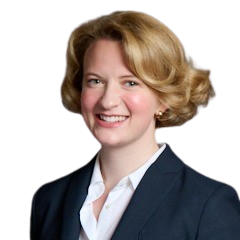
Cat Smith is the Labour MP for Lancaster and Wyre, having first been elected to parliament for the predecessor seat of Lancaster and Fleetwood at the 2015 general election.
In the 2024 general election, Smith won 19,315 votes, representing 44.9% of the vote. The Conservative candidate, Peter Cartridge, received 10,062 votes (23.4%), while the Reform UK candidate, Nigel Alderson, secured 6,866 votes (16.0%). Smith was duly elected with a majority of 9,253 votes.
The Lancaster and Wyre constituency was re-established for the 2024 election, primarily formed from the abolished Lancaster and Fleetwood seat and parts of Wyre and Preston North. It covers Lancaster, Poulton-le-Fylde, Garstang and surrounding areas in Lancashire. The predecessor Lancaster and Fleetwood seat changed hands between Labour and the Conservatives.
Political Career
Smith currently chairs the House of Commons procedure committee (since September 2024) – the committee responsible for considering the practice and procedure of the House in the conduct of its public business. It can make recommendations to the House about the operation of the House’s Standing Orders for public business.
By virtue of this role, Smith sits on the liaison committee – the so-called “super committee” composed of the cross-party chairs of all the other commons select committees. It has a broad oversight role, but is best known for its questioning of the prime minister in sessions that take place two or three times a year.
Prior to the 2024 general election, which saw Labour returned to power after 14 years in opposition, Smith chaired the petitions committee (October 2023 – May 2024). She served on the liaison committee for the same period.
Smith served in the shadow cabinets of Jeremy Corbyn and Keir Starmer as shadow minister (later shadow secretary of state) for young people and democracy from June 2016 until November 2021.
In November 2021, Smith resigned from the frontbench citing concerns over Jeremy Corbyn’s suspension as a Labour MP among other reasons.
In her resignation letter, Smith said she was grateful for Starmer’s “offer to remain in my current brief, I have only been on the backbenches for four months in my six and a half years as an MP and I will instead be returning to the backbenches.”
She added: “You will be aware that we had a meeting scheduled for later this week, during which I wanted to raise the issue of, and my concerns about, Jeremy not being readmitted to the parliamentary Labour Party after he was readmitted into our party membership following due process.
“This position is utterly unsustainable and it is important that you truly understand how much damage this is causing in Constituency Labour Parties and amongst ordinary members, a number of whom are no longer campaigning.
“You will also be aware that I am a longstanding advocate of proportional representation and I am disappointed that we, as a party, have not adopted a position which I believe to be fundamentally fairer and very much in keeping with the views of many of my constituents.”
Smith was also shadow deputy leader of the House of Commons (2016-2017) and shadow minister for women and equalities (2015-2016).
Smith was a member of the House of Commons environment, food and rural affairs committee (2023-2024), the environmental audit committee (2023-2024) and the women and equalities committee (2015).
Smith is a patron of LGBT+ Labour – a socialist society formally affiliated with the Labour Party.
Smith delivered her maiden speech on 1 June 2015 during a debate on Britain’s place in the world.
In it, she said: “Lancaster is famous for its nonconformist residents, so as a Methodist I feel I am in good company. I am pleased to be making my maiden speech in the debate on Britain in the world, because it was my faith that led me into politics, through the campaigns to drop third world debt and the campaign for fair trade.”
She added: “I had the privilege of visiting Palestine in 2012. It is shameful that ministers have so far refused to heed this House’s call to recognise Palestinian statehood. I call on this new government to address that.”
Before entering parliament, Smith stood unsuccessfully as the Labour candidate for Wyre and Preston North in 2010.
Political views
Leadership elections and loyalty
Labour deputy leadership 2025: Smith was one of 24 Labour MPs who nominated Bell Ribeiro-Addy for the party’s deputy leadership in September 2025. The election followed the resignation of Angela Rayner, who stepped down as deputy prime minister and deputy party leader after an investigation into her tax affairs. It marked the first time since 2007 that Labour had held a deputy leadership contest while in government.
Ribeiro-Addy, a member of the Socialist Campaign Group (SCG), was seen as the candidate on the left of the party. She secured only 24 nominations from the Parliamentary Labour Party (PLP), far short of the 80 required under rules introduced in 2021.
Labour leadership 2020: Smith was one of 33 Labour MPs who nominated Rebecca Long-Bailey for the party’s leadership in early 2020. The election was triggered by the resignation of Jeremy Corbyn following the party’s defeat in the 2019 general election, which resulted in Labour’s fewest seats in the House of Commons since 1935.
Long-Bailey, then the shadow business secretary, was widely regarded as the continuity candidate for the party’s left/Corbynite wing. Long-Bailey finished second with 27.6% of the vote, losing to Keir Starmer, who won a decisive victory in the first round with 56.2%.
Labour leadership 2015: Smith was one of 36 Labour MPs who nominated Jeremy Corbyn for the party’s leadership in June 2015. The election followed the resignation of Ed Miliband after the party’s defeat in the 2015 general election. It was the first contest held under the “one member, one vote” system, which replaced the previous electoral college.
Corbyn, a veteran backbencher, secured the 36 nominations required – just one over the threshold – but only after several MPs lent him their support to ensure a broader ideological debate. His anti-austerity platform gained significant momentum, and he won a landslide victory in the first round with 59.5% of the vote.
Corbyn loyalty list: In March 2016, Smith was labelled as “core group” by the Corbyn leadership in a leaked list which categorised Labour MPs by their perceived loyalty. This label suggested the Corbyn leadership viewed Smith as among its closest allies, even as an inner circle member.
Factional identity and party tradition
Labour Rural Research Group: Smith has been listed as a member of the Labour Rural Research Group (LRRG) – a caucus made up of MPs representing Labour’s so-called “rural wall”. The group’s primary aim is to ensure that policy is developed with a clear understanding of the distinct challenges and priorities of rural and semi-rural communities.
The LRRG, chaired by the Suffolk Coastal MP Jenny Riddell-Carpenter, conducts research and consultations to challenge what it sees as a “rural blind spot” in Whitehall.
Its first report, “Understanding Rural Britain”, surveyed voters on issues from healthcare and the economy to housing and the environment, seeking to build an evidence-based policy platform. The survey found nearly three quarters (74.4%) of respondents believe rural communities had been overlooked over the past 15 years. On the back of the report, Riddell-Carpenter stated that using the labelling rural voters as Nimbys (not in my back yard) was “toxic” and maintained “many people rightly despise the term”.
Leader of the left letter: In May 2015, Smith was among 10 newly elected Labour MPs who penned an open letter calling on the party to embrace a decisive break from New Labour. In the letter, the MPs called for a leader who will “challenge an agenda of cuts, take on the powerful vested interests of big business and will set out an alternative to austerity.”
Brexit and Europe
Brexit referendum: Smith supported Remain in the 2016 Brexit referendum, and therefore disagreed with a majority of her constituents, 52% of whom voted to Leave.
Article 50: In February 2017, Smith voted in favour of the European Union (Notification of Withdrawal) Bill. The legislation empowered the prime minister to notify the Council of the European Union of the UK’s intention to withdraw, formally triggering the process set out in Article 50 of the Treaty on European Union. MPs supported the bill by 498 votes to 114 at second reading.
Electoral reform
Fair elections APPG: Smith is listed as a member of the all-party parliamentary group (APPG) for fair elections – a cross-party group of MPs and peers that campaigns for electoral reform. The group’s stated aims include replacing the first past the post (FPTP) voting system with a form of proportional representation, eliminating “dark money” and “undemocratic influence” from politics, and countering disinformation.
Electoral reform amendment: In May 2026, Smith was one of over 70 Labour MPs who signed an amendment to the Representation of the People Bill, calling on the government to establish a “national commission on electoral reform”. Tabled by Alex Sobel as chair of the fair elections APPG, the amendment aimed to force a rethink of the first past the post voting system.
At the time, Sobel described FPTP as “one of the biggest examples of a broken status quo in UK politics.” He invited colleagues to join this “common sense call to take a fresh look at how parliament is elected in modern Britain.”
Welfare
Welfare ‘reasoned amendment’ (June 2025): Smith was one of the over 120 Labour MPs to sign the reasoned amendment to the government’s flagship welfare bill which aimed to reject the proposed legislation.
The amendment, in the name of senior Labour MP Dame Meg Hillier, objected to the fact that the bill had not been subject to a “formal consultation with disabled people” and that “250,000 people will be pushed into poverty” as a result of it, according to a government impact assessment.
The motion also called on the government to wait for the publication of the review into the Personal Independence Payment (Pip), helmed by minister Sir Stephen Timms, and the independent review, conducted by Sir Charlie Mayfield, into how the employment of disabled people could be boosted.
Welfare vote (July 2025): Smith went on to vote against the bill at second reading. The vote came after ministers agreed to significant concessions to avoid defeat via a mass rebellion of Labour MPs on 1 July 2025.
Welfare vote (July 2015): Alongside almost one quarter of her colleagues, Smith voted against the Conservative government’s Welfare Reform and Work Bill at second reading – defying the party whip which instructed Labour MPs to abstain. This decision to abstain, taken by interim Labour leader Harriet Harman, caused a furious backlash within the party, particularly from its left wing. It became a defining issue in the ongoing leadership contest. Jeremy Corbyn was the only candidate to vote against the bill. Overall, 48 Labour MPs voted against the proposed legislation.
Assisted dying
On the second reading of the Terminally Ill Adults (End of Life) Bill, better known as the assisted dying bill, in November 2024, Smith did not record a vote. She voted in favour at third reading (June 2025).
Social values and conscience issues
Abortion decriminalisation (2025): Smith voted in favour of a backbench amendment to the Crime and Policing Bill that sought to decriminalise abortion in England and Wales in June 2025. The amendment, which was passed by a majority of 242 votes, removed women from the threat of prosecution for ending a pregnancy at any stage. As an issue of conscience, MPs were allowed to vote according to their personal beliefs.
Social media ban: In January 2026, Smith was one of over 60 Labour MPs to sign a letter to the prime minister calling for the introduction of an Australia-style ban on social media access for children under the age of 16. Organised by Plymouth Moor View MP Fred Thomas, the initiative brought together a cross-factional coalition of backbenchers – spanning the Socialist Campaign Group, Tribune Group and Blue Labour – to demand action.
The letter called on Keir Starmer to “show leadership” by introducing a minimum age for social media access “to protect young people from the consequences of unregulated, addictive social media platforms”.
It stated: “We are all strong supporters of technology, and of this Labour government’s ambition to use tech to improve lives. But successive governments have done far too little to protect young people from the consequences of unregulated, addictive social media platforms.”
Foreign policy and security
Syria airstrikes (2015): Smith voted against a government motion to extend UK airstrikes against Isis from Iraq into Syria in December 2015. The motion, which was passed by 397 votes to 223 after a ten-hour debate in the House of Commons, authorised the RAF to conduct strikes against Isis targets in Syria.
Palestine
Palestinian recognition letter (July 2025): In July 2025, Smith was among the over 254 MPs to sign a cross-party letter calling for the government to immediately recognise the state of Palestine. The letter called on the prime minister and foreign secretary to recognise Palestine at the UN Conference then taking place in New York.
Ceasefire vote (November 2023): Smith was among 56 Labour MPs to vote in favour of a Scottish National Party (SNP) amendment to the King’s Speech in the House of Commons calling for an “immediate ceasefire” in Gaza – defying the instruction set out by the party’s frontbench. Labour had tabled its own motion, making a more moderate appeal for a “humanitarian pause” in the conflict and ordered its representatives to support that stance.
Before Politics
Catherine Jane Smith was born in Barrow-in-Furness, Cumbria on 16 June 1985. Her father was a trade unionist and her mother a Methodist. She became involved with youth movements through attending church.
She attended Parkview School and Barrow Sixth Form College. She studied sociology and gender studies at Lancaster University, graduating in 2006. She served as women’s officer for Lancaster University Students’ Union (2006-2007).
Smith worked as an office manager for the Christian Socialist Movement from 2007 to 2009 before working as a researcher for MPs Jeremy Corbyn, Katy Clark and Bob Marshall-Andrews (2009-2012).
Before entering parliament, Smith worked as a policy officer for the British Association of Social Workers (BASW).
Smith was also chair of Compass Youth (2010-2011) and later Next Generation Labour.
Personal Life
Smith married Ben Soffa, a Labour digital organiser, in 2016. They separated in 2020 and have one child, born in 2018.
In 2021, Smith was reported to be in a relationship with SNP politician David Linden. Smith and Linden were listed as a top “Westminster power couple” by Politico in 2024.
In 2024, PinkNews listed Smith among a number of out LGBTQ+ parliamentarians.
She identifies as bisexual and Methodist.
In 2010, Smith was diagnosed with postural orthostatic tachycardia syndrome (POTS).
Trivia
Before becoming an MP, Smith worked as a researcher for Jeremy Corbyn.
She is co-founder of Christians for Choice.
Cat Smith has not written for Politics.co.uk.