Neil Hamilton loses ‘cash-for-questions’ libel case

On 21 December 1999, the former Conservative MP Neil Hamilton lost his high-profile libel action against the Harrods owner Mohamed Al Fayed. A high court jury unanimously dismissed Hamilton’s claim that Al Fayed had libelled him in a 1997 Channel 4 Dispatches documentary.
The verdict marked the final chapter of the storied “cash-for-questions” scandal. The saga was seen as a defining instance of 1990s political “sleaze”, which contributed significantly to the decline of the Conservative government led by John Major.
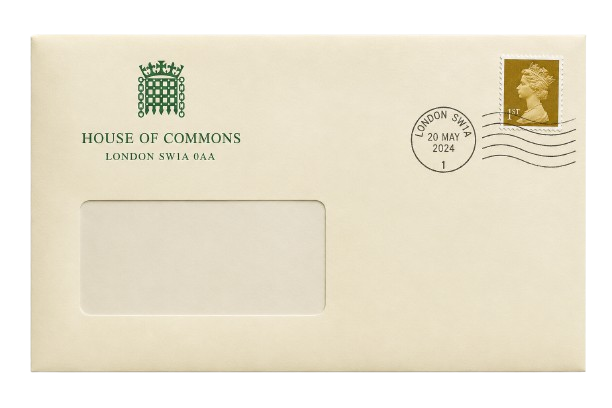
Hamilton, 50, was accused of accepting cash payments in brown envelopes from Al Fayed in return for asking parliamentary questions, and demanding a £10,000 payment from US oil company Mobil for tabling an amendment to the 1989 Finance Bill.
Hamilton, a former barrister, was ordered to pay legal costs estimated at more than £2 million.
Al Fayed, speaking outside the court, declared: “Christmas has come early. This is total vindication.”
Hamilton described the verdict as “justice in wonderland.”
Hamilton’s wife, Christine, said: “The jury are wrong is all I want to say – we are not corrupt.”
***
On 20 October 1994, the Guardian published a story alleging that Hamilton and fellow Conservative MP Tim Smith had accepted bribes from Al Fayed. Lobbyist Ian Greer was said to be the middleman in the transactions.
Smith was said to have received cash payments of between £18,000 and £25,000; he immediately resigned as a junior Northern Ireland minister.
Hamilton staunchly denied the Guardian’s claims. He joked during a photo opportunity at a school that he needed to declare a biscuit he was eating.
He said: “They’ve given me a reward for coming this morning. I shall of course be registering the biscuit on the Register of Members’ Interests.”
Despite his denials, however, Hamilton was forced to resign as minister for corporate affairs on 25 October 1994.
***
In response to the scandal, Major established the committee on standards in public life (the Nolan committee). The committee’s original terms of reference were to “examine current concerns about standards of conduct of all holders of public office, including arrangements relating to financial and commercial activities, and make recommendations as to any changes in present arrangements which might be required to ensure the highest standards of propriety in public life.”
Hamilton and Greer launched a libel action against the Guardian. However, the case collapsed on 30 September 1996, shortly before the trial was due to begin.
The following day, the Guardian ran the famous front-page headline: “A liar and a cheat.”
Hamilton, unlike Smith, refused to stand down from parliament at the 1997 general election. He was ultimately re-selected by his local association in Tatton by 182 votes to 35.
The BBC war correspondent, Martin Bell, stood against Hamilton as an independent “anti-sleaze” candidate. The Labour and Liberal Democrat parties withdrew their candidates to give Bell a clear run.
On 1 May 1997, Bell defeated Hamilton by a majority of 11,077 votes, overturning a notional Conservative majority of over 22,000. Tatton was previously considered the fourth safest Conservative seat in the UK.
Bell was the first successful independent parliamentary candidate elected from outside the party system since 1951.
In his maiden speech, Bell paid ironic tribute to Hamilton for “reviving the spirit of democracy in Tatton, which has recently experienced a general election campaign unlike any other in its history, and a little unlike any other in the country.”
***
An official parliamentary inquiry, which began its work prior to the election, concluded in July 1997. The inquiry, led by Sir Gordon Downey, ruled that the evidence “points compellingly to the conclusion that Mr Hamilton accepted cash payments from Mr Al Fayed in return for lobbying services”.
A subsequent report by the House of Commons standards and privileges committee found that Hamilton’s conduct had fallen “seriously and persistently” below the standards expected of MPs.
The report accused Hamilton of a “casualness bordering on indifference or contempt towards the rules of the House on disclosure of interests.”
It added: “Had Mr Hamilton still been a member we would have recommended a substantial period of suspension from the service of the House.”
In 1998, the Tory leader of the opposition, William Hague, said: “Neil Hamilton is not going to be coming back into a Conservative conference. He’s not going to be a Conservative MP in the future.”
Hamilton’s decision to sue Al Fayed was reportedly funded by a war chest of £410,000.
Al Fayed’s barrister, George Carman QC, framed the case around a single question: “Are you satisfied on the balance of probabilities that Mr Al Fayed has established on highly convincing evidence that Mr Hamilton was corrupt in his capacity as a member of parliament?”
The jury was satisfied on this point.
Responding to the verdict, Conservative Party chair Michael Ancram said: “I hope that this is the end of a sad and unpleasant episode which has been damaging to our party. I trust that the personalities involved will now retire from the scene.
“They certainly can expect little understanding from this party if they do not.”
Hamilton appealed unsuccessfully, before declaring bankruptcy.
He joined the UK Independence Party (Ukip) in 2002 and served as the party’s leader in the Welsh assembly from 2016 to 2021.
Hamilton then led Ukip from 2020 to 2024. He was made the party’s honorary president in May 2024.
Politics.co.uk Newsletters
DAILY
Politics@Lunch
WEEKLY
Week in Review