MPs fail to find majority for any Brexit option in ‘indicative votes’
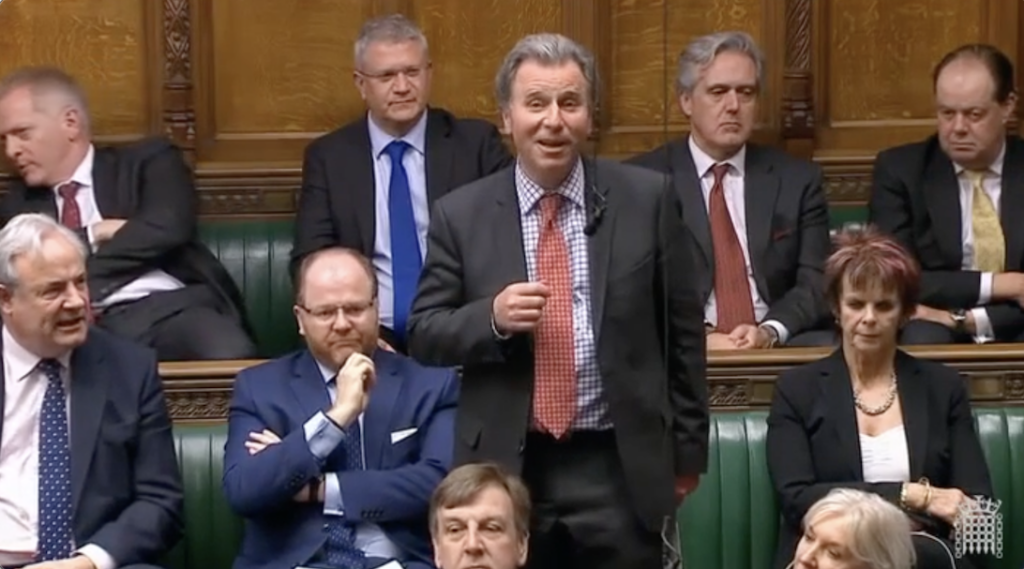
On 27 March 2019, in an unprecedented attempt to break the parliamentary deadlock over Brexit, the House of Commons held a series of non-binding “indicative votes” on alternative paths forward. The process, which saw backbench MPs seize control of the parliamentary agenda from the government, ended with none of the eight proposed options securing a majority.
***
The move came as the House of Commons appeared to reach an impasse over how to proceed with Brexit. On 12 March, Theresa May, the prime minister, suffered a second overwhelming defeat on her Brexit deal. In this second “meaningful vote”, May’s deal was rejected by 391 votes to 242 – a crushing majority of 149.
In response, May introduced a motion to test whether the House supported leaving the EU without a deal on 29 March deadline, the default legal position. This motion was subjected to a successful amendment which rejected a so-called “no-deal” Brexit.
On 14 March, MPs voted to delay Brexit by 413 votes to 202 – a majority of 211. An extension to the Article 50 period was granted on 21 March until either 22 May, subject to MPs approving the Withdrawal Agreement, or failing that until 12 April.
On 25 March, Conservative MP Oliver Letwin tabled an amendment to a government neutral motion to suspend standing order No 14 – the rule that normally gives government business “precedence at every sitting” – to allow MPs to debate and vote on alternative Brexit paths.
Letwin argued that his amendment restored the right of backbenchers to table business. “The idea that it is an ancient constitutional principle that the government should control the order paper is slightly anhistorical… because the practice started in 1906, so it is not, as far as I am aware, part of our ancient constitution”, he said.
“For about 400 or 500 years, things that either were the House of Commons or were very much like it controlled their own order papers.”
David Lidington, the chancellor of the Duchy of Lancaster, warned that the amendment would “upset the balance between legislature and executive in a way that would set an unwelcome precedent.”
However, Letwin’s plan was approved by 329 votes to 302. Three ministers, Richard Harrington (business), Alistair Burt (Foreign Office) and Steve Brine (health) resigned from the government to support Letwin’s amendment.
Following the vote, Conservative MP David TC Davies mockingly asked the speaker how to hold Letwin accountable, now that he had “installed himself as a kind of jobbing prime minister.” Bercow’s response, which included a swipe at chuntering Tory MP Greg Hands, sparked uproar in the chamber.
The speaker said: “I do not require any help from [Hands], who would not have the foggiest idea where to start. He was once a whip; he wasn’t a very good whip. It would be better if he could keep quiet.”
***
The success of the so-called “Letwin amendment” meant that backbenchers, for the first time, would determine which Brexit options the House would consider.
On 27 March, Letwin’s business of the House motion was approved (by 331 votes to 287) and MPs consequently considered a range of different Brexit options under a “recorded vote” system. It was left to the speaker to select which motions (Brexit options) would be included on the ballot paper.
Moreover, Letwin’s motion included a provision specifying that if a majority did form around a path forward, backbench MPs could then “move to the position of beginning to legislate to mandate the implementation of that majority”.
Bercow as commons speaker selected eight motions to be debated, including those expressing support for a no-deal exit, a customs union, a second referendum and the revocation of Article 50.
The debate began with Conservative MP John Baron moving motion (B), which called for the UK to leave the EU on 12 April without a deal. Baron dismissed the warnings of economic catastrophe as a repeat of the “doom and gloom” voiced during the 2016 referendum.
Labour MP Stephen Kinnock and Conservative MP Nick Boles presented Motion (D), the “Common Market 2.0” or “Norway Plus” model. Kinnock argued that a 52-48 result at the 2016 referendum did not represent a mandate to go about “wrecking the economy”. He said the vote was an “instruction to move house, but to stay in the same neighbourhood.”
Boles appealed to MPs to show leadership during the course of the votes.
He told the House: “Each of us today is a leader… In years to come, the question that our children and grandchildren will ask us is this: in that historic week when parliament took charge of the nation’s destiny, what did you do? Did you stand up and lead?
“Did you step forward to help reunite our country, or did you hang back in your party trench waiting to be told what to do and where to go?”
Boles said that if MPs chose “common market 2.0 this evening, the history books will record it as the moment that our country turned a corner and the part you played will be something of which you will be forever proud.”
The Conservative father of the House, former chancellor Kenneth Clarke, championed motion (J), which instructed the government to negotiate a “permanent and comprehensive UK-wide customs union with the EU.”
Clarke argued that the House was at last “moving into a mood where it is going to be possible to end the catastrophic shambles of the last six months.”
Scottish National Party (SNP) MP Joanna Cherry spoke in favour of motion (L), which called for the “revocation” of Article 50 to avoid no-deal. Cherry described her motion as a “failsafe” that could be supported even by those who wanted a deal or a second referendum.
Margaret Beckett spoke in favour of motion (M), which called for a “confirmatory public vote” or second referendum. Beckett questioned why the British people were seemingly “not allowed to be asked whether they have changed their minds. How can that be democratic?
Senior Labour MP Hilary Benn said he would vote for motion (M) and described the debate as “liberating”.
Stephen Barclay, the Brexit secretary, expressed the government’s mostly dismissive attitude in the face of the unprecedented proceedings. Barclay argued that many of the motions were “suboptimal” and failed the test of being deliverable or negotiable with the EU.
The House suspended for 30 minutes at 7:00 PM to conduct the ballot.
The votes occurred simultaneously using a ballot paper – specifically, green forms available in the voting lobbies. The simultaneous voting system marked the exercise out from previous indicative voting sessions held in the House of Commons in 2003 and 2007, both on reform of the House of Lords.
***
In the end, all eight motions were defeated.
Clarke’s motion (J) on a customs union came the closest to a majority, falling by just eight votes (264 to 272). Beckett’s call for a confirmatory public vote in motion (M) secured the greatest number of supportive votes at 268 – but was still defeated by a margin of 27.
Other options fared significantly worse. Baron’s no-deal motion (B) was crushed by 400 votes to 160. Meanwhile, Labour’s alternative plan set out in motion (K) fell by 70 votes. The common market 2.0 option was rejected by 283 votes to 188. Cherry’s revocation motion was dismissed by 293 votes to 184.
Addressing the House of a point of order, Letwin expressed his “very great disappointment” that MPs had not agreed a route forwards. The Conservative MP, who was greeted with cries of “Resign!”, reiterated his support for a two-day process.
Barclay argued that the vote proved “there are no easy options” and once more urged MPs to back May’s deal.
Ian Blackford, the leader of the SNP at Westminster, pointed out that the 268 votes for a second referendum exceeded the support the government had managed for its own deal in previous “meaningful votes”. Blackford called for a “general election to end this impasse.”
Conservative MP Mark Francois said the House had decided “sweet Felicity Arkwright”.
Francois stated: “I think the public will look in on these proceedings in utter amazement; they will be completely bemused by what has gone on. This attempt to seize the order paper has failed. The second referendum has been defeated.
“The revocation of Article 50 was smashed. And surely the last thing we want to do, Mr Speaker, in the eyes of the public, is on Monday to go through this farce all over again.”
***
The evening failed to produce a winner, but clarified the divisions in the House. It set the stage for the third and final ‘meaningful vote’ on May’s withdrawal agreement, which was ultimately rejected by 344 votes to 286. May’s government subsequently sent a letter to Donald Tusk, the president of the European Council, asking for a further extension to Article 50. The UK and EU ultimately agreed to extend Article 50 until 31 October 2019.
A second round of indicative votes was held on 1 April. Once more, no majority was identified for any option. However, Clarke’s customs union proposal was only rejected by three votes (276 to 273).
The common market 2.0 option, put forward by Boles and Kinnock, was rejected by 282 votes to 261.
In a dramatic point of order, Boles announced his resignation from the Conservative Party, condemning his colleagues for refusing to compromise.
He said: “I have given everything to an attempt to find a compromise that can take this country out of the European Union while maintaining our economic strength and our political cohesion. I accept that I have failed.
“I have failed chiefly because my party refuses to compromise. I regret, therefore, to announce that I can no longer sit for this party.”
Britain went on to fight the upcoming European Parliament elections. On 24 May, between polling day and the declaration of results, Theresa May announced her intention to resign as prime minister.
She was succeeded by Boris Johnson as Conservative leader and prime minister in July 2019.

Politics.co.uk Newsletters
DAILY
Politics@Lunch
WEEKLY
Week in Review
