MPs back fully elected House of Lords in ‘historic’ vote
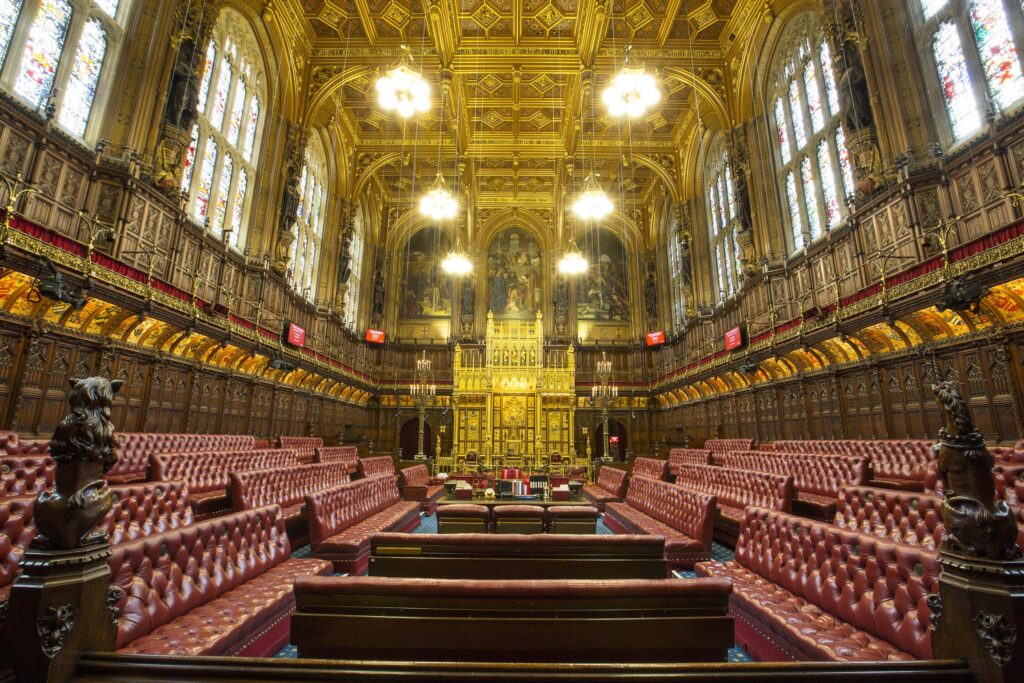
On 7 March 2007, the House of Commons voted for the first time in its history to replace the appointed House of Lords with a fully elected second chamber. The landmark result, delivered in a series of free votes, was a significant moment in the long-running debate on constitutional reform – but one that ultimately failed to translate into law.
***
The House of Lords Act 1999 reduced the number of hereditary peers to 92. When the act came into force in November 1999, a total of 667 hereditary peers ceased to be members of the House of Lords.
The legislation marked “stage one” of the Lords reform agenda promised by Tony Blair’s Labour government, elected in 1997. The act was not intended to provide for a permanent settlement, and it came alongside a royal commission “to review further changes and speedily to bring forward proposals for reform.”
The royal commission put forward a number of options for the future composition of the House, ranging from fully appointed to fully elected, with a series of compromises in between. The government responded by setting up a joint committee composed of MPs and peers to consider the report.
On 11 December 2002, the joint committee published its first report, which set out “an inclusive range of seven options for the composition of a reformed House of Lords”. They were:
- Fully appointed
- Fully elected
- 80% appointed / 20% elected
- 80% elected / 20% appointed
- 60% appointed / 40% elected
- 60% elected / 40% appointed
- 50% appointed / 50% elected
In January 2003, Blair expressed his support for a fully appointed House, arguing against any “hybrid” creations. A chamber with an elected element, he suggested, would be tantamount to a “rival chamber” – not a “revising chamber”.
The commons, however, was unable to reach a consensus on any of the options presented by the joint committee. In a series of indicative “free votes” held in the House of Commons in February 2003, MPs rejected every option presented to them.
Following this deadlock on comprehensive reform, the leader of the House of Commons, Robin Cook, observed dryly: “We should go home and sleep on this interesting position. That is the most sensible thing that anyone can say in the circumstances… the next stage in the process is for the joint committee to consider the votes in both Houses.
“Heaven help the members of the committee, because they will need it.”
A BBC News report in March 2004 said that the Blair government had put reform of the House of Lords “on hold”.
***
From 2001 to 2006, the House of Lords variously resisted the passage of the Anti-terrorism, Crime and Security Act 2001, the Hunting Act 2004, the Terrorism Act 2006, the Identity Cards Act 2006, and the Racial and Religious Hatred Act 2006. This resistance inspired a further white paper dedicated to Lords reform.
The white paper, entitled The House of Lords: Reform, described reform of the upper chamber as “unfinished business” and the 92 hereditary peers as a constitutional “anomaly”.
In the paper’s foreword, leader of the commons Jack Straw stated: “Time and time again – in 1909, 1949, 1968 and 2003 – fundamental reform of the House of Lords has failed because, for some, the best became the enemy of the good.”
Straw argued that a “hybrid”, part-elected, part-appointed, House would be the model most likely to achieve a consensus in a further free vote of the House of Commons. The document detailed how such a system might work, suggesting that elections could be held using a regional list system – a type of proportional representation (PR) – at the same time as European Parliament elections, with members serving a long, single, non-renewable term of around 15 years to encourage independent judgment. The appointed half would be selected by an independent, statutory appointments commission, removing prime ministerial patronage, and would include a significant bloc of non-party-political crossbenchers to maintain the chamber’s character as a house of revision.
The white paper was followed by a series of indicative votes on 7 March 2007 in both Houses on the composition of the second chamber.
In a key result, the commons voted by a majority of 113 (337 to 224) in favour of a 100% elected chamber. Shortly before, they had also narrowly approved an 80% elected, 20% appointed hybrid model. All other options, including a fully appointed house and the government’s preferred 50/50 split, were rejected.
This vote represented the first time the commons had endorsed a democratic mandate for the upper house.
In the first division, MPs opted to keep an upper chamber by 416 to 163, a majority of 253. They then voted heavily against a fully appointed upper chamber, with 375 against and 196 for, a majority of 179. The 80% appointed and 60% appointed options were rejected without a formal vote. Only 178 MPs backed a 60% elected body, with 392 voting against.
The 50/50 split option was rejected resoundingly, by 155 to 418 votes – a majority of 363.
The Liberal Democrat leader, Menzies Campbell, called the result a “truly historic occasion” and a “famous victory for progressive opinion both in parliament and in the country”. Straw described the vote as a “very positive vote for change – fundamental change – in the way that we order the other place .”
The commons leader said: “I am delighted, both by the results and by the fact that at long last this House has come to a very clear decision.
“The other place will be discussing this issue next week. I think it is fully accepted on both sides that we are right to take our time to consider the views of the other place. Meanwhile, I shall make arrangements to recall the cross-party working group, and at an appropriate moment after discussions in that group I shall of course make a statement to this House.”
The result, however, only contributed to the existing constitutional standoff. The House of Lords, as was widely expected, voted to endorse a fully appointed chamber by a large margin. The Lords voted against a fully elected upper chamber by 326 votes to just 112 in favour.
The momentum for reform stalled once more.
At the time, it was widely speculated that some MPs who actually favoured an appointed chamber had tactically voted for the most radical option – a 100% elected house – in the belief that it would be so unacceptable to the Lords that it would kill the entire process.
***
In May 2008, Gordon Brown as prime minister announced that the government would produce a new white paper on Lords reform.
Straw, now as justice secretary, spearheaded the proposals contained in An Elected Second Chamber. The paper’s central proposal was for a second chamber that was either 80% or 100% elected – per the consensus established in March 2007. It suggested members be directly elected for a single, non-renewable term of 12-15 years, staggered over three general election cycles to ensure continuity.
The proposals did not move forward to become legislation and the vote of March 2007 remained unfulfilled.
Labour’s manifesto for the 2010 general election proposed a referendum on Lords reform.

Politics.co.uk Newsletters
DAILY
Politics@Lunch
WEEKLY
Week in Review