King issues proclamation declaring American colonies in rebellion
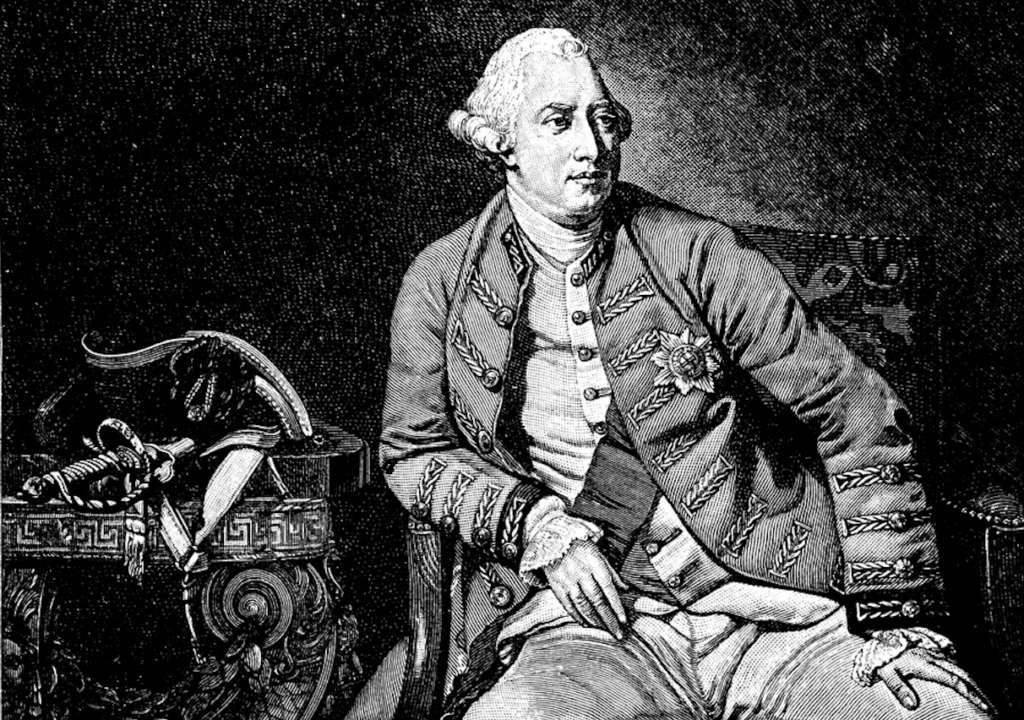
On 23 August 1775, King George III issued A Proclamation for Suppressing Rebellion and Sedition, a document that declared the American colonies to be in a state of “open and avowed rebellion.”
The proclamation was issued after news reached the government of the bloody Battle of Bunker Hill, where Britain had suffered over 1000 casualties. It confirmed that Britain’s policy in response to the outbreak of conflict would be one of military suppression, not reconciliation.
***
On 5 July, the second continental congress adopted the so-called Olive Branch Petition. The petition – a last substantive attempt at reconciliation – treated the king as a possible mediator, appealing to him over his “artful and cruel” ministers “who abuse your royal confidence and authority, for the purpose of effecting our destruction.”
The government, it added, was responsible for “delusive pretences, fruitless terrors, and unavailing severities”. The colonists called on the king to intervene to prevent the “further effusion of blood”.
George III’s proclamation, however, was drafted before the petition was received in Britain. The king, in any case, now appeared utterly resistant to appeals for peace. It was also delivered alongside a separate document, Declaration of the Causes and Necessity of Taking Up Arms, which was markedly less conciliatory in tone.
The declaration, adopted by congress on 6 July, stated: “We are reduced to the alternative of chusing an unconditional submission to the tyranny of irritated ministers, or resistance by force. The latter is our choice.”
Congress’ output at this time – reconciliation on the one hand and armed resistance on the other – reflected the body’s deep divisions about how to proceed.
George III was in no doubt. His proclamation stated that the colonies, “misled by dangerous and ill-designing Men”, were in a state of rebellion. They had “proceeded to open and avowed Rebellion, by arraying themselves in hostile Manner to with Execution of the Law, and traitorously preparing, ordering, and levying War against Us”.
The royal broadside commanded all “other our obedient and loyal Subjects to use their utmost Endeavours to withstand an suppress such Rebellion, and to disclose and make known all Treasons and traitorous Conspiracies which they shall know to be against Us, our Crown and Dignity”.
It stated that when the “unhappy and deluded multitude… shall become sensible of their error, I shall be ready to receive the misled with tenderness and mercy”
The proclamation was expanded upon in the speech from the throne delivered by George III at the opening of parliament in October. The address condemned the “promoters of this desperate conspiracy” who now “openly avow their revolt, hostility, and rebellion”.
He stated that the “rebellious war now levied is become more general, and is manifestly carried on for the purpose of establishing an independent empire.”
The speech added: “The object is too important, the spirit of the British nation too high, the resources with which God hath blessed her too numerous, to give up so many colonies which she has planted with great industry, nursed with great tenderness, encouraged with many commercial advantages, and protected and defended at much expence of blood and treasure.”
Finally, it stated that when the “unhappy and deluded Multitude, against whom this Force will be directed shall become sensible of their Error, I shall be ready to receive the Misled with Tenderness and Mercy”.
***
The proclamation was plain that the king had decided against compromise. It strengthened support for independence in the colonies and weakened the case of those, notably the drafters of the Olive Branch Petition, who held out for compromise.
The suggestion that George III was a possible conciliator could now be rejected: he wanted capitulation or conflict.
On 6 December 1775, congress issued a formal response to the proclamation. It rejected the charge of rebellion, and issued a formal threat of retaliation.
The king had accused congress of “forgetting the allegiance which we owe to the power that has protected and sustained us.”
The congress responded: “Why all this ambiguity and obscurity in what ought to be so plain and obvious, as that he who runs may read it? What allegiance is it that we forget? Allegiance to Parliament? We never owed – we never owned it. Allegiance to our King? our words have ever avowed it – our conduct has ever been consistent with it.”
They added: “We condemn, and, with arms in our hands – a resource which freemen will never part with – we oppose the claim and exercise of unconstitutional powers, to which neither the Crown or Parliament were ever entitled.”
The delegates questioned whether “the principles of reason and justice and the constitution” will prevail, adding: “Experience suggests to us the doubt”.
Congress thereby threatened to “resort to arguments drawn from a very different source”.
The response concluded: “We, therefore, in the name of the people of these United Colonies, and by authority, according to purest maxims of representation derived from them, declare, that whatever punishment shall be inflicted upon any persons, in the power of our enemies, for favouring, aiding or abetting the cause of American liberty, shall be retaliated in the same kind and the same degree upon those, in our power, who have favoured, aided or abetted, or shall favour, aid or abet the system of ministerial oppression.
“The essential difference between our cause and that of our enemies might justify a severer punishment: The law of retaliation will unquestionably warrant one equally severe.”
***
This hardening of positions, on both sides of the dispute, effectively closed the door on reconciliation. A Proclamation for Suppressing Rebellion and Sedition thus marked a crucial step on the path to the Declaration of Independence, issued on 4 July the following year.

Politics.co.uk Newsletters
DAILY
Politics@Lunch
WEEKLY
Week in Review