Harold Wilson leads Labour to landslide election victory
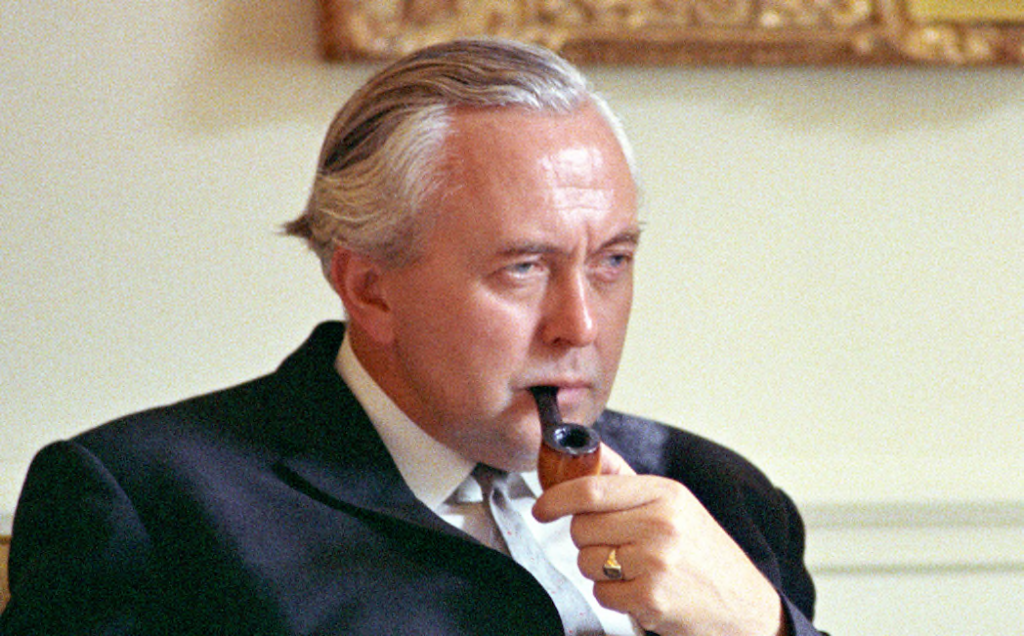
On 31 March 1966, the Labour Party under Harold Wilson’s leadership secured a decisive general election victory, winning a comfortable parliamentary majority of 98.
Wilson had called the snap election to break the parliamentary deadlock that had existed since his narrow victory, in 1964. That general election, which ended 13 years of Conservative rule, landed Labour with a parliamentary majority of just four seats – the smallest since 1847.
In the wake of that contest, Alec Douglas-Home resigned as Conservative leader. He was replaced by Edward Heath, the party’s first leader to be elected via a formal ballot of MPs, in July 1965. Heath was also the youngest Conservative leader for over a century.
***
Labour was buoyed by the January 1966 Hull North by-election which the Labour candidate, Henry Solomons, won with 20,664 votes (43.3%). Labour secured a swing of around four points away from the Conservative Party under Heath. The contest was a major blow for the young Tory leader.
One month later on 28 February, with Labour around 10 points ahead in the polls, Wilson called the general election. The prime minister said he would go to the country as 1966 was a “make-or-break year” for Britain. He argued that a “decisive government” with a larger majority was necessary.
Heath responded: “[Wilson] knows the country doesn’t want an election. He wants to cash in on the favorable public opinion before things start catching up with him.”
The House of Commons continued to sit for a further 10 days.
Significantly, on 1 March, James Callaghan delivered a ‘little’ or ‘mini’ budget. The chancellor pledged a scheme of tax rebates for mortgage holders and the decimalisation of sterling in the next parliament, which he described as a “momentous and an historic decision”.
Callaghan used his parliamentary platform to proclaim good economic tidings. He noted the deficit had been cut from over £750 million in 1964 to approximately £350 million in 1965. The trade deficit, meanwhile, was slashed by half. Gold and dollar reserves stood at £1,303 million at the end of February, an increase of £225 million on the previous month.
Heath decried Callaghan’s announcement as an “uproarious farce”. He said the chancellor had allowed “himself to be used as the simple tool of the prime minister’s decision to cash in on a general election.”
The Conservative leader charged that the cost of living under Labour had seen the “biggest rise… for any comparable period.”
The government successfully carried its motion, expressing support for its economic policy, by a narrow margin of four votes (291 to 287).
The prime minister’s bullish campaign slogan, “You know Labour government works”, was coupled with a manifesto entitled, Time for a Decision.
In the manifesto’s foreword, Wilson argued that Labour had “started on the long process of modernising obsolete procedures and institutions, ending the dominance of vested interests, liberating the forces of youth and building a New Britain.”
The Conservative Party’s manifesto, Action not Words, featured a series of “action points”.
Heath, writing in the manifesto foreword, said he would inherit a “weak economic position”.
He added: “This manifesto points the way. I ask now for your confidence so that we can put it into effect. I call not for words – but for action.”
Throughout the campaign, Heath stressed his support for Britain’s entry into the European Economic Community (EEC). Wilson steered away from the issue, not wanting to advertise divisions within his own party; instead, the prime minister accused Heath of “rolling on his back” and submitting to the common market.
Wilson declared: “One word from the French government and the Conservative leader rolls over on his back like a spaniel.”
On March 10, Heath coined the phrase “9-5-1” in an attempt to take Labour to task over its management of the economy. The soundbite stood for a 9% rise in wages, a 5% increase in prices and a 1% rise in production. Heath also warned that a large Labour majority “might very well” damage the pound.
Wilson dismissed the attacks. In a well-managed, somewhat understated campaign, the prime minister projected the image of a senior and experienced statesman.
***
The result was a landslide for Labour, which won 364 seats – a net gain of 48. The Conservatives slumped to 253 seats, losing a net 51. The Liberal Party won 12 seats – a net gain of three.
It marked only the second time a Labour government has been voted back into power, and the first time voters had overwhelmingly endorsed the incumbent party. Wilson hailed the result as “a great victory”.
Symbolically, Labour reclaimed the seat of Smethwick. The party lost the constituency at the 1964 general election by 1,774 votes, following a Conservative campaign centred on hostility to Commonwealth immigration. Supporters of the Tory candidate, Peter Griffiths, were reported to have used the slogan “If you want a nigger for a neighbour, vote Labour.”
Griffiths, who refused to condemn the slogan, therefore lost his seat.
The election delivered Wilson a commanding majority. The prime minister’s programme included a series of liberalising social reforms.
From 1966 to 1970, the Wilson government passed the Race Relations Act 1965, which outlawed discrimination on the “grounds of colour, race, or ethnic or national origins” in public places. Meanwhile, the Murder (Abolition of Death Penalty) Act 1965 abolished capital punishment; the Sexual Offences Act 1967 partially decriminalised homosexuality; and the Abortion Act 1967 legalised abortion in most of the UK.
The government also introduced the Representation of the People Act 1969 which reduced the voting age to 18. This reform made the 1966 election the last in which 21 was the eligible voting age.
The 1966 contest was the second of Wilson’s four general election victories. It also marked the only election between 1945 and 1997 (exclusive) in which the Labour Party won a workable majority. In fact, no Labour leader since Wilson has matched the 48% vote share the party recorded at the 1966 election.
However, Wilson lost the 1970 general election to Heath’s Conservatives. The prime minister’s popularity declined markedly in the late 1960s due to Britain’s economic woes – symbolised by the devaluation of sterling in November 1967.

Politics.co.uk Newsletters
DAILY
Politics@Lunch
WEEKLY
Week in Review
