Fuel protesters blockade refineries, causing petrol shortages across Britain
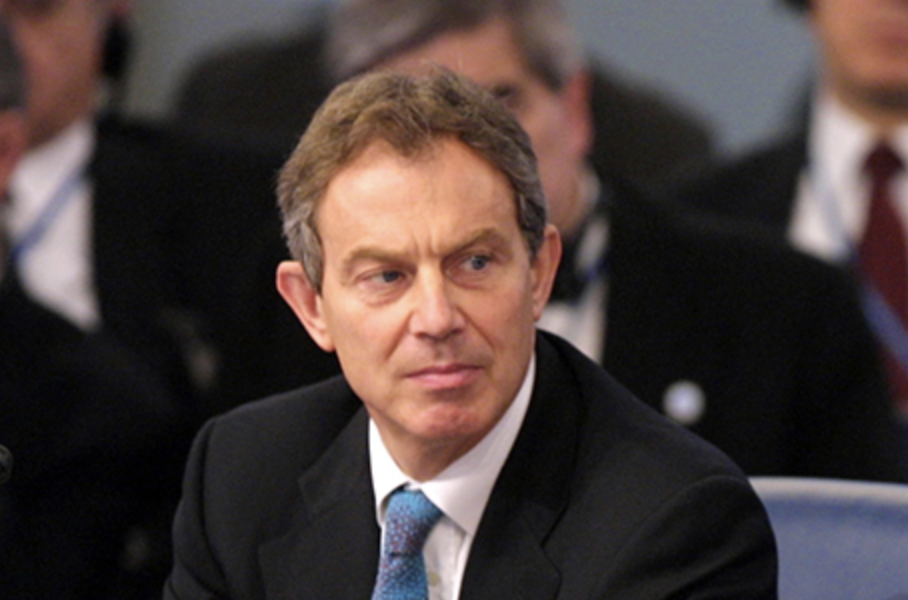
On 8 September 2000, a series of protests and blockades began at UK oil refineries, sparking a fuel supply crisis that presented Tony Blair’s government with arguably its most serious domestic crisis.
The protest movement, loosely co-ordinated by a group called Farmers for Action, was reportedly a response to tax accounting for over 80% of the total cost of unleaded petrol. This represented an increase from 72.8% in 1993.
In March 1993, the Conservative government under John Major introduced the ‘fuel price escalator’ – an environmental and revenue-raising measure. It committed the government to increase duty rates by a specified percentage each year. Initially, it was set at 3% above inflation, before being raised to 5% in November 1993, and finally to 6% in July 1997 as part of New Labour’s first budget in power.
Gordon Brown as chancellor ditched the government’s commitment to the escalator in his November 1999 pre-budget statement.
But prices remained high. The autumn 2000 crisis was triggered by the price of crude oil rising to £23 a barrel; campaigners warned that petrol could soon cost £4 a gallon.
In July 2000, the Conservative Party led by William Hague staged a protest to highlight the rise in petrol prices, distributing leaflets and posters. A separate, mostly unsuccessful boycott campaign – known as Dump the Pumps – called on drivers not to use petrol stations on 1 August.
The direct action in September, however, was immediately effective.
***
The protests began at the Stanlow oil refinery in Ellesmere Port, Cheshire, led by farmers and hauliers angry at the high price of fuel – which was then the most expensive in Europe. Unofficial pickets and blockades then spread to other key distribution terminals and refineries, including Milford Haven, Avonmouth, and Kingsbury.
Truckers also led ‘rolling roadblock’ or ‘go-slow’ protests, leading to large queues of traffic, including in central London.
Farmers for Action chairman David Handley warned of a “winter of unrest” unless the government responded to demands for lower fuel prices.
The blockades, effectively preventing tanker lorries from leaving the depots, triggered panic buying among the public. Within days, forecourts across the country began to run dry.
On 11 September, six out of the country’s nine oil refineries and four distribution depots were subject to blockades.
By 12 September, it was estimated that up to 3,000 petrol stations, of 13,500 nationally, were closed due to a lack of fuel.
The disruption had serious ramifications for the British economy. Supermarkets began rationing food, schools were closed, rubbish collections came under threat, the railway network was hit, Royal Mail reported it could not maintain deliveries, and the NHS was placed on emergency footing.
The health secretary, Alan Milburn, warned that the NHS was close to being forced to stop all but emergency operations.
Hague demanded the immediate recall of parliament from recess. He said the revolt represented “an earthquake in the political argument about tax”.
The protests initially caught the government off guard. But Blair responded with a tough stance, refusing to accede to the protesters’ demands.
The government obtained an order in council under the Energy Act 1976. This gave ministers emergency powers to compel the delivery of fuel to essential services, with the military put on standby.
Blair also held emergency discussions with oil companies, ministers and the police. The government instructed oil companies, accused by some officials of colluding with demonstrators, to get supplies moving.
***
The prime minister held two emergency Downing Street press conferences in 24 hours.
He declared: “No government, indeed no country can retain credibility in its democratic process or its economic policy-making were it to give in to such protests. And if we were to give in, how long would it be before another grievance emerged, the same tactics used with another group of people”
Whatever one’s stance on fuel duties, he said, “no one can seriously think that it is right for a British government to let policy be dictated by direct action of this sort. The idea that a picket at a refinery gate can determine whether hospitals or ambulance services or public transport qualify as essential services is an affront.”
He added: “Were we to yield to that pressure it would run counter to every democratic principle this country believes in, and what is more, if the government was to decide its policy on taxes in response to such behaviour, the credibility of economic policy vital to any country would be severely damaged and I will simply not allow that to happen.”
Blair warned that the blockades were endangering lives. “Legitimate protest is one thing but trying to bring the country to a halt is another”, he said.
Blair said: “We could not possibly responsibly introduce emergency budgets on the basis of the rapidly changing oil markets.”
He vowed to put pressure on Opec to release more oil supplies to ease the pressure on prices.
The government’s emergency powers had a positive effect on distribution, and pressure built on demonstrators to call off the blockades. Public opinion generally turned against the protestors when emergency services and food supplies came under threat.
On 13 September, some petrol tankers were back on the roads.
On 14 September, the Stanlow blockade was lifted.
The prime minister was nonetheless unable to fulfil a high-risk pledge to get the fuel situation “on the way back to normal” within 24 hours.
The protests officially ended with an ultimatum from the truckers. They called on the government to cut fuel duties within 60 days, or risk further paralysing protest.
***
Two opinion polls published in the wake of the protests showed Labour had lost significant ground, with the Conservatives either equal or pulling ahead.
In response, Hague declared: “The Conservative Party is ready for government. We have got a team that’s ready for government.”
But this bounce was ultimately short-lived. Blair’s political revival was steady and ultimately definitive.
The crisis did force a series of concessions, however. In his pre-budget report in November 2000, Brown announced a freeze on fuel duty and other tax changes for hauliers.
The Conservative Party went on to suffer a second successive landslide defeat at the 2001 general election. Labour was returned to power with a 167-seat majority.

Politics.co.uk Newsletters
DAILY
Politics@Lunch
WEEKLY
Week in Review
