Edward Heath leads Conservative Party to shock general election victory
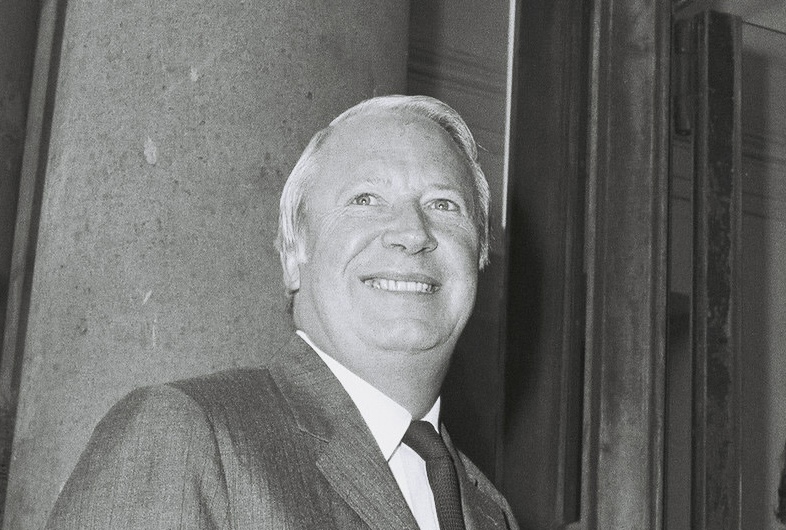
On 18 June 1970, the Conservative Party led by Edward Heath won a surprise general election victory, confounding Labour’s opinion poll leads and unseating Harold Wilson’s government.
The result, which gave the Conservatives a majority of 30, was one of the biggest electoral shocks of the post-war era.
***
Harold Wilson called the election several months earlier than required, seemingly confident of securing a third term. Throughout the campaign, polls consistently showed Labour with a comfortable, and at times commanding, lead.
However, in the final phase of the campaign, the national mood appeared to turn following the publication of poor trade figures showing a £31 million trade deficit for May. New unemployment statistics, meanwhile, showed joblessness had reached its highest level since 1940.
The revelations resonated with the focus of the Conservative campaign. (England’s quarter-final defeat by West Germany in the World Cup on 14 June has also been linked, somewhat tenuously, to the reversal of Wilson’s political fortunes).
Public dissatisfaction with the incumbent government also reflected on the devaluation crisis of 1967 and Britain’s (second) failed application to join the ‘commons market’. Labour lost a record 16 by-elections in the 1966-1970 parliament.
Midway through the campaign, the Society of Graphical and Allied Trades demanded an interim wage increase of 25% for its London-based workers. The move literally stopped the presses and transferred Wilson from the campaign frontline, to the negotiating table.
Heath was elected leader of the Conservative Party in July 1965, becoming the first leader chosen through a formal ballot of Tory MPs. Heath’s election, at the age of 49, marked a significant shift for the party. The new leader was a state grammar school educated politician from a modest upbringing – a marked difference from the aristocratic background of his predecessor, Alec Douglas-Home, who had lost the 1964 general election.
Heath, the youngest Conservative leader for over a century, took personal control of his party’s policy review. His campaign in 1970 centred on a message of economic competence and a promise to curb the power of the trade unions. The Conservative leader referred to a “shopping basket election”, hoping to capitalise on concerns over the cost of living. Controversially, he warned that Labour’s re-election could result in sterling facing a second devaluation.
But Heath faced his own problems – not least of all in the form of Conservative MP Enoch Powell. The infamous anti-immigration politician had been sacked as shadow defence secretary after delivering his “Rivers of Blood” speech in April 1968. Despite not holding a frontbench post, Powell maintained a high profile throughout the campaign.
***
The final result saw the Conservatives win 330 seats (up 77) to Labour’s 288 (down 75). Several theories were advanced to explain the discrepancy between the polls and the outcome, including the suggestion that a significant number of working-class voters were swayed by Powell’s anti-immigration rhetoric.
The Liberal Party, led by Jeremy Thorpe, saw its number of MPs halved from 12 to six. The 1970 contest marked the last time before 2017 that no third party won over 10% of the vote.
The 1970 election also marked the first general election in which 18-year-olds were eligible to vote, following the passage of the Representation of the People Act 1969.
Turnout was 72.0% – down from 75.8% in 1966 and the lowest since the 1935 general election.
The election saw the defeat of prominent Labour figures such as the deputy leader George Brown and pioneering arts minister Jennie Lee.
The 1970 election was the last time in which the Ulster Unionist Party’s total contributed to the Conservative Party’s standing. In March 1972, the UUP resigned the Conservative whip at Westminster in protest against Heath’s decision to impose direct rule on Northern Ireland, effectively dismantling the region’s devolved parliament.
The UUP was also unseated in North Antrim by Ian Paisley, standing on a Protestant Unionist Party platform. Paisley’s victory signalled fractures in the previously hegemonic official unionist bloc, and precipitated the formation of the Democratic Unionist Party (DUP) in September 1971.
Meanwhile, Bernadette Devlin, the young civil rights activist, retained her Mid Ulster seat.
The Scottish National Party (SNP) won its first ever seat at a general election (Donald Stewart in the Western Isles). The party lost control of Hamilton, however, which Winnie Ewing had won in a famous 1967 by-election.
***
Heath’s time in office was thrown into turmoil by the miners’ strikes (1972), and his acceptance of their demands. In 1973, the Conservative prime minister achieved his long-held ambition of leading Britain into the European Common Market.
Heath went to the country in February 1974 seeking a fresh mandate to confront the latest national miners’ strike. The electorate’s inconclusive answer – a hung parliament – nevertheless led to Heath’s downfall and the formation of a minority Labour government under Wilson.
Labour won a slim majority in the October 1974 general election, precipitating Heath’s defenestration as leader of the Conservative Party. He was succeeded by Margaret Thatcher.

Politics.co.uk Newsletters
DAILY
Politics@Lunch
WEEKLY
Week in Review