Edward Heath elected Conservative leader in party’s first formal ballot
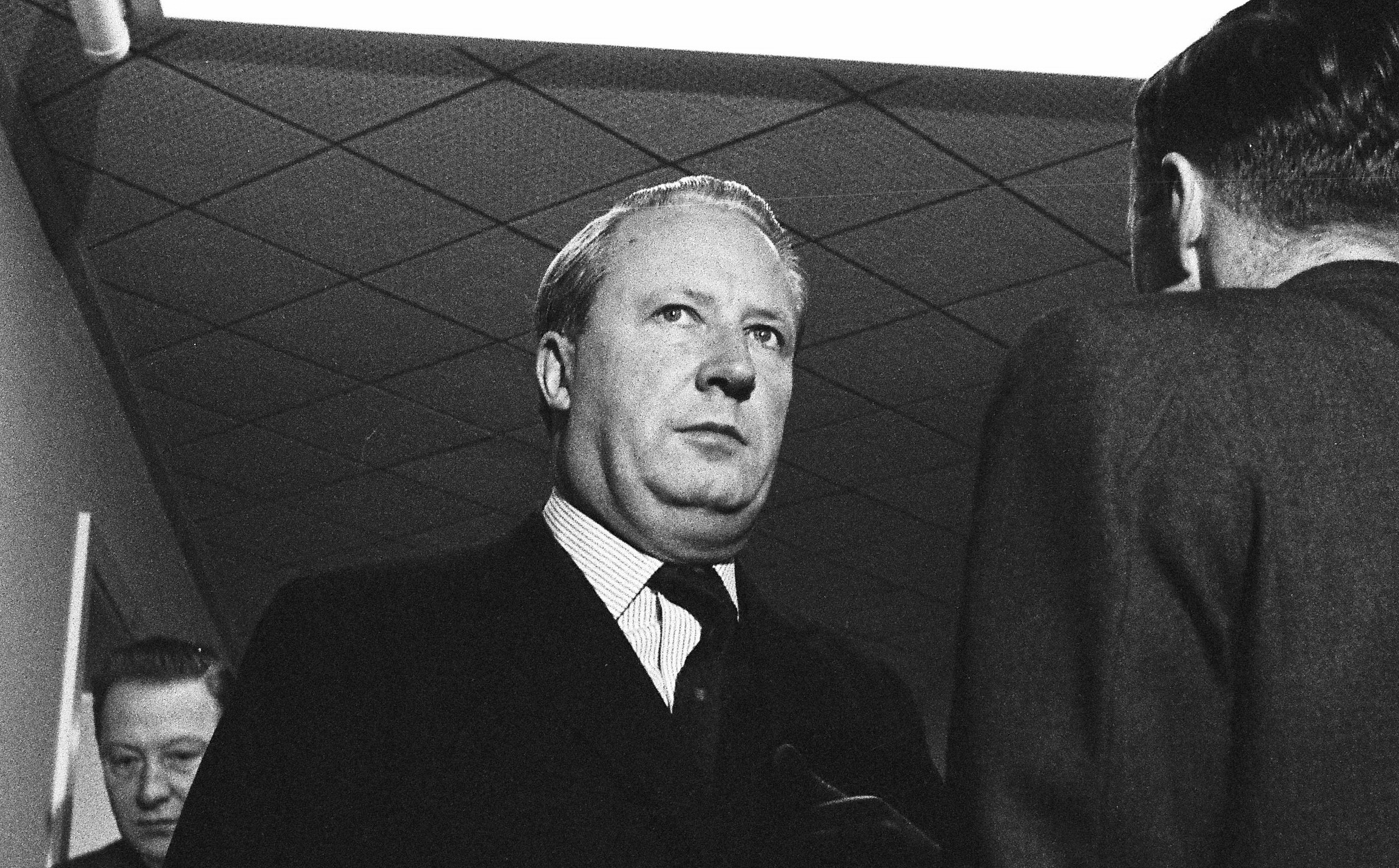
On 27 July 1965, Edward Heath was elected leader of the Conservative Party, becoming the first leader chosen through a formal ballot of Tory MPs.
The leadership contest was triggered by the resignation of Sir Alec Douglas-Home on 22 July. The ex-peer, who had ‘emerged’ as leader through the traditional, informal consultation process in 1963, led the party to a narrow defeat in the 1964 general election.
Douglas-Home’s acrimonious emergence as leader discredited the customary procedures in the eyes of many Conservatives. At the time, Iain Macleod, the former party chairman, penned a damaging article for Spectator in which he suggested the leadership race had been fixed by “the magic circle”. Macleod and Enoch Powell refused to serve in Douglas-Home’s government. His resignation thus paved the way for the party’s first-ever leadership election.
***
Three candidates contested the 1965 Conservative leadership election, namely Heath, the shadow chancellor, seen as representing a new generation; Reginald Maudling, the shadow foreign secretary, viewed as the more established figure; and Powell, the firebrand orator representing the party’s right wing.
In the ballot of Conservative MPs held on 27 July, Heath secured victory in the first round. He won 150 votes – compared to 133 for Maudling and 15 for Powell. The rules required a candidate to have a lead of 15% over their nearest rival to win outright on the first ballot; Heath narrowly missed this threshold. But Maudling conceded defeat.
The result was an upset.
A Daily Express poll suggested that the public preferred Maudling to Heath by 44% to 28%.
In a statement, the experienced former chancellor said: “I am very grateful to all the friends who have supported me but I have no doubt that it is in the interest of the party I should not continue to another ballot.
“I hope to have the opportunity of working under Mr Heath’s leadership to defeat the present government as soon as possible.”
At his first news conference as Conservative leader, Heath vowed to “fight hard in the commons and jolly hard in the country.”
Heath’s election, at the age of 49, marked a significant shift for the party. The new leader was a state grammar school educated politician from a modest upbringing – a marked difference from Douglas-Home’s aristocratic background.
Heath, the youngest Conservative leader for over a century, took personal control of his party’s policy review, focusing on economic modernisation and Britain’s relationship with Europe.
***
The 1966 general election came too early for Heath, who was characterised by Harold Wilson’s incumbent Labour government as inexperienced. But Heath defied expectations once more at the 1970 general election, winning a majority of 30 seats. His policy planning ensured he was well prepared for government.
As prime minister, Heath achieved his long-term aim of leading Britain into the European Economic Community (EEC).
However, 1970 was Heath’s only election victory. He contested four general elections (1966, 1970, February 1974, October 1974) during his tenure as Conservative leader.
In the 1975 Conservative leadership election, Heath was defeated in the first ballot by 130 votes to 119 by one Margaret Thatcher.
Heath resigned immediately, returning to the backbenches where he established himself as an outspoken opponent of Thatcherism.

Politics.co.uk Newsletters
DAILY
Politics@Lunch
WEEKLY
Week in Review