Education secretary Estelle Morris resigns over capability doubts
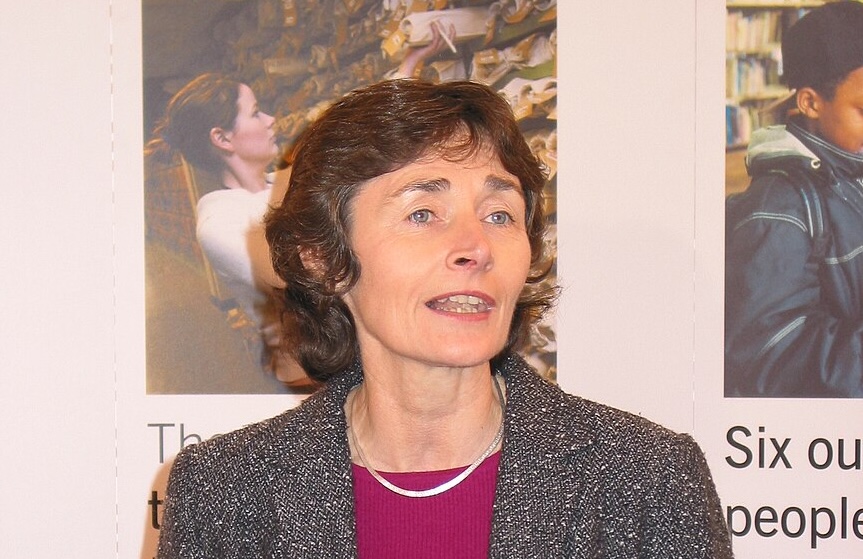
On 23 October 2002, Estelle Morris resigned as education and skills secretary. The resignation from Tony Blair’s cabinet was unusual, even extraordinary, for its candour.
***
Morris was elected the Labour MP for Birmingham Yardley in 1992. She served as minister of state for school standards from 1998 to 2001, when she was promoted to cabinet. She was the first former comprehensive school teacher to lead the Department for Education and Skills.
Her resignation came as pressure mounted over an A-level regrading controversy. Thousands of papers had to be re-marked after it emerged that some had been wrongly downgraded. The saga resulted in almost 2,000 students’ AS and A-levels being upgraded. There had also been calls for Morris to resign after she attempted to intervene when an appeals panel reinstated two boys expelled for threatening a teacher.
In March 1999, Morris committed that she would resign if the national literacy and numeracy targets were not achieved. In a commons debate, the then-Conservative shadow education secretary, David Willetts, asked Morris whether she would pledge to resign “if the government do not reach their literacy and numeracy targets by 2002”.
Morris responded: “Of course I will; I have already done so”.
In her resignation 2002 letter, Morris did not reference this commitment, instead admitting she felt she had “achieved more in the first job [minister of state] than I have in the second [secretary of state]”.
Ministers of the crown
She wrote: “I’ve learned what I’m good at and also what I’m less good at. I’m good at dealing with the issues and in communicating to the teaching profession.
“I am less good at strategic management of a huge department and I am not good at dealing with the modern media.
“All this has meant that with some of the recent situations I have been involved in, I have not felt I have been as effective as I should be, or as effective as you need me to be.”
Morris added: “I believe passionately in what this Labour government is trying to do and I will continue to support you in whatever way I can.”
In a response to Morris’ letter, Blair wrote: “Politics can be a difficult and lonely job, and the pressures can be intense. I’m sorry that things have not worked out for you as both of us hoped and wished when I appointed you.”
He added: “I have no doubt at all that you will come back into government. I want you to know that I continue to hold you in the highest regard. You have been a great asset.”
Charles Clarke was appointed as education secretary in the mini-reshuffle that followed.
Damian Green, shadow education secretary in October 2002, said Morris’ resignation showed “the failure of the government’s education policy”.
***
In an interview for the BBC, Morris admitted that the “intrusive modern media” had played a role in her resignation, citing it as one of reasons she no longer enjoyed her job.
Morris later returned to government in 2003 as minister for the arts. She stepped down from parliament at the 2005 general election, and was elevated to the House of Lords as Baroness Morris of Yardley shortly thereafter.
In an interview with the Times explaining her decision to stand down as an MP, Morris said she was disappointed that New Labour had failed to deliver “on the new style of politics”.
She commented: “If I have a regret it’s that our government… have failed to find a language that the public understand.
“The two major parties have coalesced around a series of statements that they think define themselves. And they don’t. There’s too much about soundbites and headlines.”

Politics.co.uk Newsletters
DAILY
Politics@Lunch
WEEKLY
Week in Review
