David Cameron warns corporate lobbying is ‘next big scandal’
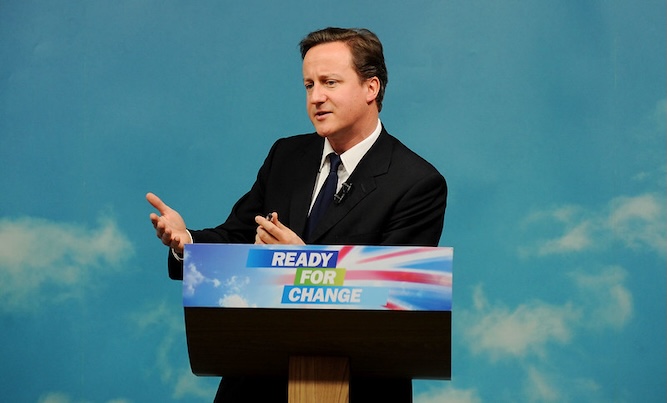
On 8 February 2010, Conservative Party leader David Cameron delivered a speech in which he identified lobbying as poised to become the next major public scandal.
***
Cameron was elected as leader of the Conservative Party in December 2005 on a platform of “modernisation”. Speaking in London mere weeks before the 2010 general election, Cameron sought to position the Conservative Party as a reforming force.
The address, entitled “Rebuilding trust in politics”, was also styled as a response to the 2009 expenses scandal. The shocking revelations as to the widespread misuse of parliamentary allowances by MPs had severely damaged the reputation of Westminster.
Cameron argued that the public was right to be cynical about the influence of money on policymaking during New Labour’s tenure in power, declaring: “We can’t go on like this.”
The Conservative leader added: “We’ve got to fix our broken politics and we’ve got to start fixing it now. The question is: who’s going to do it, and how are they going to do it?”
He argued that the “secretive, power-hoarding, controlling” character of Gordon Brown, the prime minister, had shaped the government’s character.
Turning to the issue of lobbying, Cameron described a shadowy system of “lunches, the hospitality, the quiet word in your ear” which allowed big business, represented “ex-ministers and ex-advisers for hire”, to secure access to government officials.
Cameron stated: “It is the next big scandal waiting to happen. It’s an issue that crosses party lines and has tainted our politics for too long, an issue that exposes the far-too-cosy relationship between politics, government, business and money.”
He added: “We believe in market economics, not crony capitalism. So we must be the party that sorts all this out.”
Cameron contended that politics should be the preserve of the “people, not big business or big unions”. He pledged that a future Conservative government would introduce a statutory register of lobbyists to force disclosure of who was lobbying whom.
The 2010 general election resulted in the country’s first hung parliament since February 1974, ending 13 years of Labour government. Cameron was appointed prime minister of a Conservative-Liberal Democrat coalition government.
The 2010 coalition agreement stated: “We will regulate lobbying through introducing a statutory register of lobbyists and ensuring greater transparency.”
***
Cameron’s moderniser moralising was widely recalled more than a decade later during the controversy surrounding his own lobbying activities for the finance firm Greensill Capital.
Having departed Downing Street, Cameron’s work for Greensill included messaging the then chancellor, Rishi Sunak, and other senior government figures. He was reported to have texted Sunak’s private phone asking him to give Greensill special access to hundreds of thousands of pounds of emergency Covid loans during the height of the coronavirus crisis.
As a result, Cameron found himself under investigation by the Registrar of Consultant Lobbyists, a body created under the Lobbying, Non-Party Campaigning and Trade Union Administration Act 2014. This landmark lobbying legislation was passed during Cameron’s tenure as prime minister.
The watchdog ultimately concluded that Cameron’s activities did “not fall within the criteria that require registration on the Register of Consultant Lobbyists”.
The House of Commons Treasury select committee concluded that while Cameron’s actions did not break the rules, they showed a “significant lack of judgement”.
The committee reported: “Mr Cameron’s use of less formal means to lobby government showed a significant lack of judgement, especially given that his ability to use an informal approach was aided by his previous position of prime minister…
“We accept that Mr Cameron did not break the rules governing lobbying by former ministers, but that reflects on the insufficient strength of the rules, and there is a strong case for strengthening them.”
Politics.co.uk Newsletters
DAILY
Politics@Lunch
WEEKLY
Week in Review