Blair scrapes home in tuition fees vote as Hutton inquiry looms
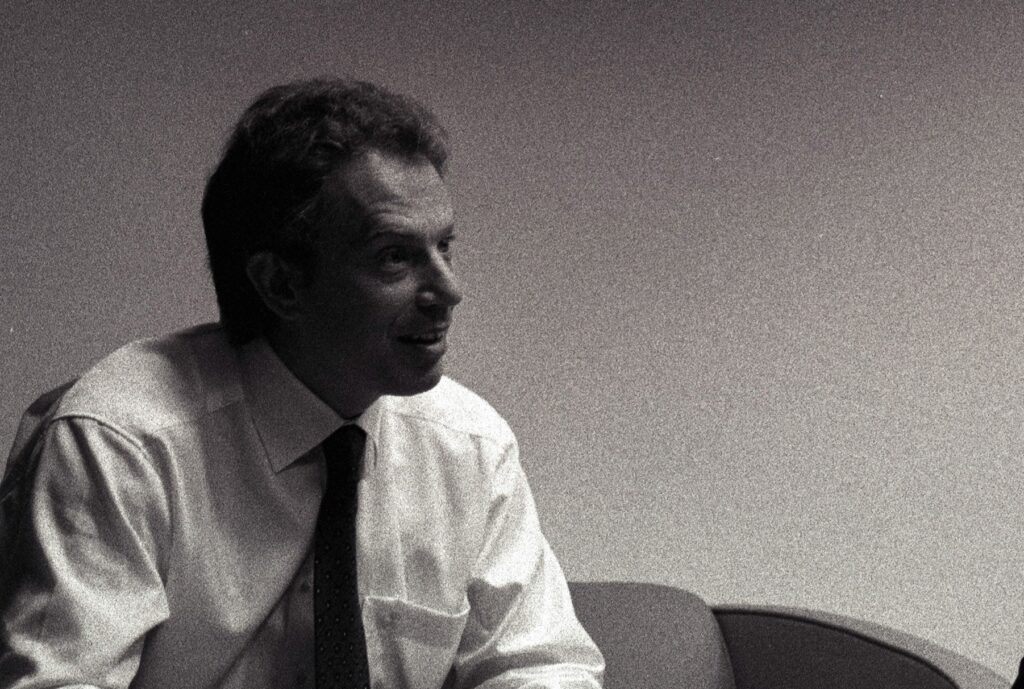
On 27 January 2004, Tony Blair’s government won a crucial vote on its university top-up fees policy by a majority of just five. The second reading of the Higher Education Bill, which paved the way for universities to charge tuition fees of up to £3,000 per year, passed by 316 votes to 311.
It marked the biggest revolt on a three-line whip in more than 50 years.
The Higher Education Bill proposed a shift in university funding by introducing variable tuition fees. It abolished the up-front fee fixed at just over £1,000 per year, introduced in 1998 under the Teaching and Higher Education Act 1998, and made provision for the deferred payment of student tuition fees. Under the proposals, universities would be allowed to “top up” the fees to a level that more accurately reflected the funding they needed.
Universities were allowed to increase tuition fees from the flat rate to a maximum of £3,000 per year. With universities able to charge different amounts, critics feared this would create a “two-tier system”, while saddling graduates with debt.
The Higher Education Bill therefore represented a breach of Labour’s 2001 general election manifesto, which stated: “We will not introduce ‘top-up’ fees and have legislated to prevent them.”
The second reading vote came during what was likely the most testing week of Blair’s premiership.
***
At the time of the top-up fees controversy, Blair also faced the imminent publication of the Hutton Inquiry report into the circumstances surrounding the death of the weapons expert Dr David Kelly. Kelly was found dead on 18 July 2003, shortly after he was named as the source for a BBC story that Blair’s office “sexed up” its dossier making the case for war against Iraq. The Hutton inquiry, tasked with investigating “the circumstances surrounding the death of Dr Kelly”, was due to report on 28 January 2004. Opinion polling found that if Hutton did blame Blair for Dr Kelly’s death, then a majority of the public would have wanted him to resign.
Blair’s position as prime minister would have been in grave danger had he lost the tuition fee vote on Tuesday and faced a damning appraisal in the Hutton report on Wednesday. The week was trailed as the “toughest since [Blair] was elected in 1997.”
On 19 January, Blair was subjected to a typically combative BBC Newsnight interview, courtesy of Jeremy Paxman. The prime minister was asked if he would win the Higher Education Bill vote on 27 January.
The prime minister responded: “I believe I will survive it, yes.”
Blair appeared to concede that trust in the government was “an issue” and acknowledged that coming days would be “difficult”.
Paxman posited that the next week would be “more or less make-or-break for your prime ministership”.
Blair replied: “It’s going to be difficult. I can’t remember the last week that was my most difficult week, and it was the week before last. But they come around pretty regularly, as you know, but that’s part of the job and you have to do what you think is right. I know a lot of people disagree with me over Iraq.
“But I believe it was the right thing to do and I know a lot of people disagree with me over this. I’m trying to do the right thing.”
He added: “I’m going to do my best, aren’t I? To win the vote, and I can’t tell you what the Hutton report is going to say. There’s no point in speculating about it.
Blair was challenged over the apparent manifesto breach not to introduce top-up fees. He replied that universities needed extra funding. “It either comes exclusively from the taxpayer, from families, or by graduates repaying something after they graduate”, he said.
“I’m not embarrassed by that because… times change.”
***
The cabinet, with Gordon Brown as chancellor, was engaged in a concerted effort to persuade Labour MPs to support his plans for university top-up fees. Publicly, Brown called on MPs to “wholeheartedly support the government proposals, which both promote fairness and give the universities the resources they need.”
The top-up fees vote was reported to be on a knife edge.
In a bid to head off the rebellion, the government announced a series of concessions, including a full-scale independent review of the top-up fees system after three years, and a guarantee the upper threshold for fees would not rise above £3,000 for two general elections.
On 27 January, education secretary Charles Clarke, opening the Higher Education Bill second reading debate, declared that the vote would “determine the future ability of this country to prosper in the increasingly competitive global economy.”
Clarke argued that Britain could no longer rely on the “taxpayer alone” to fund the higher education system. It was fair, he maintained, to “ask students, when they have graduated, to make a contribution to the cost of the university education from which they benefit.”
Tim Yeo, the shadow education secretary, accused the government of a “shameless and ruthless breach” of its 2001 election manifesto.
During the debate, Nick Brown, the former chief whip and Gordon Brown ally, confirmed he would vote for the government.
Brown, seen as the leading rebel organiser, began by stating his objections to the proposed legislation, namely “the increase in the level of debt for graduates; the difficulties with regard to the current proposals for meeting the universities’ funding gap, as it is said to be; and the two issues of principle – the manifesto pledge and, most significant for me, the potential introduction of a marketplace in higher education.”
He welcomed the government’s concessions, however, including the commitment that “in the spending review moneys will be set aside for the purpose of whatever recommendations are produced by the interim commission.”
The former cabinet minister told MPs: “The heart of my objection to the original proposals, which have now been circumscribed, is the remorseless march towards the market. I passionately believe that the ‘marketisation’ of higher education is wrong – for me it is a matter of not only economics and funding but social justice and social cohesion.”
He concluded that the government’s concessions served to “box in the cap and the move towards the market.”
Liberal Democrat education spokesperson Phil Willis decried a “sordid trade-off”, with Clarke “acting more like Del Boy in Only Fools and Horses as he tries to sell dodgy goods to his own backbenchers.”
He added: “The grand old Duke of York, [Nick Brown] led his troops to the hill, and we have seen him lead them back down again – what a shabby performance!”
The Lib Dems were opposed to the bill.
Among those putative rebels to indicate they would now vote with the government were Barbara Roche, Ann Campbell, Bob Blizzard, Angela Eagle and Clive Betts. Gordon Brown was reported to have played a prominent role in persuading rebels, including Kevan Jones, Helen Jones and Bob Blizzard, to back the government.
Several Labour MPs remained steadfastly opposed to the bill, however.
Ian Gibson, another leading rebel, appealed to his colleagues to prevent the “extension of the financial market in higher education”. Despite the concessions, he argued that the bill remained a direct contradiction of “traditional Labour values and principles.”
One Conservative MP, Robert Jackson, voted with the government and against his party’s whip, having denounced the Tory frontbench’s “opportunism”.
Jackson told the commons: “The time will soon come when the electorate will ask whether the Conservative party is once again a serious party of government… I believe that the way they have chosen to handle this issue will be remembered and will be held against [the opposition frontbench].”
After a six-hour debate, on the eve of the publication of the Hutton inquiry report, the Higher Education Bill was backed by 316 votes to 311 – a major reduction in the government’s majority of 161 and the tightest victory of Blair’s premiership.
At the time, the government’s majority was believed to be around 165.
In total, 72 Labour MPs rebelled.
Emerging from the vote, Helen Jones told reporters: “I voted for the government holding my nose. I think there has been concessions made today and Gordon made the point about not defeating the Labour government.”
Clarke subsequently told BBC News: “Had we lost [the vote], it would have been a blow to our authority, but as it is we have the ability to take the legislation forward.”
***
The Hutton inquiry report, published 28 January, ran to 750 pages in 13 chapters and 18 appendices.
It exonerated the government much more completely than had been expected.
The report concluded Blair’s government did not act in a “dishonourable, underhand or duplicitous” way in its handling of the events surrounding the death of Dr Kelly. Lord Hutton also described Gilligan’s report that the September dossier was sexed up as “unfounded”.
The relatively wholesale exoneration of the government was met with some scepticism in the media. Alastair Campbell, the former Downing Street director of communications, argued that the report meant a “stain on the integrity of the prime minister and the government has been removed.”

Politics.co.uk Newsletters
DAILY
Politics@Lunch
WEEKLY
Week in Review
