Blair apologises for Britain’s role in Irish Famine
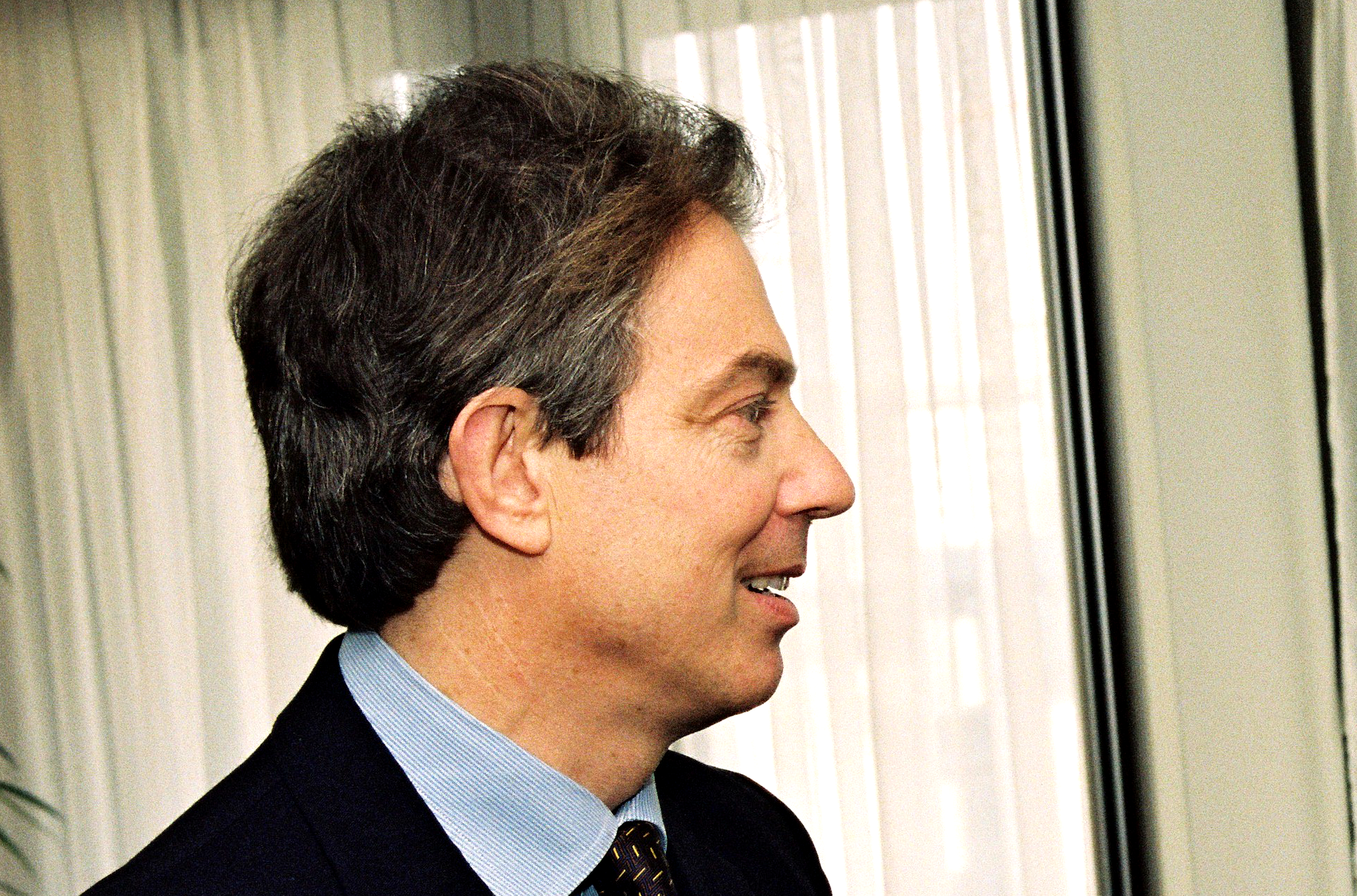
On 1 June 1997, the prime minister, Tony Blair, issued a statement appearing to apologise for the British government’s failure during the Irish potato famine of the 1840s. The message was the first of its kind from a British leader and was heralded as a landmark moment in Anglo-Irish relations.
The statement was delivered mere weeks after Blair assumed the office of prime minister following Labour’s landslide victory at the 1997 general election. It was intended as an early gesture of goodwill from the new government as it looked to continue the peace process in Northern Ireland.
***
Blair’s statement was read out by the actor Gabriel Byrne at a commemoration ceremony in Millstreet, County Cork, which marked the 150th anniversary of ‘Black ’47’, the deadliest year of the famine. The event was attended by 15,000 people, including the Irish Taoiseach, John Bruton.
The Great Hunger or Gorta Mór (1845-1852) resulted in the deaths of over a million people and the emigration of over two million. As a result, the population of Ireland dropped by 20–25% between 1841 and 1871.
In his message, Blair acknowledged that the famine had been exacerbated by inaction by the UK government.
The statement read: “The famine was a defining event in the history of Ireland and of Britain. It has left deep scars. That one million people should have died in what was then part of the richest and most powerful nation in the world is something that still causes pain as we reflect on it today.
“Those who governed in London at the time failed their people through standing by while a crop failure turned into a massive human tragedy. We must not forget such a dreadful event.”
Blair said that Britain had “benefited immeasurably from the skills and talents of Irish people”.
He added: “It is right that we should pay tribute to the ways in which the Irish people have triumphed in the face of this catastrophe.”
Bruton, the Irish Taoiseach, responded: “The prime minister is to be complimented for the thought and care shown in this statement.”
The statement was welcomed by Irish nationalists and politicians in the Republic, but treated with scepticism by unionists.
John Taylor, leader of the Ulster Unionist Party (UUP), commented: “I don’t think anyone should apologise for matters which did not happen in their lifetime and for which they were not responsible.
“I suppose it is a nice gesture by the prime minister, but he will find it will not satisfy, and there will be yet more demands. The Irish mentality is one of victimhood – and to ask for one apology one week and another on a different subject the next.”
***
Blair’s statement, it was later revealed, was drafted by aides in Downing Street and did not secure approval from the prime minister.
A note to Blair from his principal private secretary John Holmes, released in July 2021 by the National Archives, revealed the prime minister was not contactable ahead of the statement’s submission.
Holmes wrote at the time: “I tried to clear the principle of this with you [Blair] this afternoon by telephone, but you were not around at the time. In order to meet the organisers’ deadline, therefore, and to avoid the impression of a snub, I approved the attached text off my own bat and gave it to our embassy in Dublin.”
It is noteworthy that while the statement attributed to Blair was widely interpreted as an apology, Holmes considered that the remarks actually “fell well short of an apology” and was “no more than a statement of fact”.
In November 2006, Blair expressed “sorrow” for Britain’s role in the slave trade.
In an article for the New Nation newspaper, Blair said: “It is hard to believe what would now be a crime against humanity was legal at the time.
“I believe the bicentenary offers us a chance not just to say how profoundly shameful the slave trade was – how we condemn its existence utterly and praise those who fought for its abolition – but also to express our deep sorrow that it could ever have happened and rejoice at the better times we live in today.”
Politics.co.uk Newsletters
DAILY
Politics@Lunch
WEEKLY
Week in Review