Bernadette Devlin, 21, wins Mid Ulster by-election
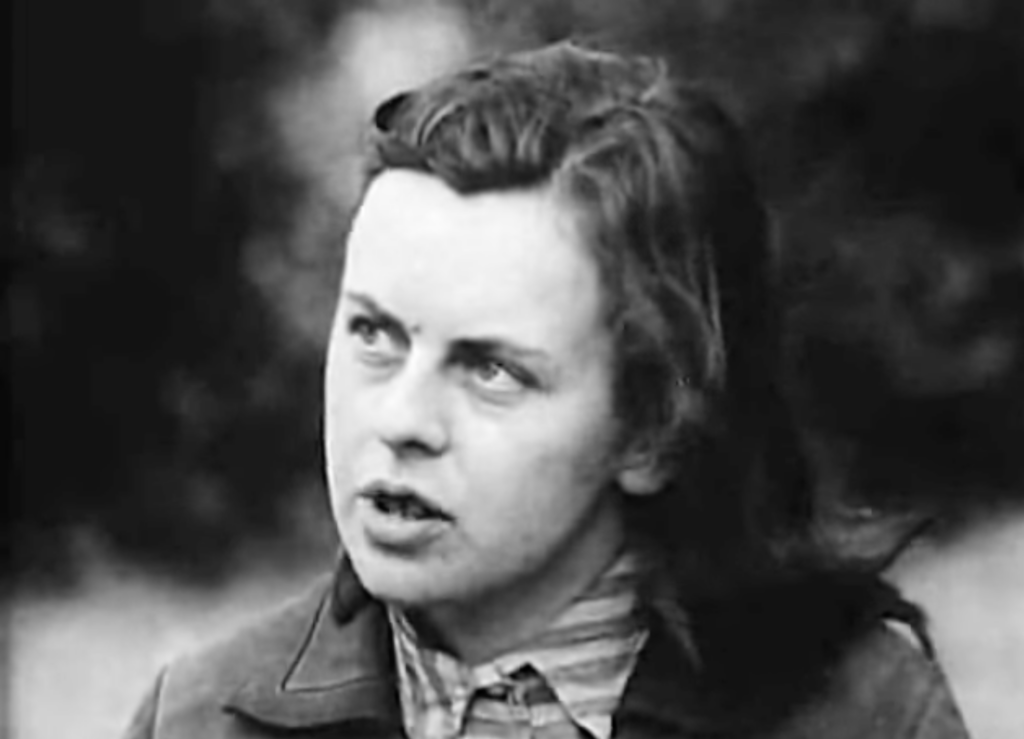
On 17 April 1969, Bernadette Devlin, a 21-year-old student and civil rights activist, was elected as the member of parliament for Mid Ulster, becoming the youngest woman ever to enter the House of Commons.
Standing on a ‘Unity’ platform, she defeated Ulster Unionist Party (UUP) candidate Anna Forrest, the widow of the previous MP, George, by 4,211 votes on a turnout of 91.5% – the highest in a Westminster by-election since the introduction of universal suffrage.
At the 1966 general election, George Forrest had previously prevailed with a 2,560-vote majority
***
Devlin was a prominent figure in the student-led People’s Democracy group, which grew out of Queen’s University Belfast. The group was founded on 9 October 1968, shortly after the Royal Ulster Constabulary (RUC) attacked a Derry civil rights march. Devlin’s candidacy for the Mid Ulster by-election was sanctioned and endorsed by the new Northern Ireland Civil Rights Association (NICRA), which had helped organise that march.
Devlin campaigned on a platform of civil rights and social justice, rejecting the traditional abstentionist stance of the Nationalist party. She stood on the slogan: “I will take my seat and fight for your rights”.
Eamonn McCann, a civil rights organiser and member of the Derry Housing Action Committee (DHAC), served as Devlin’s press agent.
Upon her victory, Devlin declared: “People of mid Ulster, we have finally started to overcome”.
Speaking to the media, she condemned the UUP – the dominant party in Northern Ireland – for having “divided, misled and betrayed the people for far too long.”
She added: “Ultimately, I want to see created in this country a society which can guarantee civil and religious liberty, equal rights and equal opportunities to all its citizens…
“I personally feel that in this society this [a united Ireland] is the ultimate end, and there would be no fear for Catholic or Protestant, rich or poor in such a society, because this is true unity.”
Forrest did not conduct much of a campaign.
In a rare intervention, she vowed, “with God’s help, to strive for a more peaceful and prosperous society where all people can live in harmony and work together for the common good of all.”
***
Devlin delivered her House of Commons maiden speech on 22 April 1969. The address coincided with her 22nd birthday.
The Mid Ulster MP acknowledged that in addressing the House on the day of her arrival and by addressing controversial subjects, she was flaunting “the unwritten traditions of the House.”
But Devlin added: “I think that the situation of my people merits the flaunting of such traditions.”
She argued that the UUP MP Robin Chichester-Clark, who was in the chamber, had “no understanding of my people, because Catholics and Protestants are the ordinary people, the oppressed people from whom I come and whom I represent.”
Devlin recognised her status “as the youngest woman in parliament”, appealing to a tradition encompassing former Sinn Féin MP – the first woman elected to the House of Commons – Constance Markievicz.
She referred to the “unashamed and deliberate policy of the Unionist government to try to force an image on the civil rights movement that it was nothing more than a Catholic uprising.”
The newly elected MP argued that the events since October 1968 had demonstrated the incompatibility between “the ideal of social justice and the ideal and existence of the Unionist Party.”
She added: “Both cannot exist in the same society. This has been proved time and again throughout Northern Ireland by the actions of the Unionist Party.”
Devlin dedicated a large portion of her maiden speech to addressing discrimination and civil rights violations in Northern Ireland. She rubbished the reform programme of Northern Ireland prime minister Terrence O’Neill as unsatisfactory and incomplete.
She stated: “The people of Northern Ireland want votes not for the sake of voting but for the sake of being able to exercise democratic rights over the controlling powers of their own areas.”
Liberal MP Jeremy Thorpe said Devlin had shown courage “during her by-election campaign and in the course of her speech… a quality which we in this House, wherever we may sit, respect.”
Conservative MP Sir Norman St John Stevas described Devlin’s inaugural contribution as “electrifying”.
***
On 23 April, the proposal to introduce universal adult suffrage in local government elections in Northern Ireland – or “one man one vote” – was passed by 28 votes to 22. James Chichester-Clark, the minister of agriculture and Robin’s brother, resigned in protest.
O’Neill resigned as prime minister some days later on 28 April after a series of bomb explosions carried out by the Ulster Volunteer Force (UVF). He was succeeded by Chichester-Clark, who defeated Brian Faulkner in the 1969 UUP leadership election.
Devlin held the seat at the 1970 general election. The contest also saw the election of a second Unity MP in Frank McManus.
Devlin’s most famous contribution to parliamentary proceedings came in the wake of the Bloody Sunday massacre on 30 January 1972. The Mid Ulster MP, who witnessed the infamous events, was repeatedly denied an opportunity to address the commons by the speaker, Selwyn Lloyd.
Devlin subsequently launched at the home secretary, Reginald Maudling, slapping him across the face.
Conservative MP John Biggs-Davison rose on a point of order to condemn Devlin’s “violent attack”.
Devlin responded: “I did not shoot him in the back, which is what they did to our people.”
When later asked if she intended to apologise, she replied: “I’m just sorry I didn’t get him by the throat.”
Edward Heath, the then prime minister, later reflected on the incident.
He told the commons in November 1985: “I remember very well when an honourable lady [Devlin] rushed from the opposition benches and hit Mr Maudling. I remember that vividly because I thought that she was going to hit me. She could not stretch as far as that, so she had to make do with him.”
Devlin lost her seat in the February 1974 general election. The nationalist vote was badly split in Mid Ulster between Devlin and a candidate standing for the Social Democratic and Labour party (SDLP).
Devlin placed third with 16,672 votes (25.0). The SDLP’s Ivan Cooper, who led the civil rights march on 30 January 1972 that developed into the Bloody Sunday massacre, won 19,372 votes (29.1%).
John Dunlop, the candidate for the Vanguard Unionist Progressive Party (VUPP), won 26,044 votes (39.0%).
Devlin remained the youngest woman ever elected to Westminster until the 2015 general election. This mantle was adopted by Mhairi Black, the 20-year-old Scottish National Party (SNP) MP.

Politics.co.uk Newsletters
DAILY
Politics@Lunch
WEEKLY
Week in Review
