Angela Rayner resigns as deputy prime minister over tax row
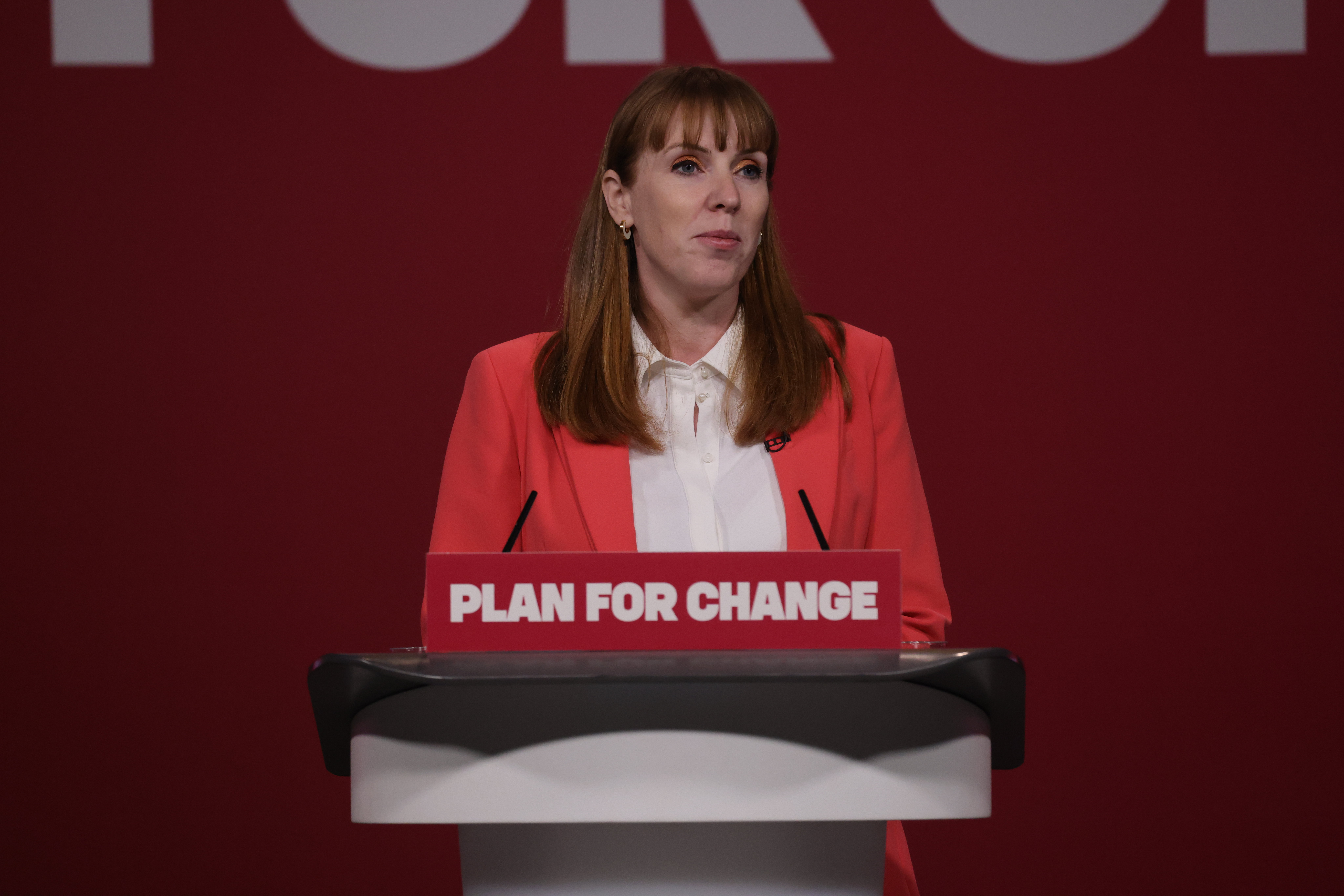
On 5 September 2025, Angela Rayner resigned as deputy prime minister and secretary of state for housing, communities and local government, following an inquiry into her tax affairs related to the purchase of a flat in Hove.
The resignation came after the prime minister’s independent adviser on ministerial interests, Sir Laurie Magnus, concluded that she had failed to meet the “highest possible standards of proper conduct”.
The controversy, which emerged in late August 2025, centred on Rayner’s underpayment of stamp duty by £40,000 on an £800,000 flat in Hove purchased in May 2025. The purchase involved complex trust arrangements linked to her disabled son. After the allegations surfaced, Rayner admitted an error had been made.
***
On 3 September, the deputy prime minister referred herself to the independent adviser to investigate.
Reporting to the prime minister two days later, Sir Laurie said that Rayner “acted with integrity”, but ultimately concluded that a minister, particularly one with oversight of housing policy, should have sought additional specialist tax advice.
His letter, addressed to the prime minister, found that:
a) Ms Rayner was open about the existence of the Trust and considered that, between them, the firms advising her had appropriate knowledge and awareness of the details and circumstances of the Trust;
b) on the basis of the advice she received, Ms Rayner believed that the lower rate of SDLT would be applicable; indeed she was twice informed in writing that this was the case; but
c) in those two instances, that advice was qualified by the acknowledgement that it did not constitute expert tax advice and was accompanied by a suggestion, or in one case a recommendation, that specific tax advice be obtained; and
d) if such expert tax advice had been received, as it later was, it would likely have advised her that a higher rate of SDLT was payable.
Sir Laurie concluded that Rayner’s “unfortunate failure to settle her SDLT liability at the correct level, coupled with the fact that this was established only following intensive public scrutiny, leads me to advise you that, in relation to this matter, she cannot be considered to have met the ‘highest possible standards of proper conduct’ as envisaged by the [ministerial] code.”
In her resignation letter to the prime minister, Rayner accepted she “did not meet the highest standards” when purchasing her property.
She wrote: “I deeply regret my decision to not seek additional specialist tax advice given both my position as housing secretary and my complex family arrangements.”
Rayner said she took “full responsibility for this error”, adding: “It was never my intention to do anything other than pay the right amount.”
Rayner also resigned as deputy leader of the Labour Party.
In a handwritten reply to Rayner, the prime minister, Keir Starmer described her decision as “very painful” but “right”.
He wrote: “Although I believe you have reached the right decision, it is a decision which I know is very painful for you.
“You have given your all to making the Labour government a success and you have been a central part of our plan to make Britain fairer for working families.
“On a personal note, I am very sad to be losing you from the government. You have been a trusted colleague and a true friend for many years. I have nothing but admiration for you and huge respect for your achievement in politics.”
Conservative leader Kemi Badenoch responded: “Angela Rayner is finally gone. But it’s only because of Keir Starmer’s weakness that she wasn’t sacked three days ago.”
***
The resignation was a significant blow to Starmer. It removed one of Labour’s most high-profile figures from the political frontline, triggering both a cabinet reshuffle and an internal election to fill the vacant deputy leadership post.
David Lammy was appointed deputy prime minister in Rayner’s wake. Upon his appointment, Lammy said it was the “honour of my life” to be appointed as deputy prime minister and justice secretary. As part of a wider reshuffle, Lammy also replaced Shabana Mahmood as secretary of state for justice and lord chancellor.
Steve Reed, meanwhile, was promoted to housing secretary.
On 25 October, former leader of the House of Commons Lucy Powell was elected as Rayner’s replacement as Labour deputy leader.
Powell had been sacked from her cabinet-attending commons leader post in the reshuffle that followed Rayner’s resignation. She was seen as a candidate representing the party’s “soft left”, and was supported by leading soft left figures including Ed Miliband and Andy Burnham. She secured 117 nominations from the parliamentary Labour Party (PLP), above the 80 required, and went on to win the election – defeating Bridget Phillipson with 54.3% of the vote.
Phillipson was cast as the No 10 or government candidate – a framing she failed to invalidate as the campaign progressed.
During the campaign, Phillipson urged members to support her candidacy to ensure party “unity”. The education secretary said she would be a voice “at the heart of government”.
Addressing activists at her leadership campaign launch, Phillipson told supporters to back her to bring the party together, secure a second term and “deliver the change we want to see and beat Reform”.
She stated: “How did we win last [time]? We came together to show the country a different vision for the future. I won’t pretend this government hasn’t made mistakes – I’ve been first to admit it.
“But we can’t afford to look inwards – to go back to the bad old days of divided Labour Party and open old wounds. If we turn against each other only one person will win – Nigel Farage – but millions more will lose.”
Powell, meanwhile, said she would be a voice for “progressive change and hope that Labour has always delivered when we’re at our best.”
She added: “I want this government to succeed, and sometimes that means speaking the truth – not sniping from the sidelines but ensuring we listen, and act on what we hear. When we don’t we make mistakes that overshadow our achievements.”
Powell dismissed suggestions that she would encourage “division and disunity”, describing the accusation (actively encouraged by the Phillipson camp) as “ridiculous”.
On 5 October 2025, Powell told BBC One’s Sunday with Laura Kuenssberg programme that Labour needed to be a “better version of ourselves” and draw in “all the voices from our broad movement that are connected to our communities.”
Powell called for a “course correction”.
Upon her election as deputy leader, Powell emphasised the need for Labour to give a “stronger sense of purpose” to voters.
She stated: “We must give a strong sense of our purpose, whose side we are on, and of our Labour values and beliefs. People feel that this government is not being bold enough in delivering the kind of change we promised.”
***
In a personal statement to the House of Commons on 22 October, Rayner expressed contrition while consciously seeking to shape her legacy.
She said that recent weeks had been “incredibly tough on my family”, acknowledging the toll the “the intense scrutiny we face takes on our loved ones”.
She added: “I have always believed in the highest standards of transparency and accountability… That is why I referred myself to the independent adviser and gave him access to all the information he needed.
“As I set out then, parents of a disabled child with a trust who divorce and seek different properties face a complex tax position. If there is one good thing that can come out of this, I hope that other families in that situation may now be aware of that and avoid getting into the position I am now in…
“This was an honestly made mistake, but when you make a mistake, you take responsibility.”
Rayner described serving at the highest level of government as a “privilege – not for the title or the office, but for the chance to change the lives of the people I grew up with and live alongside.”
She recognised “the power of politics to change lives”, reflecting on her own upbringing.
Rayner told MPs: “The last Labour government gave me the foundation to build a better life for me and my young son: a council house to support me, Sure Start to help me raise my kids, and the security of a minimum wage.”
Finally, she maintained that her personal setback was insignificant compared to the struggles of ordinary people.
Rayner concluded: “As tough as politics can be, it is nothing – nothing – compared to what thousands of my constituents and many more across this country face every single day.
“Whether we sit on the backbenches or on the frontbench, elected office is not about us. It is about our chance to change the lives of others. From wherever I sit on these benches, I will fight with everything I have to do exactly that.”

Politics.co.uk Newsletters
DAILY
Politics@Lunch
WEEKLY
Week in Review