Greater London has a unique two-tier system of government. Most local services are delivered by 32 London borough councils and the historic City of London Corporation.
Strategic, city-wide functions are the responsibility of the Greater London Authority (GLA), which is headed by the mayor of London and scrutinised by the London Assembly.
The 32 boroughs are divided into 12 inner London boroughs (Camden, Greenwich, Hackney, Hammersmith and Fulham, Islington, Kensington and Chelsea, Lambeth, Lewisham, Southwark, Tower Hamlets, Wandsworth and the City of Westminster) and 20 outer London boroughs (Barking and Dagenham, Barnet, Bexley, Brent, Bromley, Croydon, Ealing, Enfield, Haringey, Harrow, Havering, Hillingdon, Hounslow, Kingston-upon-Thames, Merton, Newham, Redbridge, Richmond upon Thames, Sutton and Waltham Forest).
The components of London government
The London boroughs
The 32 London borough councils are the principal local authorities in the capital. They are responsible for delivering the majority of local public services in their area.
Their functions include education, social services, housing, libraries, leisure and recreation, waste collection and disposal, environmental health, and most planning applications. The boroughs are also responsible for the billing and collection of council tax from residents.
The City of London corporation
The City of London corporation is the governing body for the historic square mile of the capital. It performs many of the same functions as the 32 London boroughs, but its constitution rests on ancient rights and charters, some predating the Norman Conquest. It is unique among UK councils in giving votes to businesses as well as residents, having its own police force and an elected lord mayor.
The Greater London Authority (GLA)
The GLA is the strategic authority for the whole of London, created in 2000 following a 1998 referendum. It is a precepting authority, meaning it raises funds for its services via a “precept” added to the council tax bills issued by the boroughs.
The GLA consists of two branches: an executive mayor and the 25-member London Assembly.
The mayor of London
The mayor is the executive head of the GLA, with powers and responsibilities covering transport, strategic planning, economic development, housing and the environment. The London mayor has the largest personal mandate of any UK politician, with a constituency of around 6 million voters. The current mayor of London is Labour’s Sadiq Khan, who is serving his third term.
The mayor sets the budget for the GLA and its functional bodies, including Transport for London (TfL). The mayor also holds the power of police and crime commissioner for London through the Mayor’s Office for Policing and Crime (MOPAC), giving them oversight of the Metropolitan Police Service.
The London assembly
The London Assembly is a 25-member body that holds the mayor to account. It does not have legislative power but conducts scrutiny through investigations, questioning the mayor and public consultations.
The assembly has the power to alter the mayor’s annual budget if a two-thirds majority agrees. It can also reject the mayor’s statutory strategies.
The 25 London assembly members are elected using the additional member system (AMS). Fourteen are elected from constituencies on a first past the post (FPTP) basis, and eleven are London-wide members elected via a proportional party list system. Voters use two ballot papers, putting an X next to a constituency candidate, and an X for their party of choice for the London-wide list.
History of London government
The City of London’s distinct status dates back to the time of Alfred the Great.
Today’s London boroughs, however, date back only to 1965. The London Government Act 1963 provided for the abolition of the former counties of Middlesex and London, the absorption of parts of Kent, Essex and Surrey, and their replacement with the county of Greater London.
This was to be administered by a “two-tier” local government system, comprising the Greater London Council (GLC), and the 32 borough councils and the City, which had previously remained separate. The new boroughs were formed out of a mixture of inner London metropolitan boroughs, municipal boroughs and urban districts in outer London, and three county boroughs, Croydon, West Ham and East Ham. Elections to the “shadow” boroughs and GLC were held in 1964, and the new organisations began work in 1965.
This system survived the local government upheavals of 1974, which aimed to install a uniformly two-tier model across the rest of the country, only to be replaced in 1986.
The old London county council had been dominated by Labour, based as it was on the more left-leaning inner London area. The new GLC had a more balanced political profile, in part due to the addition of many wealthy suburban areas. Control passed from Labour to the Conservatives and back again throughout the 1960s and 1970s.
In the 1970s, a left-wing faction began to coalesce within the London Labour party, which denounced the party’s 1979 election manifesto. Labour lost the election, and power passed to the strongly Thatcherite administration led by Sir Horace Cutler who in turn moved to cut public spending and encourage those living in council houses to buy their own homes.
Labour was re-elected in 1981 with a small majority. A day after the election, the left succeeded in ousting the moderate Labour leader Andrew McIntosh, replacing him with Ken Livingstone. Under Livingstone, the GLC embarked upon a strongly left-wing programme, earning its leader the nickname “Red Ken”.
In 1983, the Conservative government proposed abolishing the GLC in the white paper Streamlining the Cities. The government was under pressure from Outer London Conservatives to free them from the “tax high, spend high” council, and was keen to be rid of the GLC for ideological reasons. The GLC – along with the metropolitan counties – was abolished under the Local Government Act 1985, formally on the grounds of inefficiency, and ceased to operate on March 31st 1986.
The act passed most of the powers of the GLC to the boroughs (and the remainder were taken back by the government), although the Inner London Education Authority survived as an independent body until 1988 (the Outer London Boroughs became the Local Education Authorities for their areas). The GLC’s assets were disposed of by the London Residuary Body, which survived until 1996.
London was thus governed by a single tier of local government from 1986 until the establishment of the Greater London Authority in 2000.
Labour came to power in 1997 on a platform of devolving power to Scotland, Wales, Northern Ireland, the English regions and London. A referendum was held in 1998 on proposals for the establishment of a new strategic authority headed by a directly-elected Mayor – a concept Labour was at that time keen to promote across the country. The result was 1,230,715 in favour to 478,413 against (72% to 28%), and with this mandate, the government proceeded to pass the Greater London Authority Act 1999.
The limitations of the single-tier model for London government were said to be evident soon after the abolition of the GLC. The boroughs were thought to lack the strategic vision and mandate to co-ordinate their work on London-wide issues, such as transport, strategic planning and economic development, despite the efforts of bodies like the Association of London Government.
The early 1990s saw the government respond to this by the establishment of a transport minister for London, a cabinet sub-committee for London and in 1994, a regional Government Office for London, but it was widely argued that London had a need, and a right, to govern itself.
However, many supporters of London government regarded the new body created in 2000 as a let-down. It was considerably weaker than the GLC, despite having a number of powers (notably in relation to the Metropolitan Police) that its predecessor lacked. The mayor would not be able to vary tax, and there were wide areas in the act in which the mayor would be unable to act without the approval of the secretary of state.
In May 2000, Ken Livingstone was elected as the first mayor, in spite of Labour’s refusal to accept him as its candidate. He was re-elected in June 2004, having been re-admitted to Labour in the run-up to the election.
The Conservative, Boris Johnson, was elected mayor in the 2008 election and again for a second term in 2012 when he hosted the Olympics. In 2016, the Labour MP, Sadiq Khan was elected London mayor.
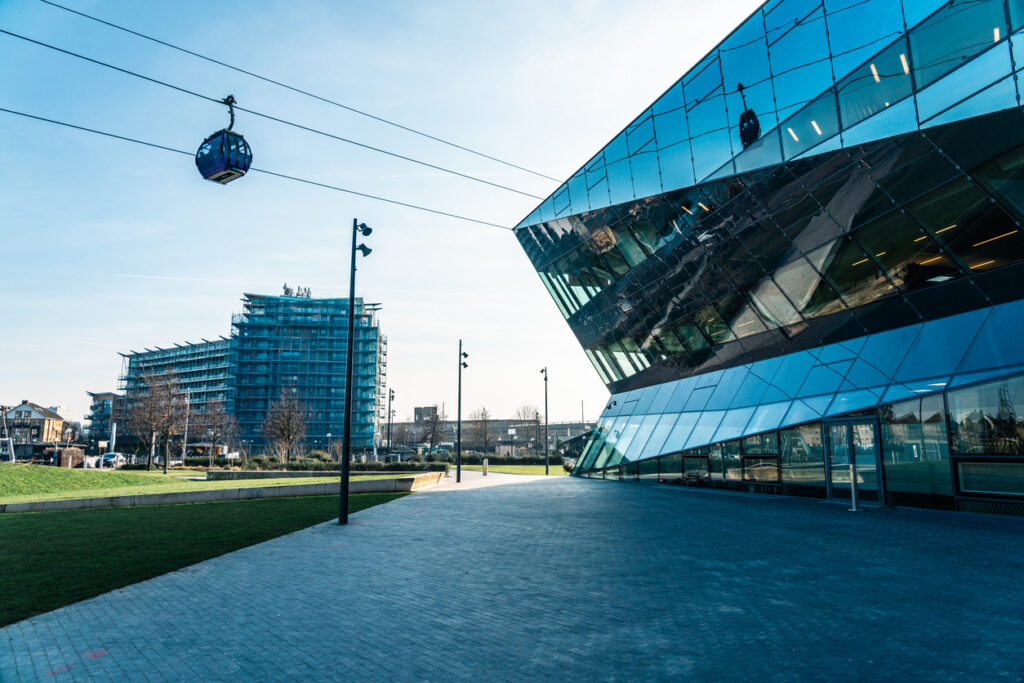
In 2022, the Greater London Authority relocated its headquarters. It moved from the distinctive City Hall building near Tower Bridge to a new home at The Crystal, a building in the Royal Docks in East London. The move was initiated as a cost-saving measure.
Khan was re-elected for a third term as mayor of London in the election held on 2 May 2024. The election was the first to use the first past the post voting system for the mayoralty, replacing the previous supplementary vote (SV) system.
Controversies and politics of the London mayoralty
Ken Livingstone’s controversies and clashes
Ken Livingstone’s successful bid for the London mayoralty was shaped largely by the controversy surrounding Labour’s internal selection process. Livingstone, a prominent figure on the party’s left and the former leader of the GLC, was a popular choice among party members but was distrusted by the New Labour leadership. Blair described Livingstone, a left-wing firebrand, as one of the Labour politicians who “almost knocked [the party] over the edge of the cliff into extinction” during the 1980s.
Blair said: “My problem with [Livingstone] is that while I was growing up in the Labour Party and he and Arthur Scargill and Tony Benn were in control of the Labour Party they almost knocked it over the edge of the cliff into extinction. It became unelectable.
“If that is the politics he still represents then… I am going to have to go out and fight for the Labour Party I believe in.”
Livingstone’s profile and political history conspicuously conflicted with Blair’s programme of ‘modernisation’. “Red Ken”, as he was known, was Old Labour to the core.
Livingstone was no stranger to taking on prime ministers. He infuriated Margaret Thatcher as leader of the GLC, eventually moving her to abolish the authority in 1986.
For the internal Labour contest, an electoral college was constructed – whereby a third of the votes would come from the rank-and-file members, a third from the trades unions, and a third from MPs and MEPs.
Livingstone, as predicted, won the vote among Labour members. But Dobson’s landslide victory among MPs and MEPs pushed his candidacy over the line. With the votes weighted by the electoral college, Dobson won by 51.53% to 48.47%. Livingstone referred to the result and Dobson as “tainted”.
On 6 March 2000, the maverick politician declared he would stand as an independent in the May contest. “I have been forced to choose between the party I love and upholding the democratic rights of Londoners”, he said.
Reacting to the election result, Blair said his view expressed in 1999 that Livingstone would be a “disaster” for London had not changed.
Livingstone was a prominent opponent of the Iraq War. In February 2003, he addressed what is believed to be the largest political demonstration in British history, when over one million people marched through central London to protest against the prospect of a war with Iraq
In January 2004, ahead of London’s second mayoral election, Livingstone was allowed back into the Labour Party. Blair admitted his prediction of a Livingstone-led “disaster” had been misjudged.
Livingstone’s invitation to the Muslim cleric Yusuf Al-Qaradwi to visit London was widely criticised. Al-Qaradwi was accused of being antisemitic, homophobic and of condoning suicide bombings.
Livingstone’s comments likening a journalist to a concentration camp guard earned him a four-week suspension from office. However, this was subsequently overturned.
Controversies during Boris Johnson’s tenure as London mayor
During his tenure as mayor of London, Boris Johnson attracted criticism over transparency and a series of perceived vanity projects. His Garden Bridge scheme was ultimately abandoned after £43 million of public funds had been spent.
Johnson’s purchase of second-hand water cannons – later prohibited from use by the home secretary – was also subjected to criticism. Johnson bought and refurbished three second-hand Ziegler Wasserwerfer 9000s from Germany for £322,000. They were sold for scrap in 2018 for just £11,025 – a loss of over £300,000.
In February 2016, Johnson, who was coming to the end of his second term as mayor of London, announced that he would campaign for Britain to leave the European Union (EU). The decision marked a severe blow to David Cameron, the prime minister, who was leading the effort to keep the UK in the EU.
Johnson soon assumed the position as de facto leader of the Leave campaign. Announcing his decision outside his home in London, Johnson said that “after a huge amount of heartache” he had concluded that the EU was “in danger of getting out of proper democratic control”.
He told reporters: “I will be advocating Vote Leave, or whatever the team is called – I understand there are many of them – I think that is basically, because I want a better deal for the people of this country, to save them money, and to take back control. That’s really I think what this is all about.”
Controversies and notable clashes under Sadiq Khan
On 21 June 2016, just two days before the Brexit referendum vote, Boris Johnson clashed with his successor as mayor of London, Sadiq Khan, in a television debate.
Khan accused Johnson of unleashing “project hate” and peddling falsehoods, particularly over the prospect of Turkey joining the EU – which the London mayor referred to as a “big fat lie”.
He said immigration brought “huge economic, cultural and social benefits to our country”. Johnson, meanwhile, called the EU a “job destroying engine”.
In March 2019, Khan was one of the speakers at a central London demonstration attended by an estimated one million people calling for a second Brexit referendum. Khan adopted a significantly more pro-Remain stance than Jeremy Corbyn’s Labour leadership.
The most notable policy controversy of Khan’s mayoralty has been the Ultra Low Emission Zone. The policy, designed to improve air quality, generated a notable political backlash, particularly in outer London. In May 2024, it was reported that more than 4,500 Ulez cameras had been vandalised as a form of protest since the expansion.
The policy was widely blamed for Labour’s defeat in the Uxbridge and South Ruislip by-election, which was triggered by Johnson’s resignation as an MP.
This prompted Keir Starmer, the Labour leader of the opposition, to distance himself from the scheme. Starmer said Ulez was “the reason we didn’t win” in Uxbridge, saying “we’ve all got to reflect on that, including the mayor”.
In February 2024, Lee Anderson, the MP for Ashfield, had the Conservative whip suspended for refusing to apologise for comments made about Khan. Anderson claimed that “Islamists” had “got control” of the mayor.
Reacting to the comments, prior to Anderson’s suspension, Khan said: “These comments from a senior Conservative are Islamophobic, are anti-Muslim and are racist.”
Quotes
“As I was saying before I was so rudely interrupted 14 years ago… I want an all-embracing administration that will speak with one voice on behalf of London. I hope after reflection my fellow candidates will want to help me in that work and hope they will join me in that administration. I believe in regional government. The government that is best is the government that is best for the people. I pledge to heal the division between myself and the Labour party and I hope the Blair government is elected for a second term.” – Ken Livingstone, May 2000
“We have a new team ready to go in to City Hall. Where there have been mistakes we will rectify them. Where there are achievements we will build on them. Where there are neglected opportunities we will seize on them, and we will focus on the priorities of the people of London: cutting crime, improving transport, protecting green space, delivering affordable housing, giving taxpayers value for money in every one of the 32 boroughs. And I hope that everybody who loves this city will put aside party differences to try in the making of Greater London greater still. Let’s get cracking tomorrow and let’s have a drink tonight.” – Boris Johnson, May 2008
“Londoners said no to division, no to hate and yes once again to diversity, unity and hope. London is now a beacon – not just for climate action, but for openness, inclusion and equality across the world. Indeed, the reason London shines so bright today is because our story is one written by people of all faiths, all nationalities and all backgrounds. People who may be able to trace their roots and family history elsewhere, to different corners of the globe. But who have in common their shared identity and experiences as Londoners. London is special – a city of progress, pluralism and endless possibility.” – Sadiq Khan, May 2024
Additional resources
- The Greater London Authority (GLA): https://www.london.gov.uk/
- London Councils (representing the 32 boroughs and the City of London): https://www.londoncouncils.gov.uk/
- The City of London Corporation: https://www.cityoflondon.gov.uk/
- Article: How London got Mayor Ken (and vice versa) by John Hall https://www.tandfonline.com/doi/pdf/10.1179/ldn.2000.25.1.84