Cabinet committees are sub-groups of the main UK cabinet, appointed by the prime minister to consider specific areas of government policy. They are a forum where the detailed work of government can be conducted, inter-departmental disagreements resolved and collective decisions made.
The decisions reached by a cabinet committee have the same authority as a decision of the full cabinet. This system is said to allow for more efficient processing of government business.
The structure, membership and number of committees are determined by the prime minister of the day, reflecting their specific policy priorities and management style.
How cabinet committees work
The committee system helps to ensure government decisions are made efficiently and effectively. By delegating responsibility to smaller groups of relevant ministers, the prime minister can ensure that those with the most knowledge of a subject are central to the decision-making process.
The committee structure varies depending on the requirements and objectives of the incumbent government. Equally, their significance and prominence in making policy decisions reflects the importance placed on them by the prime minister.
Committees are usually established to consider a particular area of government business, such as home or domestic affairs, or national security. Sub-committees may also be established to consider detailed issues. Ad hoc or miscellaneous committees may also be established by the prime minister to carry out a particular task.
The cabinet manual, which sets out the main laws, rules and conventions affecting the conduct and operation of government, states: “Cabinet committees help to ensure that government business is processed more effectively by relieving pressure on cabinet.
“The committee structure also supports the principle of collective responsibility, ensuring that policy proposals receive thorough consideration without an issue having to be referred to the whole cabinet. Cabinet committee decisions have the same authority as cabinet decisions.”
Who sits on cabinet committees?
The composition and terms of reference of cabinet committees are a matter for the prime minister of the day.
The prime minister also appoints a chair – typically a senior cabinet minister. The membership of a committee will usually include ministers from all government departments with an interest in that policy area. Junior ministers who are not members of the full cabinet can be appointed to committees.
The prime minister will typically chair the most important committees, such as the National Security Council (NSC)
The cabinet secretary can advise on questions connected with the appointment and organisation of cabinet committees, including membership and terms of reference.
The current cabinet committee system
A list of the current committees, their terms of reference and the ministers who sit on them is available from the Cabinet Office website.
The current cabinet committees are:
- Growth and living standards: The primary body for developing strategies relating to economic growth and the improvement of living standards. It is co-chaired by the prime minister and the chancellor of the exchequer.
- Public services: Considers matters relating to improving the population’s experience of public services. Chaired by the chancellor of the Duchy of Lancaster.
- Domestic and border security: Considers matters relating to improving domestic security, including safety and cohesion within local areas and secure borders. Chaired by the chancellor of the Duchy of Lancaster.
- National security council: The central forum for strategic decisions regarding national security, foreign policy, resilience, international relations, economic security, trade, development, defence and global issues. It is chaired by the prime minister.
- National security council (nuclear): Specifically tasked with oversight of nuclear deterrence and nuclear security. Chaired by the prime minister.
- National security council (resilience): Responsible for the implementation and delivery of matters relating to national resilience and emergency preparedness. Chaired by the chancellor of the Duchy of Lancaster.
- Europe: Coordinates the government’s approach to European affairs. Chaired by the prime minister.
- Union and constitution: Considers matters related to the Union and constitutional reform. Chaired by the prime minister.
- Home and economic affairs: Oversees matters relating to home and economic affairs, including the implementation and delivery of domestic policy. Chaired by the chancellor of the Duchy of Lancaster.
- Digital and technology: Consider matters related to digital transformation and technology. Chaired by the prime minister.
- Parliamentary business and legislation: Manages the government’s legislative programme to ensure it reflects current priorities while overseeing the successful passage of bills through parliament. Chaired by the lord president of the council and leader of the House of Commons.
Is the cabinet committee system effective?
The effectiveness of the cabinet committee system is a subject of some debate among the politicians who have operated within it. The significance and operation of the system, like the cabinet itself, depends on the governing style of the prime minister and the political climate of the day.
Former Labour cabinet minister Peter Mandelson observed that under Tony Blair, committees did not play a sufficiently large role. He argued that Blair was “right not to govern” by waiting months for a committee paper to be discussed.
Mandelson said: “Cabinet committees didn’t play a big enough role during the Labour government. I think we lost something as a result but that’s not to say we simply ran a ‘sofa government.’”
He argued that the formal cabinet committee system, “when it worked well, did have an ability to collectivise decision-making and secure collective responsibility”. However, he observed that this was a slow process.
Mandelson recalled that even under Gordon Brown, the culture was similar, as Blair’s successor as prime minister “wasn’t a great believer in cabinet committees either.”
John Healey, who served as a minister of state under Brown, said that committees are often an “administrative arrangement that is designed to give the political stamp to the civil servants’ ability to sort out differences and difficulties in advance.”
Healey noted that “there were very few cabinet committees where… really serious arguments and debates took place.”
Justine Greening, a Conservative former cabinet minister, similarly described the meetings as “a bit of a waste of time” if the subject was peripheral to a minister’s department. She recalled ministers sitting for two hours “just to make sure nobody saddled [their department] with some onerous extra responsibilities from left field.”
Oliver Letwin, a key Conservative architect of the 2010-2015 coalition, noted that they created a coalition committee of “equal numbers from each side that would be the ultimate arbiter, thereby depriving the Conservative side of the opportunity to dominate and depriving the Liberal Democrat side of the opportunity to be resentful about the Conservative side dominating.”
Letwin said this arrangement “worked well”.
However, David Willetts, a Conservative former minister of state, suggested that the cabinet committee system did not always operate effectively over the course of the coalition.
Willetts recalled that the economic affairs committee effectively ceased to function, in part, because “George [Osborne] didn’t want to have Vince [Cable] coming in regularly and speaking across the whole range of domestic and economic policy.”
Vince Cable, the Liberal Democrat former business secretary, himself confirmed this, stating that while he was deputy chairman of various economic committees, “they never ever met.”
These quotes are drawn from the Institute for Government’s Ministers Reflect project, which are featured in the 2024 book Ministerial Leadership: Practice, Performance and Power by Leighton Andrews.
Evaluation question
Based on this evidence, to what extent does the cabinet committee system enhance the efficiency of the executive branch?
National security council
The National Security Council (NSC) and its sub-committees were established in May 2010 to oversee and co-ordinate all aspects of the United Kingdom’s national security. Its remit includes terrorism, other security threats, hazards and resilience, intelligence policy, and the performance and resourcing of the security and intelligence agencies.
Under David Cameron and Theresa May, the NSC met on a weekly basis. However, it did not meet at all between January and May 2020 during Boris Johnson’s premiership, a period of non-use that attracted significant criticism.
During her brief tenure as prime minister, Liz Truss abolished the National Security Council and replaced it with an eight-member Foreign Policy and Security Council (FPSC). Chaired by Truss, the FPSC included James Cleverly (foreign secretary), Ben Wallace (defence secretary), Suella Braverman (home secretary), and Tom Tugendhat (security minister). Other members were Thérèse Coffey, then deputy prime minister and health secretary; Kwasi Kwarteng, the chancellor; Nadhim Zahawi, the chancellor of the Duchy of Lancaster; and Michael Ellis, the attorney general.
Truss significantly scaled back the cabinet committee system, reducing the number of full committees from 19 to five. At the time, a government spokesperson said: “The prime minister has agreed an updated cabinet committee structure to best deliver on the government’s priorities. The committees can discuss a wide range of policy areas that are relevant to their terms of reference.”
A list of cabinet committees published in November 2022 confirmed that, under Rishi Sunak as prime minister, the body had reverted to the name National Security Council. In September 2024, it was reported that the new prime minister, Keir Starmer, had begun holding weekly NSC meetings for the first time in several years.
What is Cobra? The UK’s national crisis response committee
Cobra is the United Kingdom’s national crisis management committee. It is convened on an ad-hoc basis to coordinate the central government’s response to emergencies or major disruptions that have a national impact.
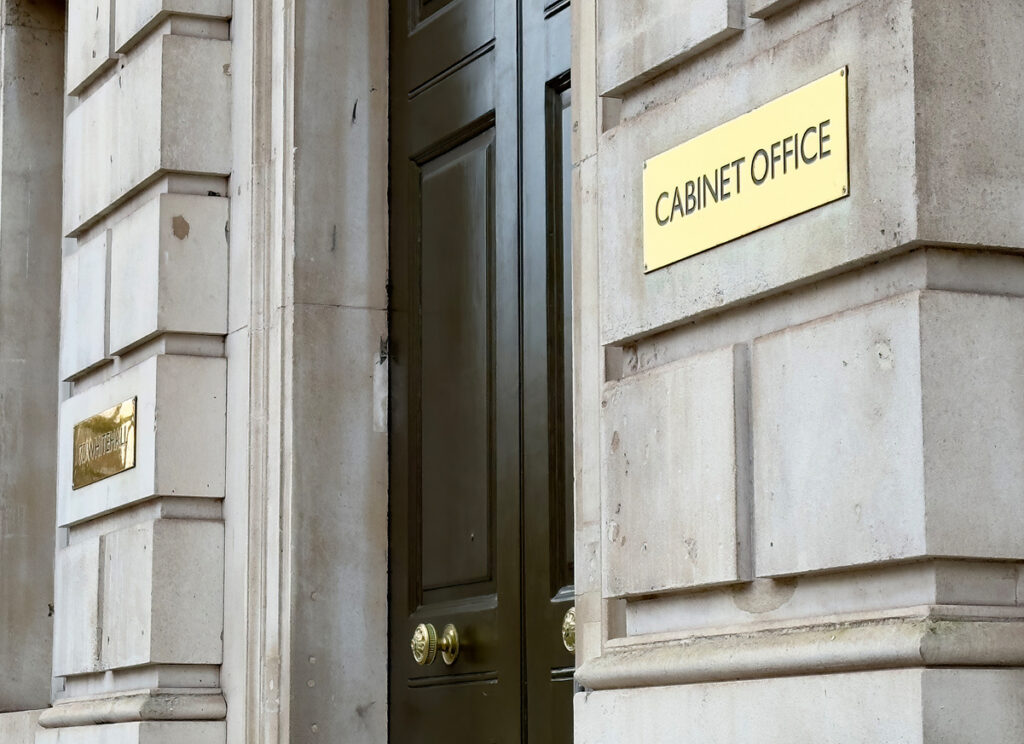
The name Cobra or COBR is a widely used shorthand for the Cabinet Office Briefing Rooms, the suite of secure meeting rooms in Whitehall where the committee meets. The committee itself is formally known as the civil contingencies committee, but this name is rarely used outside of official documents.
The decision to convene Cobra is made by the prime minister when an event is deemed to have consequences that require strategic coordination at the national level. It provides a forum for timely, high-level decision-making and coordination across government, ensuring that operational responses are supported at a strategic level.
The composition of a Cobra meeting is flexible and tailored to the specific nature of the emergency. The meeting is typically chaired by the prime minister, a Cabinet Office minister or the relevant secretary of state.
The devolved administrations, local government, officials, and representatives from external stakeholders may be invited to attend depending on the emergency.