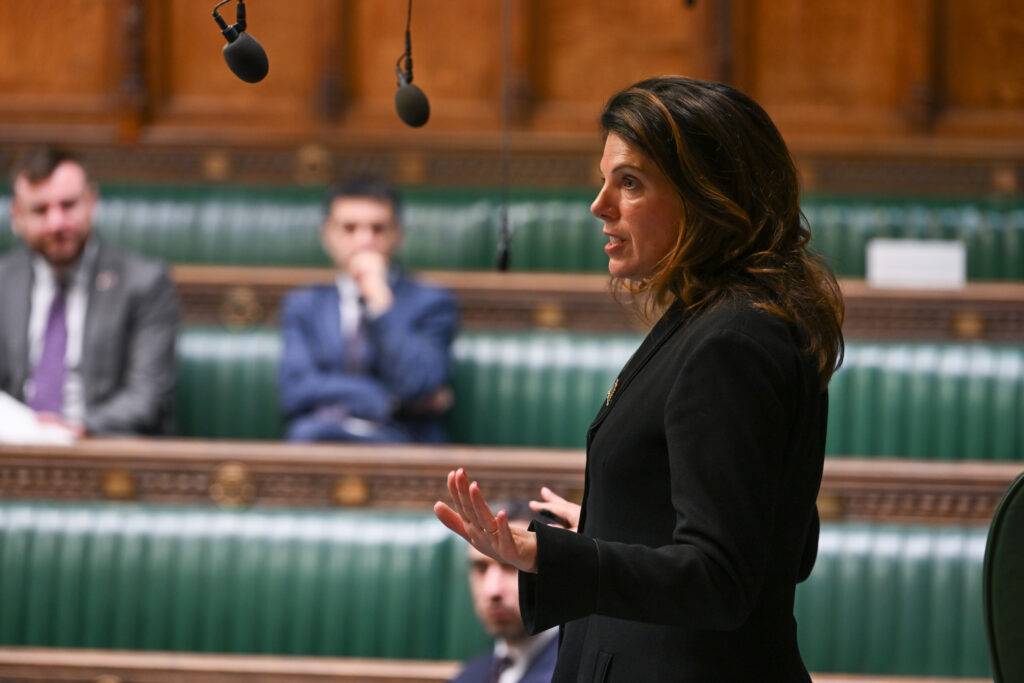
An adjournment debate is a type of parliamentary debate held in the House of Commons that allows a backbench MP to raise a specific issue and receive a direct response from a government minister. These debates take place on the technical motion “That this House do now adjourn”, which, being a neutral proposal, permits any subject to be discussed.
The primary purpose of an adjournment debate is to give individual MPs an opportunity to bring a matter to the attention of parliament that might not otherwise be debated, such as a local constituency concern or a niche policy issue.
Although no vote is taken at the end of the debate, its value lies in the guarantee of a public, on-the-record reply from the government. Adjournment debates are therefore a tool for backbenchers to hold the executive to account.
How do adjournment debates work?
There are different formats for adjournment debates.
End-of-day adjournment debate
In its most traditional form, a 30-minute adjournment debate takes place at the end of every sitting day in the main chamber of the House of Commons. The MP who has been allocated the debate speaks for around 15 minutes, and a government minister from the relevant department must then reply for the remainder of the time.
These debates begin after a government whip has stood up and stated: “I move that the House do now adjourn.”
As is standard practice in parliamentary debates, MPs in attendance may intervene on either the backbench speaker or the minister on duty during their remarks. They may also be allotted time to speak in the debate, but only if this is agreed in advance with the backbench speaker and the minister.
However, due to the fact the adjournment takes place at the end of the day’s business, the chamber is usually sparsely populated. One notable exception to this rule is the Democratic Unionist Party (DUP) MP, Jim Shannon, who has a reputation for intervening in the adjournment debate no matter the subject matter or the relevance to his constituency.
Evaluation question
Even where attendance is low, to what extent do adjournment debates retain value as a mechanism for individual MPs to raise constituency grievances with government ministers?
On the last sitting day before a recess, each parliamentary recess (such as for Christmas, Easter, and Summer), there is usually a longer debate on the question “That this House has considered matters to be raised before the forthcoming adjournment.” This provides an extended opportunity for MPs to raise a wide variety of topics in turn before the House breaks. MPs whose applications for an adjournment debate were not accepted in the preceding session may be especially keen to contribute. At the end of the debate, a minister, often the deputy leader of the House, provides a general response.
Pre-recess adjournment debates
The adjournment debate held before the summer recess is now known as the Sir David Amess adjournment debate, after the MP who was murdered during a scheduled constituency surgery in 2021. Amess was a regular and enthusiastic contributor to the annual pre-recess debate. In 2024, Conservative MP Mark Francois remembered that Amess “would manage to cram a vast number of different topics, usually related to his constituency, into a very small amount of time.”
He added: “From memory, the all-time record was 20 different subjects in 12 minutes, each of which mysteriously led to a subsequent press release.”
How an MP secures an adjournment debate
Any backbench MP can apply to the Speaker’s Office for an adjournment debate.
1. Application
An MP submits an application to the Speaker’s Office, clearly stating the title of the proposed debate. The topic must fall within the responsibility of a government department, as a minister must be able to respond. The deadline for submitting applications is Wednesday at 7pm (or the time the House finishes, if that is earlier) for adjournment debates on the following Tuesday to the Monday after that.
MPs can apply electronically via their MemberHub portal or by filling in an application form (this same form is used for Westminster Hall debates). The member must state which week’s ballot they want to enter; the debate’s title, which should be neutrally worded; the relevant department; and whether they intended to raise cases that might be sub judice (where legal proceedings, including inquests, might be active).
The application must be sent to the Table Office, where all parliamentary questions, motions for debate and early day motions (EDMs) are tabled.
2. The ballot
While the speaker is said to choose the Thursday debate, otherwise the daily end-of-day debates are decided by a ballot held by the Speaker’s Office.
3. Notification
If an MP is successful in the ballot, their office is notified on Thursday afternoon. The relevant government department is also informed at the same time, allowing it to prepare a detailed ministerial response. The list of upcoming adjournment debates is published on the parliamentary website. MPs who are unsuccessful may resubmit their application for a subsequent week.
Significance of adjournment debates
The adjournment debate procedure forms part of the House of Commons’ function as a representative and scrutinising body. Its core rationale is to ensure that any MP, on behalf of their constituents, can raise an issue and receive a government response.
An adjournment debate represents one of the few times a backbencher can set the agenda for a commons chamber debate. The procedure can therefore function as a campaigning vehicle for a backbench MP and as an outlet for voicing the concerns of constituents.
Meanwhile, the ministerial response places the government’s official position on the public record, which can be used for future campaigning and scrutiny.
Historical development of adjournment debates
Historically, motions for the adjournment were used by the government to allow wide ranging debates in the chamber. For instance, the famous Norway Debate in May 1940, which followed the failure of the Allied campaign in Norway and precipitated Neville Chamberlain’s resignation as prime minister, was held on the motion that this “That this House do now adjourn”.
In this case, a vote was taken on the motion to adjourn. The effective confidence vote saw Chamberlain’s majority plummet from over 210 to 81.
Another famous adjournment debate, held on 31 October 1956, concerned the Suez Crisis. It saw the prime minister, Anthony Eden, address MPs to justify Britain’s decision to veto a United Nations resolution calling on Israel to withdraw its forces from the region. Eden insisted he could not support the resolution as it represented “a condemnation of Israel as the aggressor in the events of the last few days.”
In a masterful response, Labour leader of the opposition Hugh Gaitskell accused the government of “an act of disastrous folly whose tragic consequences we shall regret for years.”
The Norway and Suez Crisis debates are historically significant examples. But the government’s use of the adjournment procedure to enable discussion in the House extended to non-controversial subjects.
In June 2003, Jack Straw, the foreign secretary, led a debate on the Convention on the Future of Europe. The discussion came after a government whip, John Heppell, proposed that “this House do now adjourn”. At the end of the debate, the motion to adjourn was withdrawn, allowing the commons to continue with its business.
In the 2003-2004 session, government adjournment debates accounted for around 12% of non-legislative time.
A 2007 report by the House of Commons modernisation select committee, titled Revitalising the Chamber: the role of the back bench Member, identified that the existing practice of adjournment debates was often confusing to the public and inefficient for backbench participation.
Describing the practice of government-led adjournment debates, the committee observed that they are “a procedural device that allows debate to take place without the House having to come to an opinion.”
The committee went on to note that “it must seem, to the public and many Members, a little nonsensical to debate the adjournment of the House rather than the subject at hand and to then withdraw the motion or allow it to lapse.”
The committee therefore recommended that “debates held for the purpose of discussing a topic be renamed ‘general debates’ and that debate should take place on a motion ‘That this House has considered [the matter of] [subject]’.”
The House subsequently adopted this recommendation, carving out a new category of debate that is now a staple of parliamentary activity. General debates can be proposed by both the government and individual backbench MPs; since 2010, backbench MPs have applied for general debates through the backbench business committee.
Erskine May, the authoritative account of parliamentary procedure, states: “Since a proposal from the select committee on the modernisation of the House of Commons in 2007, the House has used a standard motion ‘That this House has considered [the matter of] …’ to hold general debates on particular subjects without the House coming to a definitive conclusion.
“These debates have replaced substantive motions for the adjournment as the vehicle for general debate.”
Westminster Hall debate: what’s the difference?
Until the end of the 2010 parliament, Westminster Hall debates took place on motions for the adjournment. Westminster Hall debates, which still hold similarities with adjournment debates, now take place on a specific motion. The motion is phrased: “That the House has considered [a specific matter]”. The grand committee room off Westminster Hall was first used as an additional debating chamber following reforms in 1999.
Additional resources
- What is an adjournment debate? UK Parliament: https://www.youtube.com/watch?v=EOjOYzKWrOY
- House of Commons Select Committee on Modernisation of the House of Commons – Revitalising the Chamber: the role of the back bench Member: https://publications.parliament.uk/pa/cm200607/cmselect/cmmodern/337/337.pdf

