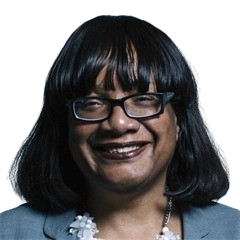
Diane Abbott is the Labour MP for Hackney North and Stoke Newington, having first been elected to parliament at the 1987 general election. Abbott’s status as a long-standing parliamentarian means she is currently the “mother of the House” – an honorary title bestowed upon the woman who is the longest-serving female member of the House of Commons.
Abbott was the first Black woman elected to parliament. Abbott’s career in frontline politics advanced most notably during Jeremy Corbyn’s time as Labour Leader where she held multiple senior shadow ministerial roles.
In the 2024 general election, Abbott received 24,355 votes, representing 59.5% of the vote share in Hackney North and Stoke Newington. The Green Party candidate, Antoinette Fernandez, was the runner-up with 9,275 votes (22.6%), while the Conservative candidate, David Landau, secured 3,457 votes (8.4%). Abbott was duly elected with a majority of 15,080.
There was a period of public uncertainty regarding Abbott’s candidacy and party affiliation during the 2024 election campaign – which was ultimately resolved when Keir Starmer confirmed she could stand for Labour.
In July 2025, Abbott had the whip removed – for a second time under Starmer – after indicating she stood by past comments about racism that led to her initial, year-long suspension from the Parliamentary Labour Party (PLP).
Abbott had the Labour whip restored in August 2026, two weeks after Andy Burnham succeeded Starmer as prime minister.
Diane Abbott: shadow home secretary (2016-2020)
A veteran MP, Abbott has served in several prominent shadow ministerial roles – including as shadow secretary of state for international development from September 2015 to June 2016, shadow secretary of state for health from June to October 2016 and shadow home secretary from October 2016 to April 2020.
As shadow home secretary under Corbyn, Abbott led Labour’s response to the Windrush scandal and the government’s handling of the immediate fallout.
During the 2017 general election campaign, the Labour Party announced that Abbott would step down as shadow home secretary due to ill health. A party statement read: “Jeremy Corbyn, leader of the Labour Party, has asked Lyn Brown to stand in for Diane Abbott as shadow home secretary for the period of her ill health.”
It came after Abbott struggled to explain the costings of Labour’s flagship policy to recruit 10,000 new police officers. In what was widely described as a “car-crash” LBC Radio interview during the general election campaign, Abbott gave a series of contradictory figures for the plan.
Some days after the general election, Abbott revealed she had Type 2 diabetes and said the condition had forced her to take a break from frontline politics. Reflecting on her LBC interview, Abbott told the Guardian she was badly affected after six successive interviews without eating enough food. “During the election campaign, everything went crazy – and the diabetes was out of control, the blood sugar was out of control”, she said.
Abbott also condemned the fact she had been “singled out” by the Conservative campaign. “It felt terrible, it felt awful – you felt you were in a kind of vortex – as I became aware of what was happening – the Facebook ads, the Tories name-dropping me for no reason”, she commented.
Abbott subsequently returned as shadow home secretary on 18 June 2017.
During Ed Miliband’s tenure as Labour leader, Abbott served as shadow public health minister from October 2010 to October 2013.
Diane Abbott and Keir Starmer (2020-2026)
Abbott returned to the backbenches in the 2019-2024 parliament, re-establishing herself as a critic of Keir Starmer as Labour leader.
After the Equality and Human Rights Commission’s finding that the Labour Party broke equality law under Corbyn, the former leader was suspended from the party. Abbott was prominent in her opposition to Corbyn’s expulsion and she shared a petition on social media to demand Corbyn be reinstated. Abbott posted to Twitter (now X): “He has always stood with us. We must stand with him”.
In October 2022, Abbott also publicly criticised Starmer, accusing him on BBC Newsnight of being focused on “a project of his own to become leader of the Labour Party” and that his ambitions were always “fairly apparent”.
She continued: “I think it’s noticeable, having been Mr Remain all the way up until he got leadership of the party, you don’t hear much from Keir about Remain now. When Jeremy was leader, it was fairly apparent that Keir had other motives.”
In May 2022, when Starmer faced a police investigation regarding potential lockdown rule breaches (which ultimately resulted in no further action), Abbott stated that Starmer should “consider his position” if fined by the police.
In April 2023, Abbott had the Labour whip suspended after she wrote a letter to the Observer suggesting that Jewish, Irish, and Traveller people experience prejudice, but not racism in the same way as black people. In the letter, she wrote that Irish, Jewish and Traveller people “undoubtedly experience prejudice”, which she said is “similar to racism”.
Abbott added: “It is true that many types of white people with points of difference, such as redheads, can experience this prejudice. But they are not all their lives subject to racism.”
Responding to the immediate fallout, Abbott apologised “unreservedly” for any “anguish” caused by her remarks.
In a statement, Abbott indicated that “errors” arose in an initial draft that was sent, adding: “But there is no excuse, and I wish to apologise for any anguish caused.”
https://x.com/HackneyAbbott/status/1650072333527252994
A Labour Party spokesman commented: “The Labour Party completely condemns these comments, which are deeply offensive and wrong.
“The chief whip has suspended the Labour whip from Diane Abbott pending an investigation.”
Abbott’s suspension ultimately lasted for over a year. In September 2023, Abbott claimed that the Labour’s whips office was no longer conducting a formal investigation. “I am the longest-serving black MP”, she said. “Yet there is widespread sentiment that as a black woman and someone on the left of the party, that I will not get a fair hearing from this Labour leadership.”
In May 2024, shortly before a general election was called, it was reported that the Labour National Executive Committee (NEC) had concluded its investigation in December 2023. Abbott was reportedly issued with a formal warning and required to complete an “antisemitism awareness course”.
Abbott was readmitted as a Labour MP on 29 May 2024, following a protracted and contested debate about her political future. Starmer publicly confirmed that Abbott’s candidacy had been approved on 31 May – ending weeks of speculation. It came after Angela Rayner, his deputy, maintained that she didn’t see “any reason” why Abbott could not stand as Labour candidate.
Abbott had organised a 30 May rally outside Hackney Town Hall, which saw her accuse “the national party is insisting that I be banned”.
She declared: “They haven’t given a reason for banning me. They just want me excluded from parliament. I am so shocked. And so alarmed about what is going on. Because it is as if you are not allowed to be a Labour MP unless you’re prepared to repeat everything the leader says.”
In July 2025, Abbott had the Labour whip suspended for a second time in as many years after suggesting that she did not regret her past remarks on racism. Asked about those comments and the subsequent row in an interview with the BBC, Abbott appeared to defend the message of the April 2023 letter.
She said: “Clearly, there must be a difference between racism which is about colour and other types of racism because you can see a Traveller or a Jewish person walking down the street, you don’t know.
“I just think that it’s silly to try and claim that racism which is about skin colour is the same as other types of racism. I don’t know why people would say that.”
Abbott’s status as an independent MP had prompted speculation that could follow her longtime ally Jeremy Corbyn in mounting a political and electoral challenge to Labour from the left. However, the veteran MP has appeared to dismiss the prospect of joining Corbyn’s nascent party.
In August 2025, she told the Edinburgh international book festival that she had warned Corbyn against creating the party.
She said: “It’s very difficult under the first-past-the-post system for a new party to absolutely win. If it wasn’t first past the post then you can see how a new party could come through, but I understand why he did it.”
Abbott added: “I think I am at the heart of the Labour party, it’s other people who aren’t.”
In May 2026, Abbott called for Starmer to resign as prime minister.
Abbott had the Labour whip restored in August 2026 following Starmer’s resignation as prime minister and Labour leader.
At the time, a Labour party spokesperson said: “Following a process conducted under Labour party rules and approved by the independent review board, Diane Abbott … [has] been readmitted to the Labour party and [has] had the Labour whip restored in the House of Commons.
“Diane Abbott has also apologised following the independent process coming to an end. All Labour elected representatives must be mindful at all times of their platform and the responsibilities that come with that privilege.”
In a statement, Abbott said: “Today, following a process conducted in line with party rules and approved by the independent review process, I have been readmitted to the Labour party.
“I have been issued with a formal warning for a tweet I previously posted. By inadvertently referring to the Israeli Defence Force as the ‘Jewish Defence Force’, I used wording that conflates the actions of the state of Israel with the Jewish community.
“I am deeply sorry for any hurt caused by that conflation and apologise for any hurt caused by it. I have been and remain a lifelong anti-racist and remain deeply committed to opposing racism in all its forms.”
Diane Abbott: rise to prominence (1987-2016)
Abbott delivered her maiden speech on 16 November 1987, speaking against the government’s Immigration Bill.
In it, she stated: “I have the distinction of both being the daughter of immigrants and representing a constituency in north-east London which, for more than a century, has been a classic centre where immigrants have been welcomed.
“My parents came to this country in 1950 as immigrants from rural Jamaica. Contrary to what Conservative Members might have us believe, they came – a whole generation of black and ethnic minority immigrants came – not to sponge, not to swamp anyone else’s culture, not to provide objects of derision for Conservative members, but to work.
“They came for a better life for their children. They also came with pride, as citizens of Britain and its Commonwealth, and believing in that citizenship.”
She added: “Since I was a child, immigration legislation has been used as a vehicle for people to air their racism. This bill was born out of racism and it will do nothing to improve community relations.
“It represents a breach of faith with a generation of people who came here with the best intentions and the highest hopes. Their aspirations, their family life and their children are constantly denigrated in the kind of debate and argument that is used to promote legislation of this kind. The Bill is a disgrace, and I urge the House to oppose it.”
Abbott served as a member of the House of Commons Treasury select committee from November 1995 to March 1997. She was later a member of the foreign affairs select committee from July 1997 to May 2001, the home affairs select committee from May 2020 until May 2024, and the justice committee from January to November 2022.
In the wake of the 2010 general election and Gordon Brown’s resignation Abbott stood for the leadership of the Labour Party. She secured the requisite 33 nominations from Labour MPs to claim a place on the ballot. MPs who lent their vote to Abbott included Harriet Harman, the acting/caretaker Labour leader, and David Miliband, who was himself standing for the leadership as a frontrunner. Abbott ultimately finished fifth in the contest, on 7.4%.
In 2012, Abbott apologised after tweeting that “White people love playing ‘divide & rule’” – a comment which drew criticism at the time.
In 2015, Abbott ran to be Labour’s candidate for mayor of London, describing herself as a voice that could “stand up against some of the anti-immigrant propaganda that we’re hearing”. Abbott’s bid was ultimately unsuccessful. She secured just 6,216 votes from the Labour membership, losing out to Sadiq Khan – who won the party’s nomination and the mayoralty.
Today, Abbott is listed as a member of the all-party parliamentary groups (APPGs) for Afrikan reparations, Dalits and Adivasis (tribals), and race equality in education.
Abbott is also a founding member of the Parliamentary Black Caucus. The cross-party group, inspired by the US Congressional Black Caucus (CBC), was established in 2025 to advance racial equality and representation for Black and minority ethnic people within parliament and across the UK.
Political Views
Leadership elections and loyalty
Labour leadership 2020: Abbott was one of 33 Labour MPs who nominated Rebecca Long-Bailey for the party’s leadership in early 2020. The election was triggered by the resignation of Jeremy Corbyn following the party’s defeat in the 2019 general election, which resulted in Labour’s fewest seats in the House of Commons since 1935.
Long-Bailey, then the shadow business secretary, was widely regarded as the continuity candidate for the party’s left/Corbynite wing. Long-Bailey finished second with 27.6% of the vote, losing to Keir Starmer, who won a decisive victory in the first round with 56.2%.
Labour leadership 2015: Abbott was one of 36 Labour MPs who nominated Jeremy Corbyn for the party’s leadership in June 2015. The election followed the resignation of Ed Miliband after the party’s defeat in the 2015 general election. It was the first contest held under the “one member, one vote” system, which replaced the previous electoral college.
Corbyn, a veteran backbencher, secured the 36 nominations required – just one over the threshold – but only after several MPs lent him their support to ensure a broader ideological debate. His anti-austerity platform gained significant momentum, and he won a landslide victory in the first round with 59.5% of the vote.
Corbyn loyalty list: In March 2016, Abbott was labelled as “core group” by the Corbyn leadership in a leaked list which categorised Labour MPs by their perceived loyalty. This label suggested the Corbyn leadership viewed Abbott as among its closest allies, even as an inner circle member.
Labour leadership 2016: Abbott was one of the minority of Labour MPs who endorsed Corbyn during his successful defence of the party leadership in September 2016. The election was triggered following a period of intense tension after the EU referendum, which saw a wave of shadow cabinet resignations and a vote of no confidence supported by 172 MPs.
Corbyn, who was automatically included on the ballot as the incumbent, was challenged by Owen Smith, the former shadow work and pensions secretary. Corbyn won the election with an increased mandate, securing 61.8% of the vote compared to 38.2% for Smith.
Factional identity and party tradition
Socialist Campaign Group: Abbott has been listed as a member of the Socialist Campaign Group (SCG) – the standard-bearer of the left wing within the Parliamentary Labour Party (PLP). Founded in 1982 by followers of Tony Benn, the group has traditionally advocated policies such as widespread public ownership, wealth redistribution and strengthened trade union rights.
Corbyn suspension: In November 2020, Abbott was among the 32 SCG MPs to sign a statement declaring that they opposed the suspension of Jeremy Corbyn and calling for the disciplinary action to be “swiftly reversed”.
The statement read: “This decision and the division it causes severely undermines efforts to unite to defeat antisemitism and fully implement the EHRC [Equality and Human Rights Commission] recommendations and to challenge and defeat this disastrous Conservative government.”
Corbyn’s suspension came after he issued a response to the EHRC report, arguing “the scale of the [antisemitism] problem was also dramatically overstated for political reasons by our opponents”.
Momentum endorsement: Abbott was endorsed by the left-wing campaign group Momentum in the 2024 general election. Momentum was founded in 2015 to support the leadership of Jeremy Corbyn and to campaign for socialist policies within the Labour party.
Spycops vote (2020): In October 2020, Abbott was one of the 34 Labour MPs to break the party whip by voting against the covert Human Intelligence Sources (Criminal Conduct) Bill at its commons third reading. The proposed legislation, often referred to as the “spycops bill”, was introduced by the Conservative government to authorise undercover agents and informants to commit crimes while on operations. The Labour Party had whipped its representatives to abstain on the bill on the basis that the legislation is “far from perfect” yet “necessary” due to “the need to provide a clear lawful framework for the use of human intelligence sources”.
Anti-austerity letter (2015): Abbott was among the 16 Labour MPs – generally associated with the party’s left wing – who signed a statement demanding then-leader Ed Miliband oppose further austerity, take rail franchises back into public ownership and strengthen collective bargaining arrangement. Corbyn and John McDonnell were among the signatories.
The statement, issued in January 2015, read: “There is an alternative way out of endless austerity. We need public investment to kickstart the economy out of faltering growth and to generate real job creation and rising incomes.”
Brexit and Europe
Brexit referendum: Abbott supported Remain in the 2016 Brexit referendum, and therefore agreed with the vast majority of her constituents, 79.5% of whom also voted to Remain.
Brexit trade deal: In December 2020, Abbott was among the 37 Labour MPs to rebel against the leadership’s position on the EU (Future Relationship) Bill – which enabled the government to implement and ratify its post-Brexit trade deal with the EU. Keir Starmer, the newly elected Labour leader, argued that while the trade deal negotiated by Boris Johnson’s government was “thin” and flawed, the only alternative at that late stage was a “no-deal” exit. To enforce the leadership’s position, a three-line whip was imposed. Abbott abstained over the bill. One Labour MP, Bell Ribeiro-Addy, voted against the bill.
Customs union vote (2025): In December 2025, Abbott voted in favour of the UK-EU Customs Union (Duty to Negotiate) Bill. The bill, introduced under the 10-minute rule procedure by Liberal Democrat Europe spokesperson Al Pinkerton, sought to mandate the government to enter into negotiations with the European Union to establish a bespoke customs union. In total, 13 Labour MPs joined the Liberal Democrats in supporting the motion, while the majority of the party abstained.
Welfare
Welfare ‘reasoned amendment’ (June 2025): Abbott was one of the over 120 Labour MPs to sign the reasoned amendment to the government’s flagship welfare bill which aimed to reject the proposed legislation.
The amendment, in the name of senior Labour MP Dame Meg Hillier, objected to the fact that the bill had not been subject to a “formal consultation with disabled people” and that “250,000 people will be pushed into poverty” as a result of it, according to a government impact assessment.
The motion also called on the government to wait for the publication of the review into the Personal Independence Payment (Pip), helmed by minister Sir Stephen Timms, and the independent review, conducted by Sir Charlie Mayfield, into how the employment of disabled people could be boosted.
In May 2025, Abbott had signed a letter warning the government that the cuts were “impossible to support” and calling for a change in direction.
The letter, signed by 42 Labour MPs, read: “The planned cuts of more than £7bn represent the biggest attack on the welfare state since George Osborne ushered in the years of austerity and over 3 million of our poorest and most disadvantaged will be affected.
“Whilst the government may have correctly diagnosed the problem of a broken benefits system and a lack of job opportunities for those who are able to work, they have come up with the wrong medicine. Cuts don’t create jobs, they just cause more hardship.”
Welfare vote (July 2025): Abbott went on to vote against the bill at second reading. The vote came after ministers agreed to significant concessions to avoid defeat via a mass rebellion of Labour MPs on 1 July 2025.
Welfare vote (July 2015): Alongside almost one quarter of Abbott colleagues, Abbott voted against the Conservative government’s Welfare Reform and Work Bill at second reading – defying the party whip which instructed Labour MPs to abstain. This decision to abstain, taken by interim Labour leader Harriet Harman, caused a furious backlash within the party, particularly from its left wing. It became a defining issue in the ongoing leadership contest. Jeremy Corbyn was the only candidate to vote against the bill. Overall, 48 Labour MPs voted against the proposed legislation.
Winter fuel payment EDM: In September 2024, … signed an early day motion (EDM) expressing concern over the government’s proposed changes to the winter fuel payment. The motion called on the government to “postpone the ending of winter fuel payments and establish a comprehensive strategy to tackle fuel poverty, health inequality and low incomes among older people.”
Assisted dying
Abbott voted against of the Terminally Ill Adults (End of Life) Bill, better known as the assisted dying bill, at both second reading (November 2024) and third reading (June 2025)
In a November 2024 article for the Guardian, co-written with father of the House Edward Leigh, Abbott argued that there was a lack of parliamentary scrutiny for the bill, that there were too many concerns from medical professionals, and the risk to vulnerable minorities who “are most likely to resign themselves to an assisted death against their will because they are unable to access the support they require”.
Speaking during the bill’s second reading debate, Abbott was one of several contributors to the debate who raised concerns over coercion. She warned that that coercion could be undetectable by doctors or judges.
Abbott told MPs: “We are told that there is no evidence of coercion in jurisdictions where assisted suicide is possible, but people do not generally write letters to sick relatives urging them to consider assisted suicide and then put those letters on file.
“Coercion in the family context can be about not what you say but what you do not say – the long, meaningful pause.”
Social values and conscience issues
Abortion decriminalisation (2025): Abbott voted in favour of a backbench amendment to the Crime and Policing Bill that sought to decriminalise abortion in England and Wales in June 2025. The amendment, which was passed by a majority of 242 votes, removed women from the threat of prosecution for ending a pregnancy at any stage. As an issue of conscience, MPs were allowed to vote according to their personal beliefs.
Same-sex marriage (2013): In February 2013, Abbott voted in favour of the Marriage (Same Sex Couples) Bill at its second reading. The landmark piece of legislation, which received its second reading by 400 votes to 175, legalised marriage for same-sex couples in England and Wales.
Foreign policy and security
Nato-scepticism: In February 2022, following Russia’s invasion of Ukraine, Abbott was one of 11 Labour MPs on the left of the party threatened with losing the party whip after they signed a statement by the Stop the War Coalition which criticised Nato, accusing the military alliance of “eastward expansion”. All 11 MPs, Abbott included, subsequently removed their signatures.
Trident renewal (2016): Abbott voted against a government motion calling for the renewal of the Trident nuclear deterrent system in July 2016. The motion, which was passed by 472 votes to 117, committed the UK to constructing a new fleet of submarines to carry the nation’s nuclear weapons. Labour was split over the issue with 140 of its 230 MPs going against leader Jeremy Corbyn and backing the motion.
Syria airstrikes (2015): Abbott voted against a government motion to extend UK airstrikes against Isis from Iraq into Syria in December 2015. The motion, which was passed by 397 votes to 223 after a ten-hour debate in the House of Commons, authorised the RAF to conduct strikes against Isis targets in Syria.
Syria airstrikes (2013): Abbott voted against the government’s motion on the principle of military intervention in Syria in August 2013. The government motion was defeated by 285 votes to 272, a move which effectively ruled out UK participation in any US-led military strikes.
Iraq War vote (2003): In March 2003, Abbott voted for a rebel amendment which argued that the case for war against Iraq had not been established. A total of 139 Labour, 53 Liberal Democrat and 15 Conservative MPs backed the amendment. The government’s unamended motion authorising military action against Iraq passed by 412 votes to 149.
Sanctioned (Russia): In April 2022, Abbott was among the group of MPs placed on a sanctions list by the Russian government. The measure barred them from entering Russia and was presented by Moscow as a retaliatory response to the UK’s stance on the invasion of Ukraine.
Palestine
Palestinian recognition letter (July 2025): In July 2025, Abbott was among the over 254 MPs to sign a cross-party letter calling for the government to immediately recognise the state of Palestine. The letter called on the prime minister and foreign secretary to recognise Palestine at the UN Conference then taking place in New York.
Palestine Action vote: Also in July 2025, Abbott was one of 26 MPs to vote against the proscription of Palestine Action under the Terrorism Act 2000. The ban, passed by 385 votes to 26, came after the Home Office accused the group of “aggressive and intimidatory attacks against businesses, institutions and the public”. However, civil liberties organisations argued proscription represented an overreach of state power and a threat to the right to protest.
Ceasefire vote (November 2023): Abbott was among 56 Labour MPs to vote in favour of a Scottish National Party (SNP) amendment to the King’s Speech in the House of Commons calling for an “immediate ceasefire” in Gaza – defying the instruction set out by the party’s frontbench. Labour had tabled its own motion, making a more moderate appeal for a “humanitarian pause” in the conflict and ordered its representatives to support that stance.
Palestinian recognition vote (2014): In October 2014, Abbott was one of 192 Labour MPs who voted in favour of recognising Palestine as a state. The motion, passed by 274 votes to 12, called on the government to “recognise the state of Palestine alongside the state of Israel as a contribution to securing a negotiated two-state solution”.
Civil liberties
Covid passes vote (2021): Abbott was one of 126 MPs to vote against Covid passes in England in December 2021. The measure, introduced by Boris Johnson’s government, was carried by 369 votes to 126.
Covid passes campaign (2021): Abbott was one of over 70 MPs and peers who launched a cross-party campaign against the “divisive and discriminatory use” of Covid passes in April 2021. The campaign was triggered by government reviews into “vaccine passports”, which signatories argued would create a two-tier society and infringe upon fundamental civil liberties.
Before Politics
Born in London in 1953, Abbott was educated at Newnham College, University of Cambridge, where she studied history.
After graduating, Abbott became an administration trainee at the Home Office from 1976 to 1978. She subsequently worked as a race relations officer at the National Council for Civil Liberties, now known as Liberty.
Abbott then pursued a career in journalism.
As a journalist, Abbott worked as a researcher and reporter for Thames Television from 1980 to 1983 and for the breakfast television company TV-AM from 1983 to 1985. She also worked as a press and public relations officer for the Greater London Council from 1985 to 1986 and the Lambeth Council from 1986 to 1987.
Personal Life
Abbott was married to David Ayensu-Thompson, a Ghanaian architect, from 1991 to 1993. They have one son.
In the late 1970s, Abbott was romantically involved with Jeremy Corbyn, her future boss, while he was a councillor in north London.
However, the relationship did not last, in her memoir, Abbott recalled: “I began to realise that, realistically, ours was not a match made in heaven…
“Once, after I lamented our lack of social activity as a couple, he pondered it for a few days and told me we were going out. Feeling excited, I dressed up nicely and we bundled into the car. I had no idea where we were going – perhaps a nice wine bar? It turned out Jeremy’s idea of a social outing was to drive me to Highgate cemetery and proudly show me the tomb of Karl Marx.”
Abbott was criticised in 2003 for sending her son to private school – a move many felt was inconsistent with her socialist values. Abbott had previously criticised her Labour colleagues – including Tony Blair – of being “intellectually incoherent” when they did the same.
When questioned about the controversy, Abbott defended her decision saying, “I had to choose between my reputation as a politician and my son”.
Trivia
In her youth, Abbott attended Harrow County Grammar School for Girls, which was near Harrow County School for Boys attended by Michael Portillo. The two knew each other and participated in a joint school production of “Romeo and Juliet” (albeit not in the lead roles). They later appeared together regularly on the BBC politics programme This Week.
In 2020, Abbott said she had declined an invitation to appear on the BBC television programme Strictly Come Dancing. She told BBC Radio 4’s Today Programme that she thought about the decision for about “60 seconds”.
In 2008, Abbott won the Spectator’s “Speech of the Year” award for a speech on civil liberties during a debate on the Counter-Terrorism Bill.
Diane Abbott has not written for Politics.co.uk.