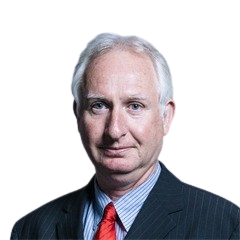
Daniel Zeichner is the Labour MP for Cambridge, having first been elected to parliament at the 2015 general election.
In the 2024 general election for the Cambridge constituency, Zeichner received 19,614 votes, representing 46.6% of the vote share. The Liberal Democrat candidate, Cheney Payne, received 8,536 votes (20.3%), while the Green Party candidate, Sarah Nicmanis, secured 6,842 votes (16.3%). Zeichner was duly elected with a majority of 11,078 votes.
The Cambridge constituency primarily covers the city of Cambridge. The constituency has a long history, dating back to 1295, and was once represented by Oliver Cromwell. In modern times, it has been a swing seat. The constituency was held by the Conservatives from 1967 to 1992; it was won by Labour (1992-2005), then the Liberal Democrats (2005-2015), before returning to Labour with Zeichner’s election in 2015.
Political Career
Zeichner was appointed as a trade envoy to Türkiye in January 2026. Appointed by the trade secretary, envoys are tasked with boosting British exports and attracting foreign investment. An envoy’s duties typically involve leading trade delegations, lobbying host governments on market access issues, and building relationships with overseas businesses.
Zeichner is also a member of the House of Commons science, innovation and technology select committee (since October 2025) – the committee responsible for examining the expenditure, administration and policy of the Department for Science, Innovation and Technology and associated its public bodies.
Zeichner served as minister of state for food security and rural affairs in the Department for Environment, Food and Rural Affairs (Defra) from July 2024 to September 2025.
Upon leaving government in September 2025 as part of a wider ministerial reshuffle, Zeichner posted to social media: “Very sad to be leaving a job in government I have loved – working with brilliant people at Defra and so many great people keeping our country fed: the farmers, the fishermen, everyone in the food supply chain and in rural areas.
“But politics, and governing in particular, is a team endeavour, and the baton is passed and I carry on with the best job possible, MP for Cambridge!”
Prior to the 2024 general election, which saw Labour returned to power after 14 years in opposition, Zeichner served in the shadow Defra team as shadow minister for food, farming and fisheries from April 2020 until the May 2024 dissolution of parliament. He previously served as shadow minister for transport from September 2015 to June 2017.
Zeichner resigned from the Labour frontbench, then led by Jeremy Corbyn, in June 2017 to vote for an amendment to the queen’s speech supporting membership of the European single market. The Labour leadership had instructed MPs to abstain.
In a statement at the time, Zeichner said: “It is with great regret that I announce my resignation as shadow transport minister. It has been an honour to serve and make a real difference especially in bus regulation.
“However my position on Europe has always been clear. I am a passionate pro-European and a straight-forward politician.
“I promised the people of Cambridge I would stick to my principles and I would do right by our city – that means voting with my conscience and doing all I can to oppose the Tories’ extreme Brexit which would, in my opinion, damage our economy, our security and our society as a whole.
“I will continue to make this case, and the case for the many progressive, radical Labour policies in our manifesto to transform our society from the backbenches.”
Zeichner was a member of the House of Commons transport committee (2017-2019), the petitions committee (2018-2019) and the science, innovation and technology committee (2015-2015).
Zeichner delivered his maiden speech on 8 June 2015 during a debate on the Scotland Bill.
In it, he said: “Cambridge is also, like so many other places, a tale of two cities; the challenges our city faces are partly the challenges of success, but we also have divisions. Our businesses need an answer to the traffic problems and the appalling housing crisis we have.
“A terraced house in Cambridge costs £450,000 and our average rents are double those in England for most homes. Our housing benefit bill has doubled in the past five years – why? It is because 12,000 people in the prosperous city of Cambridge are earning below the living wage – it is not always the way we imagine it. We need different solutions in different places.”
He added: “I stand before you today as a Labour MP for Cambridge who will represent the buccaneering investors and high-tech gurus of our city who will create wealth.
“But most of all, I will be standing up and arguing for our public sector workers, who so often are forgotten, but without whom the rest of the city cannot do its job.”
Zeichner served as a Labour councillor on South Norfolk District Council between 1995 and 2003, during which time he became leader of the council’s Labour group. He stood unsuccessfully as the Labour candidate for the Mid Norfolk constituency in the 1997, 2001 and 2005 general elections, and contested Cambridge at the 2010 general election.
Zeichner says that he began campaigning for an “elected House of Lords” some decades ago alongside the late Robin Cook.
Political views
Leadership elections and loyalty
Oppose leadership election: In May 2026, Zeichner was among the over 100 Labour MPs who signed a joint statement insisting it was “no time for a leadership contest.” The letter was an intervention in the political crisis engulfing Keir Starmer’s premiership, after Labour suffered heavy losses in the 2026 local elections and devolved elections to the Scottish Parliament and Senedd Cymru. It was organised as a counterweight to a mounting rebellion that had seen high-profile figures, including some ministers, call for Starmer’s resignation.
The statement read: “Last week we had a devastatingly tough set of election results. It shows we have a hard job ahead to win back trust from the electorate.
“That job needs to start today – with all of us working together to deliver the change the country needs.
“We must focus on that. This is no time for a leadership contest.”
Labour deputy leadership 2025: Zeichner was one of 117 Labour MPs who nominated Lucy Powell for the party’s deputy leadership in September 2025. The election followed the resignation of Angela Rayner, who stepped down as deputy prime minister and deputy party leader after an investigation into her tax affairs. It marked the first time since 2007 that Labour had held a deputy leadership contest while in government.
Powell, the former leader of the House of Commons, was seen as a candidate representing the party’s “soft left”; she was supported by leading soft left figures including Ed Miliband and Andy Burnham. She secured 117 nominations from the Parliamentary Labour Party (PLP), above the 80 required, and went on to win the election – defeating Bridget Phillipson with 54.3% of the vote.
Labour leadership 2020: Zeichner was one of 82 Labour MPs who nominated Keir Starmer for the party’s leadership in early 2020. The election was triggered by the resignation of Jeremy Corbyn following the party’s defeat in the 2019 general election, which resulted in Labour’s fewest seats in the House of Commons since 1935.
Starmer’s 82 nominations were the highest of any candidate. The shadow Brexit secretary won a decisive victory in the first round with 56.2% of the vote, defeating Rebecca Long-Bailey and Lisa Nandy.
Labour leadership 2015: Zeichner nominated Yvette Cooper for the party’s leadership in June 2015. The election followed the resignation of Ed Miliband after the party’s defeat in the 2015 general election. It was the first contest held under the “one member, one vote” system, which replaced the previous electoral college.
Cooper, the shadow home secretary, secured 59 nominations from the Parliamentary Labour Party (PLP), comfortably exceeding the 35 required to reach the final ballot. She ultimately finished third in the contest with 17% of the vote.
Corbyn loyalty list: In March 2016, Zeichner was labelled as “core group negative” by the Corbyn leadership in a leaked list which categorised Labour MPs by their perceived loyalty. This label suggested the Corbyn leadership viewed Zeichner as a critic but not openly hostile.
Labour leadership 2016: Zeichner was one of 162 Labour MPs who nominated Owen Smith for the party’s leadership in July 2016. The election was triggered by a challenge to Jeremy Corbyn following the EU referendum, which led to a wave of shadow cabinet resignations and a vote of no confidence supported by 172 MPs. Smith, the former shadow work and pensions secretary, was ultimately defeated by Corbyn, who won with an increased mandate of 61.8% of the vote.
Factional identity and party tradition
SERA: Zeichner has been listed as a member of the Socialist Environment and Resources Association (SERA) – a socialist society affiliated with the Labour Party. Founded in 1973, SERA is the party’s official environmental campaign group. The organisation campaigns on a wide range of issues, including renewable energy, biodiversity, air quality and the transition to a green economy. SERA describes its member MPs as “champions for the environment”.
Brexit and Europe
Brexit referendum: Zeichner supported Remain in the 2016 Brexit referendum, and therefore agreed with the vast majority of his constituents, 73.8% of whom also voted to Remain.
Article 50: In February 2017, Zeichner voted against the European Union (Notification of Withdrawal) Bill. The legislation empowered the prime minister to notify the Council of the European Union of the UK’s intention to withdraw, formally triggering the process set out in Article 50 of the Treaty on European Union. MPs supported the bill by 498 votes to 114 at second reading. In voting against the bill, Zeichner defied the party whip – one of 47 Labour MPs to do so.
People’s vote support (2019): Zeichner signed a January 2019 statement by Labour MPs calling for a “people’s vote” or second referendum. The statement, signed by 71 Labour MPs, read: “Defeat of the Tory [Brexit] deal in a public vote would give us all a chance to campaign for the anti-austerity policies and a Labour government that deals with the true causes of the Brexit vote, and a reformed Europe that works for all people.”
Remain pledge: During the 2019 general election campaign, Zeichner was one of 193 Labour candidates to sign the anti-Brexit “Remain pledge”, drawn up by the campaign group Remain Labour.
It stated: “Labour is committed to a confirmatory referendum, to give you the final say on Brexit. If elected as your Labour MP, I pledge to campaign to Remain in the EU.”
Welfare
Welfare vote (July 2025): Zeichner voted in favour of the government’s flagship welfare bill at second reading. The vote came after ministers agreed to significant concessions to avoid defeat via a mass rebellion of Labour MPs on 1 July 2025.
Welfare vote (July 2015): Alongside almost one quarter of his colleagues, Zeichner voted against the Conservative government’s Welfare Reform and Work Bill at second reading – defying the party whip which instructed Labour MPs to abstain. This decision to abstain, taken by interim Labour leader Harriet Harman, caused a furious backlash within the party, particularly from its left wing. It became a defining issue in the ongoing leadership contest. Jeremy Corbyn was the only candidate to vote against the bill. Overall, 48 Labour MPs voted against the proposed legislation.
Assisted dying
Zeichner voted in favour of the Terminally Ill Adults (End of Life) Bill, better known as the assisted dying bill, at both second reading (November 2024) and third reading (June 2025).
Social values and conscience issues
Abortion decriminalisation (2025): Zeichner voted in favour of a backbench amendment to the Crime and Policing Bill that sought to decriminalise abortion in England and Wales in June 2025. The amendment, which was passed by a majority of 242 votes, removed women from the threat of prosecution for ending a pregnancy at any stage. As an issue of conscience, MPs were allowed to vote according to their personal beliefs.
Foreign policy and security
Trident renewal (2016): Zeichner voted against a government motion calling for the renewal of the Trident nuclear deterrent system in July 2016. The motion, which was passed by 472 votes to 117, committed the UK to constructing a new fleet of submarines to carry the nation’s nuclear weapons. Labour was split over the issue with 140 of its 230 MPs going against leader Jeremy Corbyn and backing the motion.
Syria airstrikes (2015): Zeichner voted against a government motion to extend UK airstrikes against Isis from Iraq into Syria in December 2015. The motion, which was passed by 397 votes to 223 after a ten-hour debate in the House of Commons, authorised the RAF to conduct strikes against Isis targets in Syria.
Sanctioned (Russia): In April 2022, Zeichner was among the group of MPs placed on a sanctions list by the Russian government. The measure barred them from entering Russia and was presented by Moscow as a retaliatory response to the UK’s stance on the invasion of Ukraine.
Before Politics
Zeichner was born in Beckenham, Kent, on 9 November 1956. His father was a political refugee whose family fled Austria in 1938, while his mother came from a Cambridgeshire family with roots in agricultural work.
Zeichner was educated at Trinity School of John Whitgift in Croydon, before studying history at King’s College, Cambridge.
He joined the Labour Party in 1979.
Zeichner’s first job after university was as a trainee computer programmer for Cambridgeshire County Council. He subsequently worked in IT roles.
From 1992 to 1997, Zeichner worked as a press officer and parliamentary assistant for Norwich South MP John Garrett, and then worked for Garrett’s successor, Charles Clarke, until 1999.
In 2002, Zeichner became a national political officer for the public sector trade union Unison – a role he held until his election to parliament in 2015.
Personal Life
Zeichner lives in Comberton, a village near Cambridge, with his partner, Barbara Ziolkowska.
Zeichner and Ziolkowska met while students at King’s College, Cambridge, in 1976.
Trivia
Zeichner is reportedly a season ticket holder at Cambridge United Football Club.
As a teenager, he was a middle-distance runner.
Daniel Zeichner has not written for Politics.co.uk.