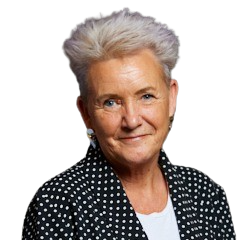
Lorraine Beavers is the Labour Party MP for Blackpool North and Fleetwood, having first been elected to parliament at the 2024 general election.
In the 2024 general election, Beavers won 16,744 votes, representing 40.0% of the vote. The Conservative candidate, Paul Maynard, received 12,097 votes (28.9%), while the Reform UK candidate, Dan Barker, secured 9,913 votes (23.7%). Beavers was duly elected with a majority of 4,647.
The Blackpool North and Fleetwood constituency was recreated for the 2024 general election. The predecessor seats were Blackpool North and Cleveleys (Conservative held) and Lancaster and Fleetwood (Labour held).
Blackpool North and Cleveleys was represented by Maynard from 2010 to 2024.
Political Career
In May 2026, Beavers publicly called for Keir Starmer, the prime minister, to step down/set out a timetable for his departure. The move followed the 2026 local elections and devolved elections to the Scottish Parliament and Senedd Cymru.
In January 2026, Beavers was one of over 60 Labour MPs to sign a letter to the prime minister calling for the introduction of an Australia-style ban on social media access for children under the age of 16. Organised by Plymouth Moor View MP Fred Thomas, the initiative brought together a cross-factional coalition of backbenchers – spanning the Socialist Campaign Group, Tribune Group and Blue Labour – to demand action.
The letter called on Keir Starmer to “show leadership” by introducing a minimum age for social media access “to protect young people from the consequences of unregulated, addictive social media platforms”.
It stated: “We are all strong supporters of technology, and of this Labour government’s ambition to use tech to improve lives. But successive governments have done far too little to protect young people from the consequences of unregulated, addictive social media platforms.”
In June 2025, Beavers was one of 22 newly elected Labour MPs who co-signed a letter to the leader of the House of Commons, Lucy Powell, and the Independent Parliamentary Standards Authority (Ipsa) calling for improved paternity leave for parliamentary staff. The letter, organised in collaboration with the campaign group The Dad Shift, argued that the current provision of two weeks’ paid leave was “unfair” and left parliament trailing behind leading private and public sector employers.
The letter said current rules meant MPs were “unable to support our staff appropriately at some of the most important times of their lives”.
They added: “Dads in our offices get just two weeks off, a situation that is unfair and puts parliament many steps behind top employers across the country.”
In response, a government spokesperson told PoliticsHome: “We are committed to making sure parents receive the best possible support to balance their work and home lives as part of our Plan to Make Work Pay.”
Beavers is listed as a member of the all-party parliamentary groups (APPGs) for liver disease and liver cancer (co-chair) and maritime and ports.
Beavers delivered her maiden speech on 21 October 2024 in a debate on the Employment Rights Bill.
In it, she said: “As a lifelong trade unionist and socialist, I am incredibly proud to be making my maiden speech on the Employment Rights Bill, which will be transformative for the working people I represent…
“With an end to fire and rehire, a clampdown on zero-hours contracts and more rights for unions to represent working people, the Bill will not just improve the lives of my constituents, but empower them.”
She added: “It is an honour and a privilege to be the voice of the residents of Blackpool North and Fleetwood. I am the 15-year-old girl who brought the school out on strike. I am the Army wife. I am the mum who could not afford to buy new shoes for her girls. I am the mum who cycled an extra mile to save 50p because funds were low.
“I understand what it is like to be poor and struggle between paydays. Sadly, I know that some of my constituents are going through far worse poverty than I could ever imagine. I see the cost of living crisis, the massive rises in rent, food and clothing and the mortgages that young people can only dream of affording, and I want to make it better.”
Prior to becoming an MP, Beavers served extensively in local government. She held posts on three different tiers of local government.
Beavers served as a councillor on Lancashire County Council from 2013 to 2024, including as deputy leader of the Labour group.
She also held posts on Fleetwood Town Council and Wyre Borough Council.
Political views
Leadership elections and loyalty
Labour deputy leadership 2025: Beavers was one of 117 Labour MPs who nominated Lucy Powell for the party’s deputy leadership in September 2025. The election followed the resignation of Angela Rayner, who stepped down as deputy prime minister and deputy party leader after an investigation into her tax affairs. It marked the first time since 2007 that Labour had held a deputy leadership contest while in government.
Powell, the former leader of the House of Commons, was seen as a candidate representing the party’s “soft left”; she was supported by leading soft left figures including Ed Miliband and Andy Burnham. She secured 117 nominations from the Parliamentary Labour Party (PLP), above the 80 required, and went on to win the election – defeating Bridget Phillipson with 54.3% of the vote.
Factional identity and party tradition
Socialism26: In May 2026, Beavers was a founding signatory of Socialism26, a political initiative and pressure group launched by a coalition of Labour MPs and general secretaries from several major affiliated trade unions, including Unison, Aslef, the CWU, the TSSA and the FBU. The group described itself as advocating a “programme for change” intended to facilitate a “progressive political reset” within the Labour Party. It called for a return to traditional socialist values and greater internal party democracy.
The initiative was built upon a set of policy demands, including urging the government to “recognise the genocide in Gaza”, deliver full compensation for the “Waspi” women affected by state pension age changes, protect civil liberties and embrace intervention to lower energy bills.
Socialism26 described this programme as “the bare minimum to ensure that the public can see and feel the difference a socialist government makes to their lives.”
Labour ‘reset’: In March 2026, Beavers was among dozens of Labour parliamentarians to co-sign a statement calling for a “reset” in the party’s internal culture and political direction. The statement, supported by an alliance of MPs from both the Mainstream (“soft-left”) and Momentum (left) wings of the party, condemned what it saw as the “insular, centralising approach” of the leadership. It called on Labour to rebuild “basic democracy, pluralism and fair process within our party.”
The intervention followed a series of by-election results in Gorton and Denton, Runcorn and Helsby and Caerphilly.
The statement said: “We stand against the insular, centralising approach of the current leadership that refuses to draw on the energy, talent and ideas of our whole movement, the continued underfunding of public services and local government, and the pandering to the talking points of the far right.”
It added: “We, the undersigned members from every section of the Labour Party – parliamentarians, councillors, internal election candidates, members and trade unionists, pledge to reset the Labour Party.”
Red Wall Caucus: Beavers is a member of the Labour Red Wall Caucus, a parliamentary pressure group of Labour MPs representing constituencies in the Midlands and Northern England. Formed in November 2024 and led by Bassetlaw MP Jo White, the caucus serves as a voice for the so-called “red wall” seats that returned to Labour en masse at the 2024 general election.
In May 2025, following a series of disappointing local election results for the Labour Party, the caucus issued a statement calling for a shift in government strategy. The group argued that Keir Starmer’s “plan for change” messaging had “fallen on deaf ears”, inviting ministers to “visit our areas, listen and rebuild the social contract between government and the people.”
The statement added: “The demands raised by new MPs from post-industrial towns where infrastructure is poor with years of underinvestment must be taken off the too-difficult-to-do list.
“Breakaway from Treasury orthodoxy otherwise we will never get the investment we desperately need. The government needs to it improve messaging by telling our story and articulating our values in the language that resonates and is heard.”
In a subsequent letter to Nigel Farage, the leader of Reform UK, on 27 August 2025, the MPs said they were elected “with commitments to destroy the criminal smuggling gang networks, ensure that our border is secure… and to quickly remove those who have no entitlement to be here.”
They went on to critique Farage’s deportations plan.
The MPs added: “We believe that migrants who pose a threat to public safety should be tagged, and that we should expand right-to-work checks to crack down on illegal working. We believe sex offenders should never get asylum in the UK. We believe that the criminal people smuggling gangs should be treated like terrorists.”
Living Standards Coalition: Beavers is a member of the Living Standards Coalition. Established in July 2025, the group’s stated aim was to develop and promote policy ideas that directly reduce everyday costs for households, particularly in areas such as food, energy, housing and childcare. In an open letter published upon its founding, addressed to Keir Starmer, the MPs wrote: “Our constituents will ask one question at the next election: did this Labour government make me better off?”
They added: “To raise living standards, we support government interventions that will help to increase incomes and lower costs.”
Electoral reform
Electoral reform amendment: In May 2026, Beavers was one of over 70 Labour MPs who signed an amendment to the Representation of the People Bill, calling on the government to establish a “national commission on electoral reform”. Tabled by Alex Sobel as chair of the fair elections APPG, the amendment aimed to force a rethink of the first past the post voting system.
At the time, Sobel described FPTP as “one of the biggest examples of a broken status quo in UK politics.” He invited colleagues to join this “common sense call to take a fresh look at how parliament is elected in modern Britain.”
Proportional representation bill: In December 2024, Beavers voted in favour of the Elections (Proportional Representation) Bill – introduced by Liberal Democrat frontbencher Sarah Olney under the 10-minute rule procedure. The bill sought to “introduce a system of proportional representation for parliamentary elections and for local government elections in England”.
A total of 138 MPs supported the bill – with 136 opposed. Notably, 59 Labour MPs backed Olney’s bill.
Introducing the bill, Olney told the House: “First past the post is a broken and unfair system. This summer, the Labour party won a landslide election victory, securing 63% of seats in the House of Commons in return for just 34% of the vote.
“The system leaves millions of voices unheard and creates a divisive, adversarial political climate where collaboration is discouraged and accountability is often sidestepped.”
Welfare
Welfare ‘reasoned amendment’ (June 2025): Beavers was one of the over 120 Labour MPs to sign the reasoned amendment to the government’s flagship welfare bill which aimed to reject the proposed legislation.
The amendment, in the name of senior Labour MP Dame Meg Hillier, objected to the fact that the bill had not been subject to a “formal consultation with disabled people” and that “250,000 people will be pushed into poverty” as a result of it, according to a government impact assessment.
The motion also called on the government to wait for the publication of the review into the Personal Independence Payment (Pip), helmed by minister Sir Stephen Timms, and the independent review, conducted by Sir Charlie Mayfield, into how the employment of disabled people could be boosted.
In a social media post in March 2025, Beavers said she would not “support anything that makes people in Blackpool North and Fleetwood poorer.”
In May 2025, Beavers had signed a letter warning the government that the cuts were “impossible to support” and calling for a change in direction.
The letter, signed by 42 Labour MPs, read: “The planned cuts of more than £7bn represent the biggest attack on the welfare state since George Osborne ushered in the years of austerity and over 3 million of our poorest and most disadvantaged will be affected.
“Whilst the government may have correctly diagnosed the problem of a broken benefits system and a lack of job opportunities for those who are able to work, they have come up with the wrong medicine. Cuts don’t create jobs, they just cause more hardship.”
Welfare vote (July 2025): Beavers went on to vote against the bill at second reading. The vote came after ministers agreed to significant concessions to avoid defeat via a mass rebellion of Labour MPs on 1 July 2025.
Assisted dying
Beavers voted in favour of the Terminally Ill Adults (End of Life) Bill, better known as the assisted dying bill, at both second reading (November 2024) and third reading (June 2025).
Social values and conscience issues
Abortion decriminalisation (2025): Beavers voted in favour of a backbench amendment to the Crime and Policing Bill that sought to decriminalise abortion in England and Wales in June 2025. The amendment, which was passed by a majority of 242 votes, removed women from the threat of prosecution for ending a pregnancy at any stage. As an issue of conscience, MPs were allowed to vote according to their personal beliefs.
Labour For Trans Rights: Beavers attended a rally organised by Labour for Trans Rights, a pressure group within the Labour party, during the party’s annual conference in September 2025. The event was described as a “Trans Solidarity Rally” and was intended to affirm the place of transgender people and their allies within the Labour movement.
Palestine
Palestinian recognition letter (July 2025): In July 2025, Beavers was among the over 254 MPs to sign a cross-party letter calling for the government to immediately recognise the state of Palestine. The letter called on the prime minister and foreign secretary to recognise Palestine at the UN Conference then taking place in New York.
Before Politics
Born Lorraine Shewan in November 1962, she grew up in Fleetwood.
Beavers joined the Labour Party at the age of 16.
Personal Life
Beavers married John Beavers in 1983. Her husband served in the British Army, including during the Falklands War and in Northern Ireland. They have two children.
Trivia
At 16, Beavers had her first taste of activism when a headteacher publicly blamed a student’s striking father for the cornflake shortage.
She organised a protest and eventually, the teacher was forced to apologise.
Beavers told the commons in her maiden speech: “I was incensed. I organised a demonstration outside the school gates that very lunchtime. The head was furious and demanded that we come back in, but we stood united and refused.
“Eventually we negotiated a deal, agreeing that the head would make a full apology at the next school assembly.”

Lorraine Beavers: ‘The silent killer the national cancer plan must confront’
31 October 2025