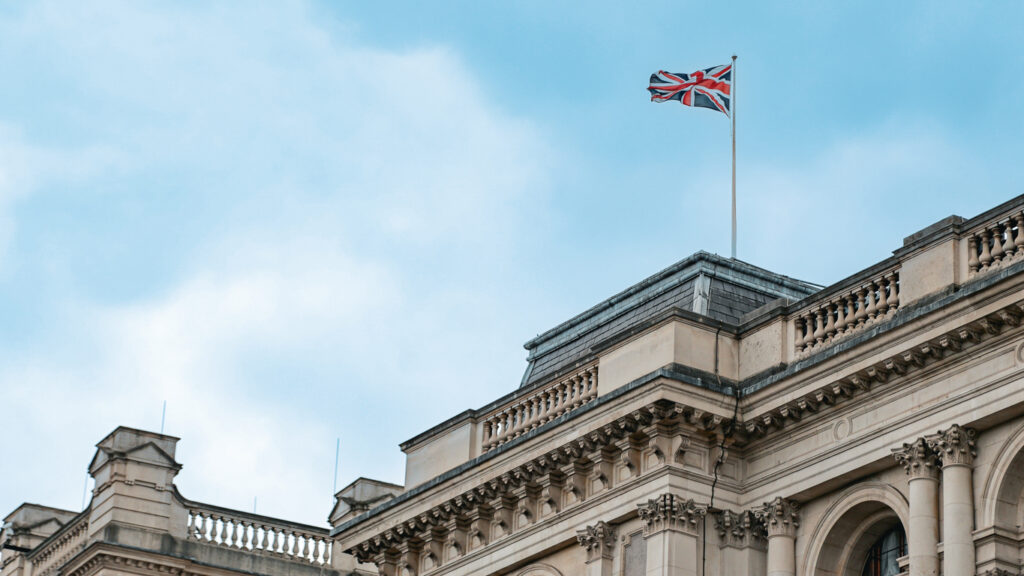
Formally, the privy council is a body of advisers to the monarch of the United Kingdom. Historically, it was the private council of the sovereign and the primary instrument of state administration. The council is said to be as “old as the monarchy itself”.
Most of its original power, exercised under the royal prerogative, has now been transferred to the cabinet and parliament. In its modern form, the privy council’s main functions are to give legal effect to decisions made by the government, to act as a final court of appeal for certain Commonwealth countries and overseas territories, and to oversee the affairs of chartered bodies.
Its work is managed by a small government department, the Privy Council Office, led by the clerk of the privy council.
The presiding officer of the privy council is the lord president of the council, who is always a senior cabinet minister. The lord president of the council is currently Alan Campbell. In recent years, the role of president of the council has been held by the leader of the House of Commons.
What does the privy council do?
Orders in council
The council is the official mechanism whereby ministers can advise the monarch on matters of state and on the exercise of the royal prerogative powers.
The sovereign, when acting on the council’s advice, is known as the king-in-council or queen-in-council. The council’s primary modern role is to make orders in council.
The orders are legal instruments which are made under prerogative or statutory powers (authority granted by acts of parliament). They are used for a wide range of purposes, including the exercise of powers delegated by statute, granting royal charters to institutions and making emergency regulations (under the Civil Contingencies Act 2004).
The privy council oversees 1,000 institutions that operate under a royal charter. This includes many of the UK’s older universities, scientific and professional institutions (such as the Royal College of Surgeons) as well as charitable bodies. Any changes to their governance documents require privy council approval under “orders of council”, which do not require the sovereign’s presence or signature.
Before the passage of the Constitutional Reform and Governance Act 2010 the management and governance of the civil service was conducted through orders in council under the royal prerogative. Using this power, Margaret Thatcher as prime minister issued an order in council banning employees of the Government Communications Headquarters (GCHQ) from joining any trade union for reasons of national security.
Proclamations
A proclamation is a formal announcement by the sovereign and the privy council. Proclamations can dissolve Parliament, create bank holidays or issue new coins.
Until 2004, the sovereign, as advised by the privy council, could proclaim a state of emergency. A total of 12 such proclamations were made between 1920 and 1974.
Judicial function
The judicial committee of the privy council (JCPC) serves as the final court of appeal for the UK’s overseas territories and crown dependencies. It also serves as the final court of appeal for a number of independent Commonwealth countries that have retained it as part of their justice system.
The jurisdiction of the JCPC originated at the Norman conquest under the premise that: “The king is the fountain of all justice throughout his dominions, and exercises jurisdiction in his council, which act in an advisory capacity to the crown.”
Historically, rulings have been made in different kinds of law from many countries.
Before the establishment of the supreme court in 2009, the JCPC held jurisdiction over devolution issues.
What is the membership of the privy council?
Membership of the privy council is an honour granted for life by the monarch on the advice of the prime minister.
In 2009, Lord Mandelson, a senior government minister, answered a question concerning the composition and appointment of the council.
He responded: “Recommendations are made on the basis that the individual concerned is involved in affairs of state or has a close and confidential relationship with the crown. In practice, this means those who have obtained high office or senior positions in the executive, legislative or the judicial branches of the state either in this country or in one of the countries of which the [monarch] is head of state.
“It follows therefore, that most new privy counsellors are serving ministers, senior parliamentarians or judges.”
There are over 700 privy counsellors. They are drawn from senior public life and include:
- Cabinet ministers.
- Some junior ministers.
- The leaders of the main political parties.
- The speaker of the House of Commons.
- The first ministers of Scotland, Wales and Northern Ireland.
- Senior judges.
- Archbishops.
Privy counsellors are entitled to use the style “The Right Honourable” before their name.
Can members of the privy council resign or be expelled?
While membership is conferred for life, the monarch can remove an individual from the privy council. On 4 February 2026, Keir Starmer, the prime minister, announced that he had recommended to the king that Lord Mandelson be removed from the privy council.
Former Labour MP Elliot Morley was expelled from the privy council over the expenses scandal in 2011.
Members of the privy council have resigned from the body, usually in disgrace. These figures include John Profumo (1963), John Stonehouse (1976) and Jonathan Aitken (1997). Profumo, Stonehouse and Aitken were the only three people to resign from the privy council in the 20th century.
In 2013, former deputy prime minister Lord (John) Prescott resigned from the privy council in protest against delays to the introduction of press regulation.
Also in 2013, former Liberal Democrat cabinet minister Chris Huhne resigned from the privy council after pleading guilty to perverting the course of justice.
The oath and ‘privy council terms’
Upon their appointment, all privy counsellors must take an oath, which dates back to Tudor times. A section of the oath requires the taker to keep “secret matters committed” to them.
The oath includes the commitment: “You will in all things to be moved, treated and debated in Council, faithfully and truly declare your mind and opinion, according to your Heart and Conscience; and will keep secret all matters committed and revealed unto you, or that shall be treated of secretly in council.”
This is constitutionally significant as it allows the government to share highly sensitive information, such as national security intelligence, including with the leader of the opposition on “privy council terms”. This means the information is shared on the strict understanding that it is for background purposes only and cannot be disclosed publicly.
In 2003, Tony Blair, the prime minister, met Conservative leader Iain Duncan Smith and Liberal Democrat Charles Kennedy to discuss evidence about Iraq possessing weapons of mass destruction.
Privy counsellors must also commit to defending the sovereign against “all foreign princes, persons, prelates, states or potentates”.
Privy council meetings: how often do they happen?
For its executive function, meetings of the privy council are held about once a month. The sovereign presides and the meeting is attended by the council clerk, who records the names of those present and authenticates the monarch’s assent to measures with their own signature.
Meetings are therefore attended by the sovereign, the clerk of the council and a small number of government ministers.
By tradition, the meetings are brief and are conducted with the ministers standing up. The monarch gives their assent to the orders in council by saying “Approved.”
Upon the “demise of the crown” (death or abdication of the monarch), the privy council meets to declare the accession of the new sovereign. In this instance, the privy council is expected to meet in full. The council also meets in full if a monarch intends to marry. The last time this latter meeting occurred was during Queen Victoria’s reign.
However, a total of 200 privy counsellors were invited to attend the official accession council of September 2022, following the death of Queen Elizabeth II – less than the full membership.
Criticism of the privy council
In an article for the Guardian, published in December 2000, former Labour deputy leader Roy Hattersley called for the council to be abolished.
Hattersley concluded that membership functioned chiefly as a mark of status rather than a substantive governing role. “Membership is a medal”, he wrote, suggesting that former ministers wore the distinction “as if it were part campaign ribbon and part wound stripe.”
Hattersley rejected the idea that the Privy Council remained an important constitutional body, arguing instead that “traditionalists and romantics still pretend that the privy council is more than a footnote to the ‘dignified’ – that is to say outdated – part of our constitution.”
In his own experience, he had attended only one meeting in 25 years, reinforcing his view that it was “simply pointless.”
Hattersley added: “The usual complaint against it (normally made by Tony Benn) is that it is the institution through which orders in council are made and the royal prerogative exercised – both potential abuses of our parliamentary system.
“But the blame lies with ministers. The privy council only provides the flummery which camouflages their autocracy.”
Evaluation question
To what extent is Roy Hattersley correct in his assessment that the body is just outdated “flummery” and a ceremonial cover for largely unchecked executive decision-making? Placement after “…The privy council only provides the flummery which camouflages their autocracy.”
The operation of the privy council
Privy council intrigue and the unseating of a speaker
On 16 October 1834, a fire destroyed the majority of the medieval Palace of Westminster, the seat of the Houses of Parliament. The devastating fire had an immediate political impact that implicated the operation of the privy council.
When parliament reconvened in February 1835, the incumbent speaker, Sir Charles Manners-Sutton, faced a challenge from Whig MPs. The Whigs alleged that Manners-Sutton had improperly assisted in the formation of a new Conservative government during the period when the palace lay in ruins.
The controversy centered on the speaker’s attendance at meetings of the privy council while King William IV was in the process of replacing the Whig administration of Viscount Melbourne with a Tory government led by the Duke of Wellington and Sir Robert Peel. Manners-Sutton’s defense was that his meetings with the king and his attendance at the privy council were strictly related to the emergency caused by the fire.
Leading the attack for the Whig opposition, Lord John Russell acquitted Sutton of “any share in any political intrigues.” The Whigs were likely seeking an opportunity to assert their parliamentary authority after having been unceremoniously dismissed from office in favour of Peel and the Conservatives.
The result was a victory for the Whig opposition, with James Abercromby elected speaker by 316 votes to 306 – a majority of 10. It marked the first time a speaker had been removed by a vote of the House since 1780.
Proclaiming an emergency bank holiday
In March 1968, the prime minister, Harold Wilson, convened an emergency late-night meeting of the privy council to approve an emergency bank holiday. This would enable the government to close the London gold market to stem the losses being suffered by the British pound.
However, George Brown, the talented and eccentric foreign secretary, was not in attendance for the meeting. The foreign secretary felt he had been improperly excluded and so confronted Wilson. But he appeared heavily intoxicated. Brown ultimately stormed out of Downing Street — though it was unclear whether he had tendered his resignation.
Brown, who felt compelled to resign as foreign secretary, later told the press that he could not be found ahead of the privy council meeting because “no one looked hard enough… at no stage was I away from the telephone.”
Heath, the privy council and emergency powers
On 9 February 1972, the Conservative government led by Edward Heath declared a state of emergency as the first official national miners’ strike since 1926 threatened to bring the country’s power supply to a critical low. The strike, reported to involve 280,000 miners, had begun one month earlier on 9 January after wage negotiations between the National Union of Mineworkers (NUM) and the National Coal Board (NCB) broke down.
The government invoked emergency powers under the terms of the Emergency Powers Act 1920. The proclamation of the state of emergency was read in the House of Commons by the speaker.
It read: “We counsellors of state, to whom have been delegated certain royal functions as specified in letters patent dated the 4th day of February 1972, being of opinion that the present industrial dispute affecting persons employed in the coal mines and the production and distribution of fuel constitutes a state of emergency within the meaning of the said Act of 1920 as so amended, have in pursuance thereof made on Her Majesty’s behalf a proclamation dated the 9th day of February, 1972, declaring that a state of emergency exists.”
On 13 November 1973, the Heath government declared a state of emergency – the fifth such declaration in just over three years.
Lorry protest: Blair’s use of emergency powers
On 8 September 2000, a series of protests and blockades began at UK oil refineries, sparking a fuel supply crisis that presented Tony Blair’s government with arguably its most serious domestic crisis. The protest movement, loosely co-ordinated by a group called Farmers for Action, was a response to tax accounting for over 80% of the total cost of unleaded petrol. This marked an increase from 72.8% in 1993.
In response, the government obtained an order in council under the Energy Act 1976. This gave ministers emergency powers to compel the delivery of fuel to essential services, with the military put on standby.
The government’s emergency powers had a positive effect on distribution, and pressure built on demonstrators to call off the blockades. Public opinion generally turned against the protestors when emergency services and food supplies came under threat. On 13 September, some petrol tankers were back on the roads.
Boris Johnson and the prorogation controversy
On 28 August 2019, the government of Boris Johnson announced that it had advised Queen Elizabeth II to prorogue parliament. The Queen, acting on the prime minister’s advice at a privy council meeting at Balmoral, approved an Order in Council to suspend parliament for five weeks. The prorogation – typically an uncontroversial and insignificant procedure – was scheduled to begin between 9-12 September and last until a state opening on 14 October. Since 1979, parliament had not been prorogued for more than three weeks. The five-week prorogation would have been the longest since 1930.
The government’s stated rationale was to end the parliamentary session, and introduce a new legislative agenda via a queen’s speech.
Johnson won the 2019 Conservative Party leadership contest on a platform of delivering Brexit “do or die” and “no ifs no buts”. The Brexit withdrawal date had previously been scheduled for 29 March 2019 – before two successive extensions to 12 April and then 31 October.
Prorogation in order to secure a ‘no deal’ Brexit – the default legal position under EU law’s Article 50 process – had been a point of debate in the 2019 Tory leadership contest. This strategy, it was suggested, would prevent MPs from legislating to block a no deal Brexit, tabling a vote of no confidence in the government, or introducing a motion to trigger an early election.
But the approach was denounced by critics, including those within the Conservative Party, as an anti-democratic, unconstitutional ploy to bypass MPs – at a time when the parliamentary arithmetic was finely balanced.
The controversy culminated on 24 September 2019, when the supreme court, in the landmark Miller/Cherry case, unanimously ruled that the prime minister’s advice to the queen was unlawful. Eleven justices, led by Lady Hale, ruled that the prorogation was “void and of no effect”, meaning parliament could be reconvened the following day.
The prorogation, it was found, “had the effect of frustrating or preventing, without reasonable justification, the ability of parliament to carry out its constitutional functions as a legislature and as the body responsible for the supervision of the executive.”
Additional resources
- The Privy Council Office: https://privycouncil.independent.gov.uk/
- Jurisdiction Map of the Judicial Committee of the Privy Council: https://jcpc.uk/uploads/jurisdiction_of_the_jcpc_fb7f7434ee.pdf

