
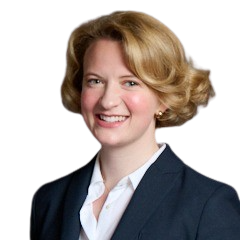
Lilian Greenwood is the Labour MP for Nottingham South, having first been elected to parliament at the 2010 general election.
In the 2024 general election, Greenwood received 15,579 votes (47.4%). The Conservative candidate received 5,285 votes (16.1%), and the Reform UK candidate secured 4,936 votes (15.0%). Greenwood was duly elected with a majority of 10,294.
The Nottingham South constituency covers the southern part of the city of Nottingham in Nottinghamshire. Campuses of both the University of Nottingham and Nottingham Trent University are located within the constituency. The seat has been held continuously by the Labour Party since 1992, when Labour gained it from the Conservatives. It is considered a safe Labour seat.
Greenwood’s immediate predecessor as the MP for Nottingham South was Alan Simpson, who represented the seat from 1992 to 2010.
Political Career
Greenwood currently serves as parliamentary under-secretary of state in the Department for Work and Pensions. She was appointed to this role in July 2026, following the Labour leadership contest and Andy Burnham’s elevation as prime minister.
Greenwood served as parliamentary undersecretary of state for local transport and lord commissioner of HM Treasury (a government whip role) from September 2025 to July 2026.
Greenwood was initially appointed to the post of vice-chamberlain of HM household (a whip role) in the September 2025 ministerial reshuffle. This represented a demotion as Greenwood had held the post of parliamentary under-secretary of state for future of roads at the Department for Transport since July 2024.
Mere days after her de facto demotion, however, Greenwood was re-appointed as a transport minister. She served as vice-chamberlain of HM household for a total of nine days from 7 September 2025 and 16 September 2025, according to her Gov.uk profile.
At the time, Greenwood said on social media: “Delighted to be reappointed to the DfT in a new role as transport minister.
“Chuffed to also be continuing my work in the whips team as we continue to drive forward this Labour government’s agenda and work to rebuild a transport system Britain can rely on.”
Prior to the 2024 general election, which saw Labour returned to power after 14 years in opposition, Greenwood served extensively in shadow ministerial posts. During Keir Starmer’s tenure as opposition leader, she was shadow minister for arts, heritage and civil society (September 2023 – July 2024) and opposition deputy chief whip (May 2021- September 2023). In this latter capacity, Greenwood was partly responsible for enforcing party discipline. As a whip, Greenwood’s primary duty was to ensure that her party’s MPs attended parliamentary votes and supported the frontbench’s position.
Greenwood sat in the shadow cabinet as shadow secretary of state for transport from September 2015 until June 2016. She was among those to resign from the shadow frontbench in protest at Jeremy Corbyn’s then-leadership and his approach to the 2016 referendum on Britain’s membership of the European Union (EU).
In her resignation letter, addressed to Corbyn, Greenwood described the Labour leader as a “kind, decent and principled colleague”. But she called for a “new leadership” that could “bridge the widening divides in our party, both in parliament and in the country as a whole.”
In a speech to her Constituency Labour Party (CLP), published by the New Statesman in July 2016, Green described feeling “undermined” by Corbyn.
She stated: “In the nine months I spent in the shadow cabinet, I never briefed against Jeremy. I never tweeted what was happening in shadow cabinet meetings or spoke to journalists about our private discussions. Whenever challenged, I defended our party leader.
“I hope you all know that I work hard for my constituents in Nottingham South. I worked just as diligently in the shadow cabinet. Leading the Labour transport team.”
Greenwood said she was furious that a shadow cabinet reshuffle began on the day of rail fare rises, which she and her staff had spent weeks preparing to campaign on.
She said: “Rail fares go up once a year on 2 January. It’s the perfect opportunity to show that this Tory government aren’t on the side of working people… On 4 January – a cold dark Monday morning – I was at Kings Cross at 7am doing Radio 5 and BBC TV. Standing with Jeremy and the Rail Union General Secretaries for the media photocall…
“Incredibly, Jeremy launched a shadow cabinet reshuffle on the same day.”
Greenwood described the leadership’s decision to reshuffle Labour’s frontbench in this way as “unnecessary” and “incompetent”.
Greenwood also said she had been assured by Corbyn’s director of policy that he would support HS2, but the Labour leader later suggested to a journalist that the line should not stop in central London. When I raised my concerns, it was simply shrugged off”, she said.
“It undermined me in front of colleagues and made me look weak. It made me feel like I was wasting my time.”
From July 2017 to January 2020, Greenwood served as chair of the House of Commons transport select committee – the committee responsible for the scrutiny of the Department for Transport and its associated public bodies. Its remit covers all aspects of transport policy in England, as well as UK-wide issues such as aviation and maritime policy. She had previously sat on the committee from July 2010 to November 2010.
By virtue of her role as transport committee chair, Greenwood sat on the liaison committee – the “super committee” composed of the cross-party chairs of all the other commons select committees. It has a broad oversight role, but is best known for its questioning of the prime minister in sessions that take place two or three times a year.
In June 2015, Greenwood introduced a private members’ bill to address accessibility on video streaming services. Her On-demand Audiovisual Services (Accessibility for People with Disabilities affecting Hearing or Sight or both) Bill aimed to close a loophole that exempted platforms like Netflix and BBC iPlayer from providing the same level of subtitles, signing, and audio-description required of traditional broadcasters.
While the bill itself did not pass, its aims were later substantially incorporated into the government’s Digital Economy Act 2017.
Greenwood was also a member of the education committee from October 2016 to May 2017, and a member of the regulatory reform committee from July 2010 to March 2015.
Under Ed Miliband’s Labour leadership, Greenwood served as shadow rail minister (October 2011 – September 2015) and as assistant opposition whip (October 2010 – October 2011).
Greenwood delivered her maiden speech on 3 June 2010 during a debate on European affairs. In it, she said: “Unfortunately, I fear that the so-called new politics that members on the [Conservative-Liberal Democrat] government benches are so keen to talk about may provide a pleasing soundbite but be of no use to the people I seek to represent.
“I fear that the drive for efficiencies and cutting waste that the [chancellor George Osborne’s] team is so intent upon will actually take us back to a time as bad as the one that I remember in the 1980s – a time when millions faced the misery of unemployment with no prospect of real help or support, when public housing was either sold off or allowed to deteriorate so that only those in desperate need would want to live there, and when it was normal to wait for months, and even years, for hospital treatment.”
Political Views
Leadership elections and loyalty
Labour leadership 2020: Greenwood was one of 31 Labour MPs who nominated Lisa Nandy for the party’s leadership in early 2020. The election was triggered by the resignation of Jeremy Corbyn following the party’s defeat in the 2019 general election, which resulted in Labour’s fewest seats in the House of Commons since 1935.
Nandy, the MP for Wigan, argued that the party needed a “bridge” to reconnect with traditional working-class voters in northern England. She finished third in the contest with 16.2% of the vote.
Labour leadership 2015: Greenwood was one of 68 Labour MPs who nominated Andy Burnham for the party’s leadership in June 2015. The election followed the resignation of Ed Miliband after the party’s defeat in the 2015 general election. It was the first contest held under the “one member, one vote” system, which replaced the previous electoral college.
Burnham, the shadow health secretary, was initially considered the frontrunner. He secured 68 nominations from the Parliamentary Labour Party (PLP), comfortably exceeding the 35 required to reach the final ballot. He ultimately finished second in the contest with 19% of the vote, losing to Jeremy Corbyn in the first round.
Corbyn loyalty list: In March 2016, Greenwood was labelled as “core group plus” by the Corbyn leadership in a leaked list which categorised Labour MPs by their perceived loyalty.
Labour leadership 2016: Greenwood supported Angela Eagle for the party’s leadership in July 2016. The election was triggered by a challenge to Jeremy Corbyn following the EU referendum, which led to a wave of shadow cabinet resignations and a vote of no confidence supported by 172 MPs.
Eagle, the former shadow first secretary of state, was the first to formally launch a challenge against Corbyn. However, she withdrew from the race on 19 July after attracting fewer nominations than Owen Smith. Greenwood subsequently shifted her support to Smith.
Corbyn was ultimately re-elected with an increased mandate of 61.8% of the vote.
Labour leadership 2010: Greenwood was one of 63 Labour MPs who nominated Ed Miliband for the party’s leadership in May 2010. The election followed the resignation of Gordon Brown, who stepped down as prime minister and Labour leader after the 2010 general election.
Miliband, the former energy and climate change secretary, was seen as the candidate of the “soft left” and secured significant backing from affiliated trade unions. He secured 63 nominations from the Parliamentary Labour Party (PLP), exceeding the 33 required to reach the final ballot. Miliband went on to narrowly defeat his brother, David, in the final round by 50.7% to 49.3%.
Factional identity and party tradition
Tribune group (2017): Greenwood was listed among the supporters of the Tribune parliamentary group – a caucus generally described as representing the party’s “soft left”.
The Tribune group was initially formed in 1964 to support the newspaper of the same name. It served as a prominent forum for those parliamentarians situated on the left of the Labour Party – but it split over Tony Benn’s campaign for the deputy leadership in 1981. Benn’s supporters founded the Campaign group – which evolved into the Socialist Campaign Group (SCG). Today, the Bennite SCG is strongly associated with the Labour left tradition.
During the 1980s, the Tribune group emerged as a more natural home for those on Labour’s “soft left”.
In 2017, Efford officially re-launched the group with a new mission statement calling for “opportunity and aspiration” to be placed at the heart of the party’s programme. Efford said he had reformed the group to ensure that the centre-left of the Parliamentary Labour Party (PLP) “have a space in which to put forward ideas and debate which has not been there under successive leaders”.
He added: “The view of Labour MPs at the moment tends to be that too much are just Blairites who want to stab Jeremy Corbyn in the back. We want to show that is not where we are, and that we want to develop our own ideas that represent the centre-left of the party.”
Brexit and Europe
Brexit referendum: Greenwood supported the Remain campaign in the 2016 EU referendum, and therefore agreed with a majority of constituents, 53.5% of whom voted to Remain. She later described the referendum campaign as “divisive and frankly xenophobic”.
Article 50: In February 2017, Greenwood voted against the European Union (Notification of Withdrawal) Bill. The legislation empowered the prime minister to notify the Council of the European Union of the UK’s intention to withdraw, formally triggering the process set out in Article 50 of the Treaty on European Union. MPs supported the bill by 498 votes to 114 at second reading. In voting against the bill, Greenwood defied the party whip – one of 47 Labour MPs to do so.
Remain pledge: During the 2019 general election campaign, Greenwood was one of 193 Labour candidates to sign the anti-Brexit “Remain pledge”, drawn up by the campaign group Remain Labour.
It stated: “Labour is committed to a confirmatory referendum, to give you the final say on Brexit. If elected as your Labour MP, I pledge to campaign to Remain in the EU.”
Welfare
Welfare vote (July 2025): Greenwood voted in favour of the government’s flagship welfare bill at second reading. The vote came after ministers agreed to significant concessions to avoid defeat via a mass rebellion of Labour MPs on 1 July 2025.
Assisted dying
Greenwood voted in favour of the Terminally Ill Adults (End of Life) Bill, better known as the assisted dying bill, at both second reading (November 2024) and third reading (June 2025).
Social values and conscience issues
Abortion decriminalisation (2025): Greenwood voted in favour of a backbench amendment to the Crime and Policing Bill that sought to decriminalise abortion in England and Wales in June 2025. The amendment, which was passed by a majority of 242 votes, removed women from the threat of prosecution for ending a pregnancy at any stage. As an issue of conscience, MPs were allowed to vote according to their personal beliefs.
Same-sex marriage (2013): In February 2013, Greenwood voted in favour of the Marriage (Same Sex Couples) Bill at its second reading. The landmark piece of legislation, which received its second reading by 400 votes to 175, legalised marriage for same-sex couples in England and Wales.
Foreign policy and security
Syria airstrikes (2015): Greenwood voted against a government motion to extend UK airstrikes against Isis from Iraq into Syria in December 2015. The motion, which was passed by 397 votes to 223 after a ten-hour debate in the House of Commons, authorised the RAF to conduct strikes against Isis targets in Syria.
Palestine
Palestinian recognition vote (2014): In October 2014, Greenwood was one of 192 Labour MPs who voted in favour of recognising Palestine as a state. The motion, passed by 274 votes to 12, called on the government to “recognise the state of Palestine alongside the state of Israel as a contribution to securing a negotiated two-state solution”.
Before Politics
Born Lilian Rachel Greenwood in Bolton, Lancashire on 26 March 1966, she attended Canon Slade School in Bolton. She studied economics and social and political sciences at St Catharine’s College, Cambridge University.
After moving to Nottinghamshire in 1999, she worked for 17 years as a regional official and organiser for the public sector trade union UNISON.
Personal Life
Greenwood is married and has three daughters.
Trivia
Greenwood was named after her grandmother, who was denied a grammar school education by her father because he believed “education was wasted on girls.”
Greenwood cited this as an early inspiration for fighting for gender equality.
In her 2010 maiden speech, Greenwood said: “A generation later, my own mother, the daughter of a Lancashire clog-maker, also had limited educational opportunities. Her teachers at secondary school asked her to help with the younger pupils, but there was no opportunity for her to take public exams, and she left school without a single qualification.
“The fact that the abilities of those two women had been squandered or ignored on the basis of their sex or their class infuriated and inspired me as a child”


Deliver for the Midlands by connecting it with HS2
22 September 2020