By Alex Stevenson Follow @alex__stevenson
Up to two million public sector workers are striking over their pensions today, as union leaders' impasse with the government continues.
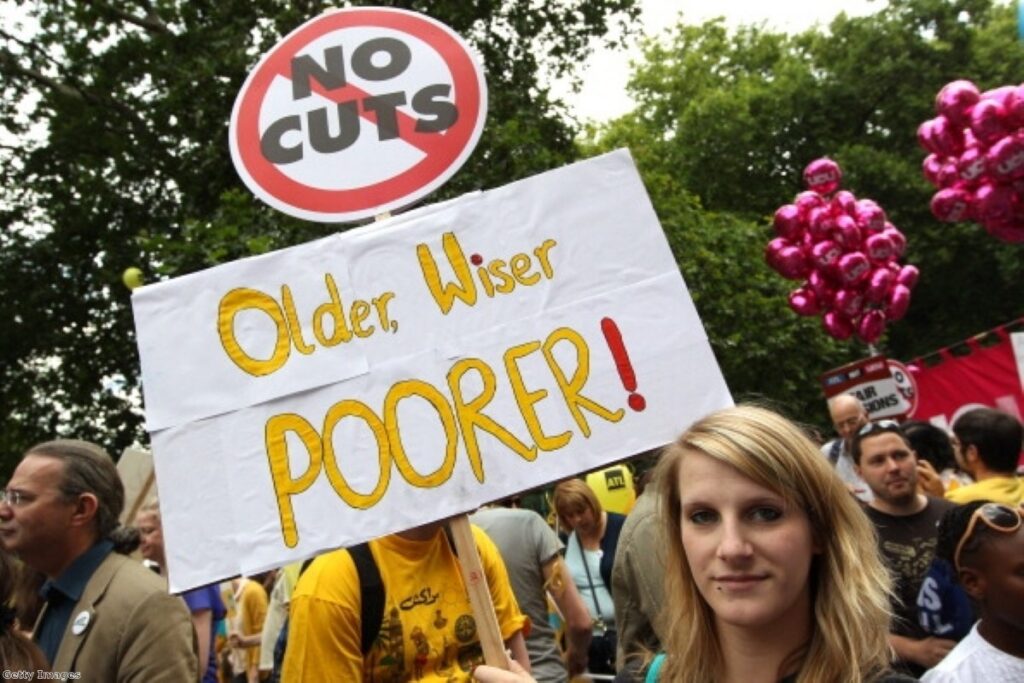
Picket lines are in operation up and down the country in what is being called the biggest walkout in a generation.
The strike action has been hailed as a key moment in the return of the unions, but David Cameron poured scorn on suggestions of mass disruption in prime minister's questions.
He told MPs: "Despite the disappointment of the party opposite that supports irresponsible and damaging strikes, it looks like something of a damp squib."
Thirty-seven unions are participating in today's industrial action after refusing a government offer ministers insisted was "generous" earlier this month.
Union leader Brendan Barber, general secretary of the TUC, argued today that public sector pensions are not "unsustainable or unaffordable" as the government claims.
"Let's be clear. Of course people never take industrial action lightly," TUC general secretary Brendan Barber said at a rally in Birmingham.
"Nobody wants to forsake a day's pay when the cost of living is high, and nobody wants to inconvenience the public and other working families. But when unfairness is piled on injustice you are right to take a stand."
This lunchtime Mr Cameron attacked union leaders for going on strike "at a time when negotiations are still underway", however.
He said the reforms to public sector pensions were "absolutely essential".
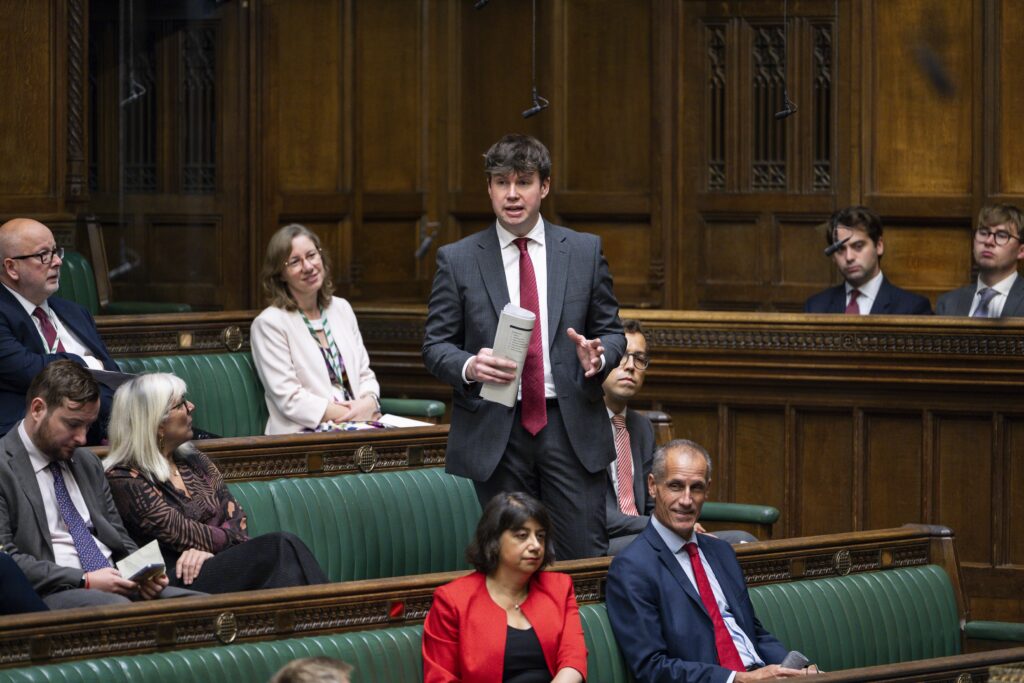
Outside parliament, Labour MPs rallied at a picket line to back workers who have refused to work in the Palace of Westminster.
"I've been talking to cleaners today who are looking forward to a £6,000-a-year pension after 20 years of service. I don't think that's gold-plated at all," Labour backbencher Tom Blenkinsop told politics.co.uk.
"I think Cameron needs to get into the real world, get out of his mansion house in Oxfordshire and see some real people on a picket line."
Less than a third of civil servants are taking strike action today, the Cabinet Office said.
Schools are suffering the most disruption, with just 16% state-funded schools able to make it through the day fully open. A further 16% were partially open and 62% were completely closed for the day, according to Department for Education statistics.
Sixty-three per cent of maintained schools and 57% of academies were shut.
Airports face some disruption, but initial reports suggested this was limited. Some frequent flyers even claimed border controls were better manned than usual.
It is the sweeping nature of the public services affected – including courts, libraries council services and driving test centres – which marks today out as being unusual, however.
As of 15:30 the Local Government Association said around 670,000, or 32% of the local government workforce in England and Wales, was striking.
"Councils across England and Wales are working tirelessly to ensure that disruption to essential 'life and limb' services is kept to a minimum during today's strikes," the LGA said in a statement.
NHS hospitals are seeing walkouts from nurses, resulting in around 6,000 operations being rescheduled so that urgent surgery is prioritised. Emergency and critical care services are operating as normal.
"Once again the public sector is being made to pay for the crisis caused by the banking sector," Public and Commercial Services union general secretary Mark Serwotka said.
"The economy is heading back into recession. If the government was serious about turning the economy round it would invest in collecting the £120 billion in avoided, evaded and uncollected tax."
Marches and rallies took place across the country today. In east London, 37 protesters were detained this morning on suspicion of breach of the peace, the Metropolitan police said.
This afternoon the Met imposed a "containment" on Panton Street in Haymarket, which the UK Uncut group claimed was the headquarters of the highest paid chief executive in the country.
Unite general secretary Len McCluskey said November 30th 2011 would become known as the day when the trade union movement re-established itself as a major force fighting to protect economic and social advances since the Second World War.
"Today will be remembered as the day when the trade union movement renewed and strengthened its compact with the British people and clearly stated it was fighting back on behalf of families and communities struggling with soaring household bills and record levels of unemployment," he said.
General secretary Jonathan Baume said his First Division union, which represents the top seven civil service pay grades, was striking for the first time in its history because members are "angry about what is being proposed" on pensions.
"There's the long-term threat to the value of pensions, and even though we are now making some progress in the negotiations this has come quite late," he told politics.co.uk.
"There are areas such as the increased contributions to 2015 which the government is refusing to talk about at all.
"Even today, we are still not clear what aspects of [chief secretary to the Treasury] Danny Alexander's proposals mean in terms of the detail."
Cabinet Office minister Francis Maude urged workers to look at the government's offer for themselves, rather than listening to the "rhetoric" of union leaders.
"Let me say again that the timing of this strike is indefensible and wrong," he said.
"Union leaders should be responding in a responsible manner to reach agreement. A strike will not achieve anything other than causing inconvenience to hard working people at a time when we are trying to get the economy back on its feet."
Mr Baume said wavering strikers will have had their resolve strengthened by announcements in yesterday's autumn statement.
The chancellor announced plans to cap public sector pay at one per cent for two years, after the current pay freeze ends, and take steps to 'rebalance' pay levels across the country.
Centre-right thinktank Policy Exchange pointed out that a typical public sector worker will earn £1,900 more a year than their contemporaries in the private sector, however.
"Unions are striking despite generous pay and extraordinary pensions arrangements – but they need to start focusing on quality of service, productivity and jobs," head of economics and social policy Matthew Oakley said.