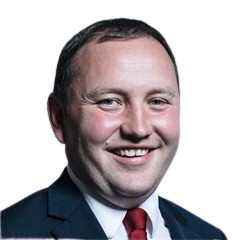
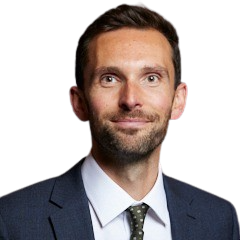
Ian Murray is the Labour MP for Edinburgh South, having first been elected to parliament at the 2010 general election.
In the 2024 general election, Murray won 24,976 votes, representing 53.3% of the vote. The Scottish National Party (SNP) candidate, Simita Kumar, received 7,725 votes (16.5%), while the Scottish Green Party candidate, Jo Phillips, secured 4,270 votes (9.1%). Murray was duly elected with a majority of 17,251 votes.
The Edinburgh South constituency covers southern parts of the city including Morningside, Southside/Newington, and Liberton/Gilmerton. Historically Conservative/Unionist, Labour has held the seat since 1987.
Political Career
Murray currently serves as minister of state in the Department for Digital, Culture, Media and Sport. He was appointed to this role in July 2026, following the Labour leadership contest and Andy Burnham’s elevation as prime minister.
Murray served as minister of state in the Department for Culture, Media and Sport and the Department for Science, Innovation and Technology from September 2025 to July 2026.
Murray served in cabinet as secretary of state for Scotland from July 2024 to September 2025.
Murray’s demotion in September 2025 reportedly sparked something of a backlash among Labour MPs. He was replaced by the recently returned former foreign secretary, Douglas Alexander. Torquil Crichton told the Daily Record that Scottish Labour MPs were “all very sorry to see Ian go”, saying he had ” held the Alamo for a decade, always outnumbered, never outgunned, and he led us proudly back into government.”
Murray initially said he was “stunned” to lose his cabinet-ranking position. In a written statement, he said he was “hugely disappointed to be leaving government with so much done and so much more to do”.
He added: “Politics in the UK, and elsewhere, now is at a dangerous crossroads. It is the responsibility of all of us in public life to make an argument for progressive change that bring prosperity, hope and our communities together, rather than further division and despair.”
Murray was later reappointed to government, taking up a more junior minister of state role jointly in the science, innovation and technology and culture, media and sport departments.
In December 2025, Murray told the Holyrood magazine his wife was “absolutely f***ing furious” about his demotion.
The senior Labour MP stated: “For me, the hardest part was the complete lack of any sort of recognition for doing a half decent job. That’s the hardest bit.
“The second hardest bit is having no explanation of why I was sacked, and as we sit here today, I still don’t have that despite me asking on a number of occasions.
“And the third bit is that I didn’t think I deserved the public humiliation of it all. I genuinely don’t know why it happened and that feels like an unfair gap.”
Prior to the 2024 general election, which saw Labour returned to power after 14 years in opposition, Murray served as shadow secretary of state for Scotland from 2015 to 2016 and again 2020 to 2024.
Murray stood in the 2020 Labour deputy leadership election. He vowed to make the party a “broad church” again and said Labour had “let down the voters of Britain last year”. He received the backing of former prime ministers Gordon Brown and Tony Blair. “I know Ian Murray to have been committed to and directly involved in supporting investment in science in our country”, Brown said.
However, Murray ultimately placed fourth out of five candidates. He received 64,560 (14.3%) in the second round.
In June 2016, Murray was among those to resign from the shadow frontbench in protest at Jeremy Corbyn’s leadership and his approach to the Brexit referendum. In his resignation letter, addressed to Corbyn, Murray said the referendum result demanded a “strong opposition capable of holding the Government to account, helping to secure the best possible deal for Scotland and the UK and building to win any future general election.”
Murray added: “I want to say that I have always supported you and regard you as a kind, principled and genuinely decent man. I agreed to serve in the shadow cabinet for the good of party unity, and to honour my responsibility to Scotland after the general election in 2015…
“I have always expressed my thoughts directly to you as I think it is important to be honest and open with each other. However, I do not feel this has been reciprocated. I also feel the way some colleagues have been treated has been unfortunate.”
He said about Corbyn: “He’s a decent human being, a lovely man who I get on incredibly well with. But he just can’t lead the Labour party and I don’t think the public think he can be prime minister.”
Speaking to the BBC, Murray described Corbyn as a “decent human being, a lovely man who I get on incredibly well with. But he just can’t lead the Labour Party and I don’t think the public think he can be prime minister.”
Murray was reportedly lined up to defect to the Independent Group of former Labour MPs in February 2019 in protest at Corbyn’s leadership. A Daily Record report in September 2020 said Murray “changed his mind at the last minute but not before he had written and rehearsed a resignation speech.”
The senior Labour MP is said to have told friends: “I didn’t want to hand my seat to someone from the Corbyn wing of the party and felt loyalty to all the people who had worked so hard to help me win over the years.”
In a statement after the publication of the 2020 report, Murray said: “Many despaired and examined their own consciences over that period, and for very good reason. In the end, I decided to stay and fight for the party and I was absolutely right to do so.”
Murray served as shadow minister for trade and investment (2011-2015) on the frontbench constructed by Ed Miliband as leader.
Murray was a member of the House of Commons foreign affairs select committee (2016-2020), the environmental audit committee (2010-2012), and the business, innovation and skills committee (2010-2011).
Murray delivered his maiden speech on 8 June 2010 during a debate on economic affairs and work and pensions.
In it, he said: “Edinburgh South is a diverse constituency stretching from the old mining villages of Gilmerton to the leafy suburbs of Morningside and beyond. Some literary geniuses that honourable members may recognise live in the constituency – Ian Rankin, Alexander McCall Smith and, of course, J.K. Rowling lived but a stone’s throw from each other in the heart of the constituency.”
He added: “Ultimately, this is not a real Tory-Lib Dem coalition; this is a personal relationship between the prime minister [David Cameron] and his deputy [Nick Clegg]. The coalition is held together by the unnatural empathy and their deep, deep comfort in each other’s personalities, politics and background: two peas from the same pod.
“In the 1980s, Margaret Thatcher claimed that the Liberal prime minster William Gladstone would have felt very much at home with the dominant ideology of the Conservative Party. I am convinced that the deputy prime minister would fit in very well, too.”
Before entering parliament, Murray served as a Labour councillor on the City of Edinburgh Council from 2003 to 2010.
Political views
Leadership elections and loyalty
Labour leadership 2020: Murray was one of 21 Labour MPs who nominated Jess Phillips for the party’s leadership in early 2020. The election was triggered by the resignation of Jeremy Corbyn following the party’s defeat in the 2019 general election, which resulted in Labour’s fewest seats in the House of Commons since 1935.
Phillips, the MP for Birmingham Yardley, had been a prominent critic of Corbyn’s leadership of the Labour Party. She withdrew from the contest on 21 January 2020, suggesting that she could not “unite all parts of our movement”.
Labour leadership 2015: Murray was one of 26 Labour MPs who did not nominate any candidate for the party’s leadership in June 2015. The election was triggered by the resignation of Ed Miliband following the 2015 general election defeat and was the first to be conducted under the “one member, one vote” system. The contest eventually saw Jeremy Corbyn, a veteran backbencher, win a landslide victory in the first round with 59.5% of the vote, defeating Andy Burnham, Yvette Cooper and Liz Kendall.
Corbyn loyalty list: In March 2016, Murray was labelled as “core group negative” by the Corbyn leadership in a leaked list which categorised Labour MPs by their perceived loyalty. This label suggested the Corbyn leadership viewed Murray as a critic but not openly hostile.
Labour leadership 2016: Murray was one of 162 Labour MPs who nominated Owen Smith for the party’s leadership in July 2016. The election was triggered by a challenge to Jeremy Corbyn following the EU referendum, which led to a wave of shadow cabinet resignations and a vote of no confidence supported by 172 MPs. Smith, the former shadow work and pensions secretary, was ultimately defeated by Corbyn, who won with an increased mandate of 61.8% of the vote.
Labour leadership 2010: Murray was one of 81 Labour MPs who nominated David Miliband for the party’s leadership in May 2010. The election followed the resignation of Gordon Brown, who stepped down as prime minister and Labour leader after the 2010 general election.
Miliband, the former foreign secretary, was seen as closely aligned with the New Labour project – a Blairite figure. He secured 81 nominations from the Parliamentary Labour Party (PLP), comfortably exceeding the 33 required to reach the final ballot, but was narrowly defeated by his brother, Ed Miliband, in the final round by 50.7% to 49.3%.
Factional identity and party tradition
Tribune group (2017): Murray was listed among the supporters of the Tribune parliamentary group – a caucus generally described as representing the party’s “soft left”.
The Tribune group was initially formed in 1964 to support the newspaper of the same name. It served as a prominent forum for those parliamentarians situated on the left of the Labour Party – but it split over Tony Benn’s campaign for the deputy leadership in 1981. Benn’s supporters founded the Campaign group – which evolved into the Socialist Campaign Group (SCG). Today, the Bennite SCG is strongly associated with the Labour left tradition.
During the 1980s, the Tribune group emerged as a more natural home for those on Labour’s “soft left”.
In 2017, Efford officially re-launched the group with a new mission statement calling for “opportunity and aspiration” to be placed at the heart of the party’s programme. Efford said he had reformed the group to ensure that the centre-left of the Parliamentary Labour Party (PLP) “have a space in which to put forward ideas and debate which has not been there under successive leaders”.
He added: “The view of Labour MPs at the moment tends to be that too much are just Blairites who want to stab Jeremy Corbyn in the back. We want to show that is not where we are, and that we want to develop our own ideas that represent the centre-left of the party.”
Brexit and Europe
Brexit referendum: Murray supported in the 2016 Brexit referendum, and therefore agreed with a majority of his constituents, 77.8% of whom also voted to Remain.
Article 50: In February 2017, Murray voted against the European Union (Notification of Withdrawal) Bill. The legislation empowered the prime minister to notify the Council of the European Union of the UK’s intention to withdraw, formally triggering the process set out in Article 50 of the Treaty on European Union. MPs supported the bill by 498 votes to 114 at second reading. In voting against the bill, Murray defied the party whip – one of 47 Labour MPs to do so.
People’s vote support (2019): Murray signed a January 2019 statement by Labour MPs calling for a “people’s vote” or second referendum. The statement, signed by 71 Labour MPs, read: “Defeat of the Tory [Brexit] deal in a public vote would give us all a chance to campaign for the anti-austerity policies and a Labour government that deals with the true causes of the Brexit vote, and a reformed Europe that works for all people.”
Remain pledge: During the 2019 general election campaign, Murray was one of 193 Labour candidates to sign the anti-Brexit “Remain pledge”, drawn up by the campaign group Remain Labour.
It stated: “Labour is committed to a confirmatory referendum, to give you the final say on Brexit. If elected as your Labour MP, I pledge to campaign to Remain in the EU.”
Welfare
Welfare vote (July 2025): Murray voted in favour of the government’s flagship welfare bill at second reading. The vote came after ministers agreed to significant concessions to avoid defeat via a mass rebellion of Labour MPs on 1 July 2025.
Assisted dying
On the second reading of the Terminally Ill Adults (End of Life) Bill (November 2024), better known as the assisted dying bill, Murray abstained. He voted in favour of the bill at third reading (June 2025).
Social values and conscience issues
Abortion decriminalisation (2025): Murray voted in favour of a backbench amendment to the Crime and Policing Bill that sought to decriminalise abortion in England and Wales in June 2025. The amendment, which was passed by a majority of 242 votes, removed women from the threat of prosecution for ending a pregnancy at any stage. As an issue of conscience, MPs were allowed to vote according to their personal beliefs.
Same-sex marriage (2013): In February 2013, Murray voted in favour of the Marriage (Same Sex Couples) Bill at its second reading. The landmark piece of legislation, which received its second reading by 400 votes to 175, legalised marriage for same-sex couples in England and Wales.
Foreign policy and security
Trident renewal (2016): Murray voted against a government motion calling for the renewal of the Trident nuclear deterrent system in July 2016. The motion, which was passed by 472 votes to 117, committed the UK to constructing a new fleet of submarines to carry the nation’s nuclear weapons. Labour was split over the issue with 140 of its 230 MPs going against leader Jeremy Corbyn and backing the motion.
Syria airstrikes (2015): Murray voted against a government motion to extend UK airstrikes against Isis from Iraq into Syria in December 2015. The motion, which was passed by 397 votes to 223 after a ten-hour debate in the House of Commons, authorised the RAF to conduct strikes against Isis targets in Syria.
Syria airstrikes (2013): Murray voted against the government’s motion on the principle of military intervention in Syria in August 2013. The government motion was defeated by 285 votes to 272, a move which effectively ruled out UK participation in any US-led military strikes.
Sanctioned (Russia): In April 2022, Murray was among the group of MPs placed on a sanctions list by the Russian government. The measure barred them from entering Russia and was presented by Moscow as a retaliatory response to the UK’s stance on the invasion of Ukraine.
Palestine
Palestinian recognition vote (2014): In October 2014, Murray was one of 192 Labour MPs who voted in favour of recognising Palestine as a state. The motion, passed by 274 votes to 12, called on the government to “recognise the state of Palestine alongside the state of Israel as a contribution to securing a negotiated two-state solution”.
Before Politics
Murray was born in Edinburgh on 10 August 1976. He grew up in the Wester Hailes area of the city. His father was a cooper and his mother a shop assistant.
He attended Dumbryden Primary School and Wester Hailes Education Centre.
He studied social policy and law at the University of Edinburgh. Whilst studying he set up and ran a pizza delivery business.
After university, he worked in pensions management for Royal Blind. He later worked for an online TV station before setting up his own event management company, 100 mph Events Ltd. He also organised a student exchange programme in Nepal to fund school building projects and staff.
Personal Life
Murray lives in Edinburgh and London with his wife, Mariam. They have two daughters, Zola and Lois.
Upon the birth of Lois, Murray became the first serving secretary of state to take paternity leave.
Murray said at the time: “As an expectant dad I’m hoping I can encourage working dads across the country to take their full paternity leave and spend their time with their new baby in those special early weeks.
“We know one in five dads and partners who are entitled to paternity leave don’t take it – that should change in my view.
“I’m proud to serve in a government that is delivering better rights for working families by giving dads day one rights to paternity leave, as well as a range of other rights, increasing the minimum wage and starting the process to ban zero-hours contracts.
“What is good for working families is good for Scotland’s economy – giving people the security and opportunity to get on will help kick-start growth.”
Trivia
Murray was the only Scottish Labour MP between 2015 and 2017, and again between 2019 and 2024.
He is a keen supporter of Heart of Midlothian Football Club and previously served as chair of the Foundation of Hearts. He wrote a book about the fan-led efforts to save the club, This is Our Story: How the Fans Kept Their Hearts Beating, which won in the best biography or memoir by a parliamentarian at the Parliamentary Book Awards in 2019.

If I’m deputy leader, Labour will stay true to European values
27 January 2020