TUV
Traditional Unionist Voice (TUV) is a right-wing, unionist political party in Northern Ireland.
Founded in 2007, it is defined by its staunch opposition to the Belfast/Good Friday Agreement (1998) and to power-sharing with nationalist parties generally. The party represents the most hard-line expression of unionism among the region’s elected parties.
The Traditional Unionist Voice has found success since its founding as a hardline alternative to the Democratic Unionist Party, the unionist party from which it originally split.
House of Commons representation: The TUV won one out of Northern Ireland’s 18 parliamentary constituencies and 6.2% of the vote in the 2024 UK general election.
Northern Ireland Assembly: The TUV won one out of 90 seats and 2.6% of the vote in the 2022 NI assembly election.
Local government representation: The TUV won 9 councillors across Northern Ireland’s 11 councils in the May 2023 local government elections, making it the sixth-largest party at local government level.
Who is the TUV leader?
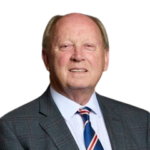
The current and founding leader of the Traditional Unionist Voice is Jim Allister.
A veteran politician, Allister founded the TUV in December 2007 after resigning from the DUP. Allister sat in the European Parliament from 2004 to 2009, including as a DUP MEP.
In fact, Allister was involved in DUP politics from the party’s foundation in 1971, having initially defected from the Ulster Unionist Party (UUP). He served as a DUP member of the Northern Ireland Assembly for North Antrim from 1982 to 1986, acting as the party’s chief whip, and as a European Parliament assistant to DUP co-founder and longtime leader Ian Paisley from 1980 to 1982.
Allister was involved in the 1974 Ulster Workers’ Council (UWC) strike against the Sunningdale Agreement – the landmark, but ultimately failed, first attempt at establishing a power-sharing devolved government in Northern Ireland.
Allister was first elected a TUV MLA in the 2011 Northern Ireland Assembly election.
He was elected to the House of Commons as the MP for North Antrim at the 2024 general election. Upon his election to the parliament at Westminster, Allister announced that the former deputy mayor of Mid and East Antrim, Timothy Gaston, would succeed him as the TUV MLA for North Antrim.
What does the TUV stand for?
The TUV’s foundational principle is its unequivocal opposition to the 1998 Good Friday Agreement, which it views as a betrayal of the Union and a concession to Irish republicanism.
It has called for a system of devolved government “compatible with democratic principles and precedents prevailing elsewhere in the UK”, reflecting Allister’s opposition to the power-sharing principle established in the Belfast Agreement. It has also endorsed an “integrationist” approach, arguing that Northern Ireland could be governed without a devolved legislature under a form of direct rule that gives “due regard to the prevailing regional ethos and values”.
The TUV’s formation in 2007 was a result of the DUP agreeing to enter power-sharing arrangements alongside Sinn Féin. Allister saw this as morally and politically unacceptable.
This position is exemplified in the TUV slogan that “nothing which is morally wrong can be politically right.”
Allister refers to Sinn Féin as IRA/Sinn Féin.
The TUV’s most significant political campaign in recent years was its vehement opposition to the DUP’s decision to end its two-year boycott and re-enter the Northern Ireland Executive in February 2024. This led to the appointment of Sinn Féin’s Michelle O’Neill as first minister – the region’s first nationalist first minister. Under the terms of the GFA, the largest unionist party, the DUP, nominated Emma Little-Pengelly to serve as deputy first minister.
Allister derided the DUP’s decision to restore power-sharing as a “surrender”.
Speaking at the TUV’s campaign launch for the 2024 general election, Allister said the DUP had “irretrievably forfeited” the trust of voters with its “deception” over the deal to restore Stormont.
In his foreword to the TUV’s 2024 manifesto, Allister wrote: “This election is overshadowed by the greatest constitutional crisis Northern Ireland has ever faced. Our nation is partitioned by a border in the Irish Sea and unaccountable rule from Brussels dictates many aspects of our lives.”
In October 2024, Allister introduced a private members’ bill to parliament aimed at dismantling the post-Brexit trading arrangements for Northern Ireland.
In March 2025, Allister described the union as “depleted” by the NI protocol. Addressing the TUV’s annual conference, Allister declared: “Never let anyone pretend to you that the union is not depleted by the protocol – it inescapably is.”
The TUV is a socially conservative party. It opposes the extension of abortion rights in Northern Ireland and is against same-sex marriage.
The party’s manifesto for the 2024 election stated: “The willingness of Westminster to legislate over the heads of MLAs on issues like same sex marriage, abortion and Relationship and Sex Education totally undermines the idea that Stormont provides Unionists with any kind of guarantee to stop legislation they do not like.”
The manifesto added: “It might not be in tune with the woke spirit of the age, but TUV believes that gender is determined at birth.”
Its economic policies are broadly right-wing, advocating for lower taxes and less state intervention.
The party is strongly Eurosceptic and supported the UK’s withdrawal from the European Union, campaigning alongside the DUP in this regard.
In March 2024, the TUV formed an electoral partnership with Reform UK, with the two parties agreeing to stand mutually agreed candidates in Northern Ireland for the 2024 general election based on their shared opposition to the post-Brexit trade arrangements. The party’s policies in other areas (economic, social, etc) were also deemed to be sufficiently aligned.
History of the TUV and emergence as a significant force
On 10 April 1998, Good Friday, after marathon all-party talks in Belfast, a historic peace accord for Northern Ireland was finally reached. The Good Friday Agreement (GFA), also known as the Belfast Agreement, established a new political framework designed to end 30 years of violent conflict and create a lasting and inclusive settlement.
In Northern Ireland, the agreement was spearheaded by the Ulster Unionist Party (UUP) leader, David Trimble, and the Social Democratic and Labour Party (SDLP) leader, John Hume.
As in previous decades, the Democratic Unionist Party, led by Ian Paisley, remained the primary political vehicle for unionists opposed to power-sharing.
In the years following the Belfast Agreement, the DUP steadily eroded the UUP’s dominance, emerging as the largest unionist party in the 2003 Northern Ireland Assembly election. Simultaneously, Sinn Féin emerged as the largest nationalist party.
However, on 26 March 2007, in a moment of immense historical significance, Paisley and Sinn Féin’s Gerry Adams sat alongside each other for the first time and publicly announced their agreement to form a power-sharing government in Northern Ireland. The private negotiating session that preceded the announcement was the first time the two parties had ever held direct talks.
The agreement was the culmination of the process set out in the St Andrews Agreement of 2006 and came after Sinn Féin took the crucial step of formally endorsing the Police Service of Northern Ireland (PSNI).
Announcing the deal at a news conference, Paisley declared: “Our goal has been to see devolution returned in a context where it can make a real, meaningful improvement in the lives of all the people of this part of the United Kingdom.
“On Saturday, the DUP executive overwhelmingly endorsed a motion committing our party to support and participate fully in government in May of this year – this is a binding resolution.”
On 27 March, Allister, a longstanding DUP operator and Paisley ally, resigned from the party. In a statement, Allister said that Sinn Féin was “not fit for government”.
He declared: “To continue as the DUP’s MEP, it would be my obligation to accept the party executive policy decision to usher Sinn Fein into government in a few short weeks.
“This, in conscience, I cannot do. Thus, I must resign from the DUP.
“Sinn Fein, in my view, is not fit for government. Nor can it be in a few weeks.”
He added: “I have fought a protracted battle within the party over recent months against a premature DUP/Sinn Féin government.
“I now have to accept that this battle is lost.”
On 8 May 2007, Paisley was sworn in as first minister and Sinn Féin’s Martin McGuinness as deputy first minister, ushering in a new era of devolved government.
This move cemented the DUP’s transition from a party of protest to a party of government.
The Traditional Unionist Voice was officially formed on 7 December 2007.
In an early party pamphlet, the TUV argued that now “the two unionist parties [UUP and DUP] are enthusiastically working and implementing the truth about the Belfast Agreement, Unionists who reject its architecture, structures and trajectory are disenfranchised.”
The party added: “Traditional unionist principles have been abandoned. Hence, the need for a new movement to give voice to their convictions and viewpoint.”
The party’s electoral baptism was provided by the Dromore council by-election in February 2008. In traditional unionist territory, the DUP won 1069 votes, and the UUP won 912 votes. Allister’s TUV won 739 votes.
However, under the single transferable vote system, it was the UUP who ultimately emerged on top once “transfers” were counted. Allister, having raided the DUP vote, argued that the result was a “thumping vote of no confidence for the chuckle coalition [the Paisley-McGuinness leadership at Stormont].”
The TUV therefore established itself as a more hard-line alternative to the DUP.
An electoral breakthrough for the TUV came with the 2011 Northern Ireland Assembly election, when Allister won a seat in the North Antrim constituency.
Allister stood unsuccessfully as the TUV candidate for North Antrim in the 2010 UK general election, finishing second to the DUP incumbent, Ian Paisley Jr, on 7,114 votes (16.8%).
In February 2022, the DUP withdrew its first minister from the executive, collapsing the power-sharing institutions, in protest against the post-Brexit trading arrangements known as the Northern Ireland Protocol, which the DUP argued undermined Northern Ireland’s place within the United Kingdom.
The impasse finally broke in late January 2024 after the DUP’s party executive voted to accept a deal with the UK government. The agreement, detailed in a command paper titled Safeguarding the Union, included measures to reduce checks and paperwork on goods moving from Great Britain to Northern Ireland.
The DUP’s climbdown shortly before the 2024 general election provided Allister with ample ammunition and his party with a clear platform.
In March 2024, the TUV formed an electoral alliance with Reform UK, then under the leadership of Richard Tice. It was agreed Reform would not stand candidates in Northern Ireland at the 2024 United Kingdom general election. The alliance was spearheaded by Ben Habib, the then deputy leader of Reform UK, who, like Allister, was vehemently opposed to the post-Brexit arrangements in Northern Ireland.
Reform UK and Traditional Unionist Voice signed a formal memorandum of understanding on 16 March 2024. The agreement committed both parties to “cooperate in providing and mutually supporting candidates in Northern Ireland” on the basis of a shared platform.
The memorandum emphasised vaguely Thatcherite principles, including the defence and “strengthening of the Union between Great Britain and Northern Ireland”, the “completion” of Brexit to ensure that the United Kingdom enjoys “full independence and economic freedom”, the implementation of “robust” immigration controls, and the establishment of a tax system designed to “reward work”.
On these terms, TUV candidates in the 2024 general election appeared under a joint Reform UK-TUV logo.
Nigel Farage, however, upon returning to the political frontline, appeared to distance himself from the alliance by endorsing some DUP MPs. Notably, Farage endorsed Ian Paisley Jr, against whom Allister was standing in the North Antrim constituency.
Allister called Farage’s move “disappointing”. He said that the TUV party entered an electoral arrangement with Reform UK “in good faith” and called Farage’s stance “disappointing”.
Allister later argued that Farage had made “dubious” comments about Northern Ireland. The TUV leader said Farage’s contribution to the Brexit debate was “unparalleled” – but referenced “some idiosyncrasies that come to the surface from time to time”.
Allister told BBC Radio Ulster‘s Talkback programme: “There have been one or two dubious utterances relating to Northern Ireland, ‘the Northern Ireland thing’, and indeed some previous comments about Irish unity and matters like that”.
Allister ultimately unseated Paisley Jr in North Antrim, winning 28.3% of the vote. As a TUV MP, Allister decided not to take the Reform whip, instead saying he would support the party in areas of mutual interest.
As the MP for North Antrim, Allister delivered his maiden speech on 18 July 2024 during a debate on foreign affairs and defence.
In his maiden speech, Allister said: “What was keeping me from representing North Antrim in this House was a 54-year dynasty of family and party. From June 1970, North Antrim was represented in this House by Ian Paisley, father and son.
“Today, I want to pay tribute to my predecessor for the considerable work that he did for his constituents in North Antrim, but it is a new era – it is a new start – and I am here with a very distinctive and particular message in regard to the future of Northern Ireland.”
He added: “There was not much in the king’s speech about Northern Ireland, apart from a couple of fleeting references. It was a disappointment to me that there was nothing to address the disenfranchising of the people of Northern Ireland.
“Those [MPs] who come from England, Scotland or Wales, come to this House as a parliament that, in tandem with devolved institutions – if they have them – can collectively legislate for all the laws that govern their constituents.
“Sadly, we cannot say that about my constituents or any constituent in Northern Ireland, because in 300 areas of law, sovereignty over making those laws has been surrendered to a foreign parliament.
“We are now subject to the last government’s [Northern Ireland] protocol and Windsor framework arrangements – subject to laws governing our trade, our agrifood industry, much of our economy and much of our environment that this House cannot make and that Stormont cannot make.
“Those laws are made in a foreign parliament and then, colony-like, are imposed on Northern Ireland.”