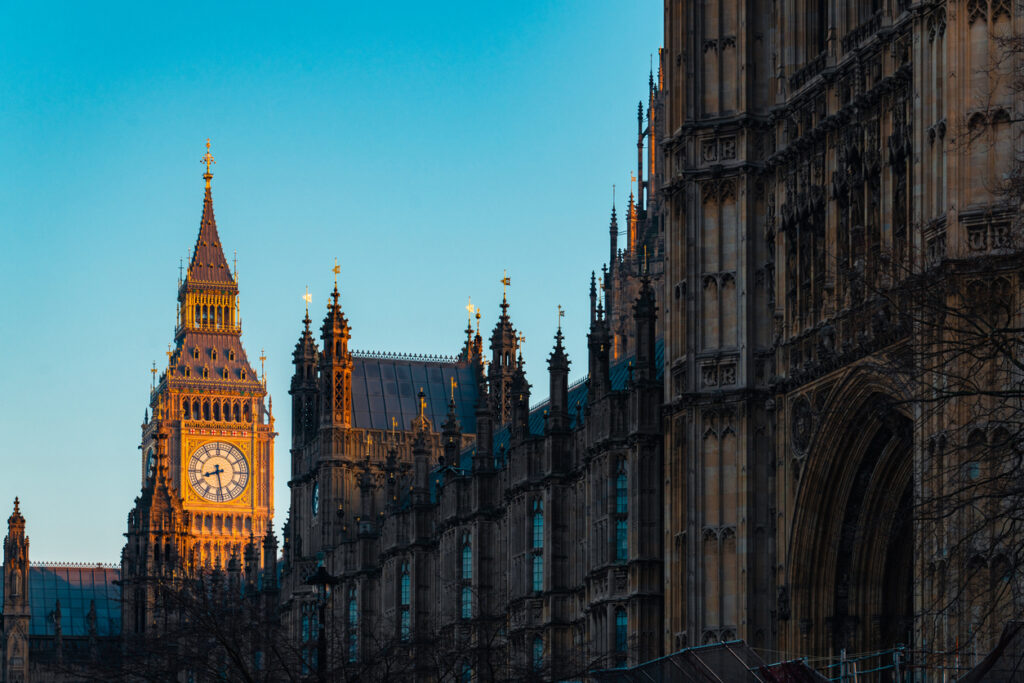
A recess is a period when the House of Commons and the House of Lords are not sitting. These breaks in the parliamentary calendar are not holidays; they are periods that allow MPs and their counterparts in the House of Lords, peers, to carry out their duties away from Westminster.
For MPs, recesses are traditionally a time to focus on their constituency work.
The dates for each recess are proposed by the government and must be formally agreed upon by a vote in the House of Commons.
Recesses: when do they happen?
The parliamentary year is structured around a series of recesses, which are broadly aligned with school holidays. The typical recess pattern is:
- February recess: A one-week break, usually in mid-February.
- Easter recess: Approximately two weeks around the Easter period.
- Whitsun recess: A one-week break at the end of May or beginning of June.
- Summer recess: The longest break of the year, typically lasting around six weeks from late July to early September.
- Conference recess: A three-week break in late September and early October to allow for the annual conferences of the main political parties.
- Christmas recess: Approximately two to three weeks covering the Christmas and New Year period.
The current House of Commons recess dates can be viewed here. Recess dates can vary between the Commons and Lords.
A list of previous recess dates can be found here.
What do MPs do during recess?
Parliamentary business is not conducted during recess periods. Instead, MPs are expected to return to their constituencies to focus on local issues and the concerns of the people they represent.
This work may include holding more regular advice surgeries for constituents, visiting local schools, businesses and community groups, meeting with local councillors and dealing with a heavy caseload of correspondence. Recesses are a good opportunity for catching up on casework which has accumulated over recent weeks.
Parliamentarians may also use recess periods to carry out other duties, such as undertaking visits as part of select committee business and/or participating in parliamentary delegations abroad.
Party leaders may use the opportunity to reset and consider their political strategy among their close advisers. Recess is sometimes followed by a significant set-piece speech or announcement, which can signal a “reset”, reflecting a renewed focus or strategy.
Recesses can serve as the backdrop to major political developments and events. Much of the 2014 Scottish independence referendum unfolded over the summer recess. The 2019 Conservative party leadership election concluded during the summer recess. The 2022 July-September Conservative leadership contest also played out when parliament was not sitting.
Of course, MPs may also use the recess period for going on holiday or cashing in “freebies” accumulated as part of their parliamentary engagement activities. Many will likely use at least one recess each year to head to the beach or the ski slopes.
Some commentators and constituents express healthy scepticism about how much work is completed during recess compared with time spent on holiday.
How are recess dates agreed?
The dates for each recess are proposed by the government, usually in a motion tabled by the leader of the House of Commons. This motion must be approved by a vote in the House. The government’s control of the parliamentary timetable means that its proposed dates are invariably agreed to.
Recess dates in the House of Lords are set by the government chief whip, in consultation with the commons and the “usual channels”. The usual channels involve discussions between the leader of the House, the government’s chief whip and their opposition counterparts. No motion is needed in the House.
How is parliament recalled during recess?
During a recess, parliament can be “recalled” to sit at short notice if a major national or international event occurs that requires urgent parliamentary attention. It is the responsibility of the speaker of the House of Commons to recall the House at the request of the government. The speaker must decide whether it is in the public interest to agree to a recall request from the government.
The House of Lords is usually recalled by the lord speaker at the same time as the commons.
In recent years, parliament has been recalled on several occasions, including:
- On 12 April 2025 to debate and pass emergency legislation concerning the steel industry.
- On 18 August 2021 to debate the Afghanistan withdrawal.
- On 12 April 2021 to pay tributes to the Duke of Edinburgh (Prince Philip).
- On 30 December 2020 to debate and pass legislation giving effect to the post-Brexit UK-EU trade deal.
Pre-recess debates in the House of Commons
On the last sitting day before a recess, each parliamentary recess (such as for Christmas, Easter, and Summer), there is usually a longer debate on the question “That this House has considered matters to be raised before the forthcoming adjournment.”
This provides an extended opportunity for MPs to raise a wide variety of topics in turn before the House breaks. At the end of the debate, a minister, often the deputy leader of the House, provides a general response.
The adjournment debate held before the summer recess is now known as the Sir David Amess adjournment debate, after the MP who was murdered during a scheduled constituency surgery in 2021.
Amess was a regular and enthusiastic contributor to the annual pre-recess debate. In 2024, Conservative MP Mark Francois remembered that Amess “would manage to cram a vast number of different topics, usually related to his constituency, into a very small amount of time.”
He added: “From memory, the all-time record was 20 different subjects in 12 minutes, each of which mysteriously led to a subsequent press release.”
Recess vs prorogation vs dissolution: what’s the difference?
The word “parliament” can be used to refer to the time between two general elections. The current parliament is the 59th parliament of the United Kingdom, which first met in July 2024 following the general election.
Dissolution brings an entire parliament to an end and triggers a general election.
Under the Dissolution and Calling of Parliament Act 2022, a prime minister can request a dissolution of parliament and call a general election at a time of their choosing. A general election must take place at least every five years.
A parliament is sub-divided into several year-long “sessions”, which begin with the traditional state opening of parliament, and end with parliament’s prorogation.
Prorogation brings all parliamentary business to an end. Legislation is not carried over unless specific provision is made.
A recess, as has been discussed, is a temporary break during a parliamentary session. The House stops sitting but can be recalled. Legislation is carried over between these breaks.
A sitting is the daily meeting of either House. At the end of each sitting day, the House adjourns until the next sitting.
2022: Parliament backs post-Brexit deal after emergency recall
On 30 December 2020, with just 24 hours remaining before the end of the post-Brexit transition period, the House of Commons was recalled from its Christmas recess to approve the European Union (Future Relationship) Bill.
Legislation was required to implement the Trade and Cooperation Agreement (TCA), which had been agreed between the UK and the European Union (EU) on Christmas Eve. The timing of the vote meant there was little time for detailed scrutiny or amendment. MPs, faced with a choice of approving the deal or face a chaotic ‘no deal’ departure at 11pm the following day, overwhelmingly supported the bill by 521 votes to 73.
The 80-page bill was published by the government shortly before 2:00 pm on 29 December – less than 24 hours before parliament started to debate its contents. In order to secure its swift passage, section 36 of the bill disapplied the Constitutional Reform and Governance Act 2010 (CRAG). The 2010 act brought the ‘Ponsonby Rule’ onto a statutory footing, requiring a 21-day period to give parliament the opportunity to scrutinise and potentially delay treaties.
Lindsay Hoyle, the speaker of the House of Commons, began the session on 30 December 2020 by way of thanking those staff members who had worked through the holidays. Hoyle said that his own office had been working “very late Christmas eve, Boxing day and all the way through.”
The leader of the House, Jacob Rees-Mogg, then moved a programme motion to fast-track all stages of the bill through the commons in a single day.
Rees-Mogg defended the expedited schedule as a necessary measure to meet international obligations. He described the bill as “merely the final little bit of icing being put on the Christmas cake that the prime minister so efficiently delivered for the nation.”
Valerie Vaz, the shadow leader of the House, supported the motion to prevent a no-deal scenario but labelled the lack of scrutiny as “unacceptable.”
The European Union (Future Relationship) Act ultimately received royal assent at 12.25 am on 31 December. Britain completed its separation from the EU at 11:00 pm on 31 December as the transition period came to an end, four and half years after the 2016 referendum.
2013: Cameron suffers commons defeat on Syria intervention after recall
On 29 August 2013, the House of Commons rejected a motion from David Cameron’s coalition government that sought parliamentary approval for military action against Syria. The government’s motion was debated after parliament had been recalled from its summer recess. It was defeated by 285 votes to 272, a majority of 13.
The defeat was a significant blow to the prime minister and effectively ended any prospect of UK participation in any US-led military strikes. The vote was non-binding. But Cameron – the first prime minister to lose a parliamentary vote on military action since Lord North in 1782 – accepted the result.
The emergency recall of parliament from its summer recess was prompted by the chemical weapons attack in Ghouta, a suburb of Damascus, on 21 August 2013. The UK government, along with allies including the United States, attributed the attack, which killed hundreds of civilians, to the Syrian regime of Bashar al-Assad.
Cameron argued that a “strong humanitarian response” was required to deter the future use of chemical weapons, and that this response could include targeted military action.
The government’s motion was carefully worded to authorise military action only in principle, with a second vote to be held on specific intervention plans once United Nations inspectors had reported. However, the Labour opposition, led by Ed Miliband, argued that no action should be taken without “compelling evidence” and explicit UN authorisation.
Many members, mindful of the flawed intelligence used to justify the 2003 Iraq War, were unwilling to commit to military action without greater certainty and a clear legal basis. The debate, it was said, was conducted in the “shadow of Iraq”.
2011: Parliament recalled to debate England riots
On 11 August 2011, parliament was recalled from summer recess for an emergency session to debate the wave of rioting that had swept across London and other English cities over the preceding five days.
The riots had begun in Tottenham, north London, on 6 August following an initially peaceful demonstration over the fatal shooting of Mark Duggan by police. The disorder rapidly escalated and spread, initially across London, and then to cities including Birmingham, Manchester, Liverpool, and Nottingham.
In response, prime minister David Cameron cut short his holiday and chaired meetings of the Cobra emergency committee.
The session on 11 August began with a statement from Cameron, outlining the nature of the government’s response and principles that underpinned it. He condemned the violence as “completely unacceptable” and “criminality, pure and simple”.
Speaking to MPs, Cameron said: “We have seen houses, offices and shops raided and torched, police officers assaulted and fire crews attacked as they try to put out fires.
“We have seen people robbing others while they lie injured and bleeding in the street, and even three innocent people deliberately run over and killed in Birmingham.”
The PM vowed to do “whatever it takes to restore law and order” and rejected any link between the disturbances and the death of Mark Duggan, which he called “preposterous.”
He added: “Young people stealing flat-screen televisions and burning shops – that was not about politics or protest, it was about theft.”
However, Cameron also admitted to initial policing failures, stating that there were “simply far too few police deployed on to our streets, and the tactics that they were using were not working.”
He said the police had initially treated the situation as a “public order issue, rather than essentially one of crime.”
In his statement, Cameron outlined a three-part response: restoring order, supporting victims, and tackling the “deeper problem.”
For the first part, restoring order, Cameron pointed to the increase in police deployment from 6,000 “to almost 16,000 officers” and the cancellation of police leave. He stated that over 1,200 people had been arrested, with courts sitting “through the night” to process cases.
He pledged that “no phoney human rights concerns” would prevent the police from publishing CCTV images to identify perpetrators.
Cameron announced a “cross-government programme of action to deal with this gang culture”, referencing anti-gang tactics used by Bill Bratton, former commissioner of police in New York and Los Angeles. On 13 August, Bratton was announced as Cameron’s new crime adviser.
The prime minister concluded: “To the law-abiding people who play by the rules and who are the overwhelming majority in this country, I say: the fight back has begun. We will protect you. If you have had your livelihood and property damaged, we will compensate you.
“We are on your side. To the lawless minority, the criminals who have taken what they can get, I say: we will track you down, we will find you, we will charge you, we will punish you. You will pay for what you have done.”
Cameron’s statement was followed by questions from 160 MPs, including Labour leader Ed Miliband, across a session that lasted for over 165 minutes. The prime minister took to his feet at 11:00 am to deliver his initial statement, and sat down for the final time at around 1:45 pm.
Following the prime minister’s statement, the House of Commons held a debate on the outbreak of public disorder. Theresa May, the home secretary, led the debate for the government.
1939: Parliament recalled to pass Emergency Powers Bill with war looming
On 24 August 1939, the House of Commons was recalled from its summer recess to hear the government’s response to the Molotov-Ribbentrop Pact, a non-aggression treaty between Nazi Germany and the Soviet Union, and pass the Emergency Powers (Defence) Act – legislation that granted the government broad authority in response to the imminent threat of war.
The Molotov-Ribbentrop Pact was unveiled and signed on 23 August, after a long period of secret negotiations. After the annexation of Austria (Anschluss) and the invasion of Czechoslovakia, the pact neutralised the risk of a Soviet resistance to a German invasion of Poland. It made a wider European conflict all but inevitable.
Addressing the commons on 24 August, the British prime minister, Neville Chamberlain, referred to the Molotov-Ribbentrop Pact as a “bombshell”. He announced the government’s intention to pass an emergency powers bill through all its legislative stages in a single day.
Chamberlain told the House that the “international position has steadily deteriorated until today we find ourselves confronted with the imminent peril of war.”
The anti-appeasement MPs, notably Anthony Eden, Leo Amery and Aneurin Bevan, spoke of their frustration as to the government’s policy to this point. Ellen Wilkinson, the Labour MP for Jarrow, said she could not “enter into this general atmosphere of forgive and forget as regards the present prime minister.”
The Emergency Powers (Defence) Bill was introduced by the home secretary, Sir Samuel Hoare.
Hoare described its measures as “very wide, very drastic and very comprehensive”.
The long title of the bill stated its aim as “to confer on His Majesty certain powers which it is expedient that His Majesty should be enabled to exercise in the present emergency; and to make further provision for purposes connected with the defence of the realm.”
The bill ultimately passed the commons unamended and without need for a division. After journeying through the Lords, the bill received royal assent shortly after 22:00 on 24 August 1939.
On 1 September 1939, German forces started their invasion of Poland.
On 3 September 1939, King George VI declared war on Germany.
On 17 September, the Soviet Union invaded Poland from the east.
The Emergency Powers (Defence) Act formed the legislative foundation for the entire home front war effort, such as the blackout, rationing, censorship and the Defence Regulation 18B. This 18B regulation provided for the internment of individuals suspected of being Nazi sympathisers, suspending their right to habeas corpus. Sir Oswald Mosley and his wife Lady Diana Mosley were both interned under 18B, as well as other members of the British Union of Fascists (BUF).
Additional resources
- UK Parliament – Recess Dates: https://www.parliament.uk/about/faqs/house-of-commons-faqs/business-faq-page/recess-dates/
- UK Parliament – List of previous Commons Recess Dates: https://www.parliament.uk/about/faqs/house-of-commons-faqs/business-faq-page/recess-dates/list-of-previous-commons-recess-dates/

