What is Ofwat?
The Water Services Regulation Authority, better known as Ofwat, is the independent economic regulator of the privatised water and sewerage industry in England and Wales. Prior to April 1st 2006 its functions rested with the Director General of Water Services. The framework for the changeover was outlined in the Water Act 2003.
As the economic regulator, Ofwat is responsible for setting limits on pricing and protecting customer interests, encouraging competition and adequate investment within the industry, and administering and enforcing the licensing regime for water and sewerage companies set out in the Water Services Act 1991.
Ofwat also serves to provide environmental oversight of the water industry. It also operates an innovation fund to assist the water industry in its capacity to innovate.
Ofwat’s annual statement showed it to employ 234 people in March 2021, up from 201 people in 2018.


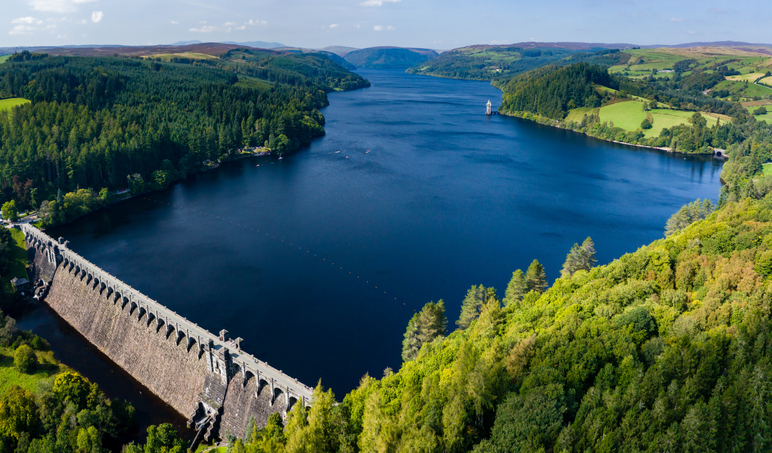
Ofwat was set up in 1989 to regulate the privatised water industry.
Like other independent regulators, including Ofsted, Ofcom and Ofgem, Ofwat is a non-ministerial government department.
The current regulatory framework for water is set out by the Water Services Act 1991, as updated by section 39 of the Water Act 2003.
This requires all water and sewerage companies to submit to regulation by Ofwat as “water undertakers”, and to provide and maintain an “efficient and economical system of water supply”, and to improve and extend its network of coverage.
The Act, and regulations under it, also set out standards of service that companies must meet. Should they fail to do so, Ofwat is empowered to issue “enforcement orders” against them, which can include fines. In extreme circumstances, Ofwat can seek High Court approval to appoint administrators to take over the company until the terms of the Order have been complied with.
Ofwat’s main function is to conduct five-yearly price reviews. These aim not only to keep prices for customers to a minimum, but also to permit water companies to make an adequate return on capital (permitting investment into the water infrastructure), while encouraging efficiency savings. Ofwat sets its price frameworks on a company-by-company basis, reflecting their business plans and projected revenues, and determines a maximum level above which prices may not rise.
Background
Ofwat was created by the Water Act 1989, which privatised the ten public water authorities, creating ten regional water companies in their place. Prior to 1973, water services were provided by a mixture of local authority and private undertakers. The Water Services Act 1973 created the structure that survived to privatisation.
Privatisation was first mooted in a 1986 white paper and was consulted on in 1987. The privatisation was motivated by the desire of the Thatcher government to improve efficiency and performance by introducing private sector disciplines to public sector utilities, to spread share ownership, and to raise money from the flotation (which took place in November 1989). In order to meet EU water standards and to make the sale more attractive, the Government wrote off £5 billion in the industry’s debts and provided a “green dowry” of £1.6 billion for environmental investment.
It followed the model of previous sell-offs of nationalised natural monopolies: recognising that full competition would not be immediately possible, and that private sector monopolies or oligopolies would tend to exploit their positions at the expense of customers, an independent regulator was created to approximate competitive conditions and to protect the interests of customers. Water privatisation was one of the most controversial of all the Thatcher and Major governments’ de-nationalisations, with many astonished at the notion of “privatising water”.
One of the first duties of the new director general was to appoint ten independent regional Customer Service Committees (which have been known as WaterVoice committees since 2002) to represent the interests of consumers.
The Water Industry Act 1991 consolidated previous legislation and established the current system of regulation, bringing sewerage into the regulatory framework. The Environment Act 1995 created the Environment Agency as a water quality regulator (replacing the National Rivers Authority) and put Ofwat under a duty to promote efficient water use by customers. In 1998, the ten major water companies joined together to form Water UK to represent their interests.
With the election of Labour in 1997, the regulatory system was put under scrutiny in a major Utilities Review. The Competition Act 1998 bolstered the role of the Office of Fair Trading and the regulators in ensuring the maintenance of competition. This was followed by the consumer white paper, “Modern Markets: Confident Consumers”, which proposed a new structure for the regulators. This proposed that the regulators’ primary duty should be consumer protection, and undertook to increase the independence of consumer representation.
The subsequent Water Services Act 1999 increased Ofwat’s powers by giving the director general the right to approve companies’ charging schemes, and it pursued the consumer agenda by reducing companies’ powers to disconnect customers and to require water metering. The utilities bill (subsequently the Utilities Act 2000) would have introduced the new regulatory framework across gas, electricity, water and telecommunications, but due to a lack of parliamentary time, the elements relating to water and telecoms were dropped.
In November that year, the Department for Environment, Food and Rural Affairs (Defra) issued a draft water bill for consultation, which would also put the regulator under a duty to promote (rather than facilitate) competition, to reform abstraction licensing and promote water conservation. Consultations concluded in 2002, and the subsequent bill became the Water Act 2003.
In 2014, the Water Act extended retail competition to all non-household customers of English water companies from April 2017 and provided for possible future competition in wholesale markets. Ofwat’s role includes regulating such water and wastewater markets and promoting effective competition wherever appropriate.
- The water industry national environment programme (WINEP) is the programme of work water companies in England are required to do to meet their obligations from environmental legislation and UK government policy. For 2020 to 2025 it consists of £5.2 billion of asset improvements, investigations, monitoring and catchment interventions. It sets out how the water industry will contribute to improving the natural environment.
In July 2021, the government laid down a series of goals for the water sector in tandem with OFWAT. These included:
- Protecting and enhancing the environment – Better protecting chalk streams and other rare habitats, and delivering the ambition of the 25 Year Environment Plan, with a focus on improving water quality by promoting nature and catchment-based solutions. There was also a focus on meeting government’s ambitions to significantly reduce the frequency and volume of sewage discharges from storm overflows.
- A resilient water sector – Challenging water companies to plan strategically to tackle long term risks of drought, flooding, and pollution. Continuing to work with companies to drive down leakage and improve water efficiency for the benefit of current and future customers.
- Serving and protecting customers – Driving companies to treat all customers fairly, including through their complaints processes and wider customer service. Continuing to press for improved support for customers requiring extra help, both financial and non-financial.
- Driving markets to deliver to customers – Considering where markets can play a role in driving innovation, efficiencies, and promote longer term sustainable investment across the sector.
Controversies
It is widely agreed that the water industry has been pressed hard by Ofwat. Many argue that the stringency of the Office’s regime has contributed to a lack of willingness to invest in water. Indeed, in 2000 proposals were put forward to transform Welsh Water into a debt-financed company, taking it effectively out of the private sector.
The National Audit Office warned that the use of an RPI-x price control model had some considerable potential to distort investment in the industry, whilst additionally acting as a disincentive to water providers. The NAO also criticised the number of demands put upon the industry by Ofwat. As such, it recommended a simplification of the price review process.
Throughout the preparations for the November 2004 pricing review, the industry insisted that considerably higher water prices were required to permit it to maintain the increasingly antiquated network of mains and sewers. In 2003, Water UK warned that companies would need to raise an additional £50 billion to carry out 25 per cent of the necessary repairs.
For the 2009 pricing review, Ofwat said there had been a greater focus on setting price limits within the context of the long-term future of the water and sewerage sectors. The Environment Agency described the 2009 price review decision as “a good deal for water customers and the environment.”
In August 2010 the Government announced that a review would be carried out into Ofwat itself, to ensure that the regulator still offered good value for money and that it was well prepared to tackle future challenges such as climate change.
Defra published its review of Ofwat in July 2011, the main conclusions being that regulation in the water sector had worked well since privatisation and that there was no need for major change to be made to the statutory framework or regulatory landscape.
However, Defra also emphasised that Ofwat had to see through the changes it had embarked on to reduce the burden of regulation it imposes on the water industry and work constructively with the other organisations in the sector, in order to achieve continued success.
In response, one of the key reforms included in the ‘Water for Life’ white paper published in December 2011, was that the Government, together with Ofwat and the Environment Agency, would provide clearer guidance to water companies on planning for the long-term, and keeping demand down.
Quotes
Our priorities for Ofwat build on the work I have already undertaken to reduce harm from storm overflows and sets a clear expectation for water companies to significantly reduce the frequency and volume of sewage discharges from storm overflows.”. Environment Minister Rebecca Pow, 2021.