What are organophosphates?
Organophosphates (OPs) are a group of synthetic chemical compounds, composed of variable mixtures of phosphorus, carbon, and hydrogen.
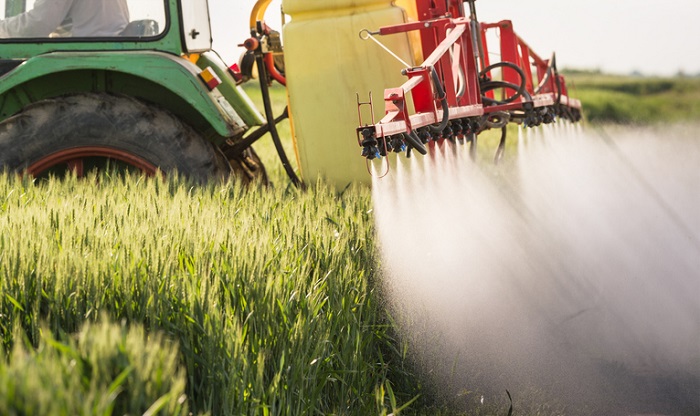
Originally, organophosphates were developed as insecticides, and are used as such in thousands of licensed pesticides today. They act as cholinesterase inhibitors (chemicals that disrupt neuromuscular transmission), and as such were also developed as neurotoxins during the Second World War. Sarin – the poison gas released by Aum Shinrikyo cultists in 1995 on to the Tokyo underground – is the most well-known organophosphate-based chemical weapon.
Despite their positive effects on agricultural productivity, many believe organophosphates have negative effects on the environment and human and animal health. However, there is increasing interest in organophosphates’ cholinesterase inhibiting properties in therapeutic environments.
The Department for Environment, Food and Rural Affairs (Defra) is principally responsible for regulating the agricultural use of organophosphates in the UK. Other bodies with an interest in regulating their use and research include the Health and Safety Executive, the Department of Health, the Veterinary Products Committee, the Advisory Committee on Pesticides, the Committee on Safety of Medicines and the Committee on Toxicity.


Background
The first organophosphate, physostigmine, was synthesised in 1850 as a treatment for glaucoma. Their use as a pesticide began in the 1930s and took off in the 1960s, when they were promoted as a safer alternative to organochlorines. As well as being used in agricultural products, they are used in head lice treatments, pet shampoos and other household products.
Organophosphates’ little-understood non-specific toxicity lies at the root of their success as both pesticides and chemical weapons agents.
In 2003, researchers at the Salk Institute, California, claimed to have explained this toxicity, arguing that organophosphates target a key enzyme in the brain, neuropathy target esterase. The research found that mice genetically engineered to have low levels of the enzyme were particularly susceptible to organophosphate poisoning. Previous research, indeed, had already pointed to susceptibility being genetic, with some more predisposed than others.
In the UK, the dangers of organophosphate poisoning have mainly been raised in relation to two issues: their use in sheep dips and Gulf War syndrome.
The 1951 Zuckerman report recommended that agricultural organophosphate pesticides should be labelled as ‘deadly poison’, but it was not until 1976 that containers were required to be labelled as potentially hazardous. Even then, no recommendations about protective clothing or other precautions were provided. While an HSE guidance sheet, known as MS17, was produced in the early 1980s, it was never circulated to farmers, doctors, vets, or indeed the Ministry of Defence.
In the 1980s and 1990s, hundreds of farm workers began to report symptoms including fatigue, memory loss, weakness, joint and muscle pain and depression, which they put down to low-level exposure to organophosphates over long periods of time. The government’s position was to deny that there was a clear link, but in 2000 and 2001, it funded more research into the effects of organophosphate exposure and poisoning. The results of some of these studies provided support for the poisoning hypothesis, but the outbreak of a Foot and Mouth Disease epidemic in 2001 led to the postponement of the completion of Government-funded studies until 2006/07.
Also in the early 1990s, large numbers of soldiers returning from the Gulf War claimed to be suffering from similar symptoms, which was subsequently dubbed ‘Gulf War Syndrome’. Organophosphates featured prominently among the many theories for the cause of Gulf War Syndrome, with claims that troops had been exposed to some sort of organophosphate pesticide.
In December 1996, defence minister Nicholas Soames confirmed that this was indeed the case. However, the Ministry of Defence continues to refute the existence of Gulf War Syndrome as a distinct condition, saying “there are too many different symptoms reported for this ill-health to be characterised as a syndrome in medical terms.”
Controversies
Scientific understanding of the health effects of organophosphates and safe exposure levels is limited. Those who are convinced of the dangers continue to campaign for a ban on organophosphate pesticides, putting them into conflict with the agro-chemical industry and long-established agricultural practice.
Over the years, campaigners have alleged that the expert committees advising governments on pesticide safety have been too close to and dominated by the chemicals industry.
The matter is of intense political significance. There have been a number of high-profile suits brought worldwide over agricultural organophosphate poisoning claims: in 1998, a former employee of Lancashire Agricultural College, Robert Shepherd, received £80,000 in an out-of-court settlement over ill-health claims. The alleged failings of successive governments to take note of warnings about the risks and the imposition of a requirement on sheep farmers to dip their flocks using organophosphates as a precaution against sheep scab from 1976 to 1992, threaten a flood of compensation claims were a definite link to be established.
Moreover, because the MoD does not recognise Gulf War Syndrome as a debilitating condition, veterans who have left the armed forces due to ill-health are not eligible to take up disability pensions. The establishment of a link between Gulf War Syndrome and organophosphate poisoning could cost the MoD and its counterparts in other Gulf War coalition member states vast sums in compensation.
If a government were to ban organophosphate products, it would have to pay potentially huge sums in compensation to the chemicals industry for withdrawing licences (Marketing Authorisations) that have already been issued. At present, the government’s position remains that organophosphate pesticides are safe, if used in line with the manufacturers’ instructions. A certification and registration scheme exists for ensuring that those using organophosphate products understand how to do this.
In September 2012, on the 50th anniversary of the publication of Rachel Carson’s ground-breaking book on pesticides, ‘Silent Spring’, Friends of the Earth warned that the Government must act on the rising use of pesticides and their impact on bees and other pollinators.
According to Friends of the Earth, since ‘Silent Spring’ “there has been no fundamental shift from the reliance on chemicals in farming” and a new generation of neonicotinoid insecticides – which are toxic to bees – “are being used in increasing quantities in the UK countryside.”
The charity has called on the Government to “set out a clear strategy to help farmers cut their dependence on chemicals.”
Statistics
In a report for Friends of the Earth bee experts at the University of Reading warned that pesticide use had risen by 6.5% between 2005 and 2010 and that more insecticide treatments tend to be applied to bee pollinated crops. Friends of the Earth research, published earlier this year, found it would cost the UK an extra £1.8billion every year to hand-pollinate crops without bees. [Source: FOE – 2012]
Pesticide usage has been declining since 1990 despite a larger area being treated each year. The use of registered pesticides on arable crops halved from 28000 tonnes in 1990 to 14000 tonnes in 2010. 94% of the sprayed area in England is being treated with machines tested under the National Sprayer Testing Scheme. 80% of farmers use low drift nozzles and 69% have buffer strips to prevent pesticides contaminating water courses. [Source: NFU – 2012]
Quotes
“Around 31,000 tonnes of chemicals are used in farming in the UK each year to kill weeds, insects and other pests that attack crops”…”The most dangerous chemicals used in farming, such as organophosphates, have been linked with a range of problems including cancer, decreasing male fertility, foetal abnormalities, chronic fatigue syndrome in children and Parkinson’s disease.” – Soil Association – 2012