What are National Parks?
Some areas of particularly significant and unspoiled natural heritage have been designated as National Parks to preserve their character and ecosystems for public enjoyment.
National Parks in England are designated by Natural England, subject to the approval of the Secretary of State under the National Parks and Access to the Countryside Act 1949.
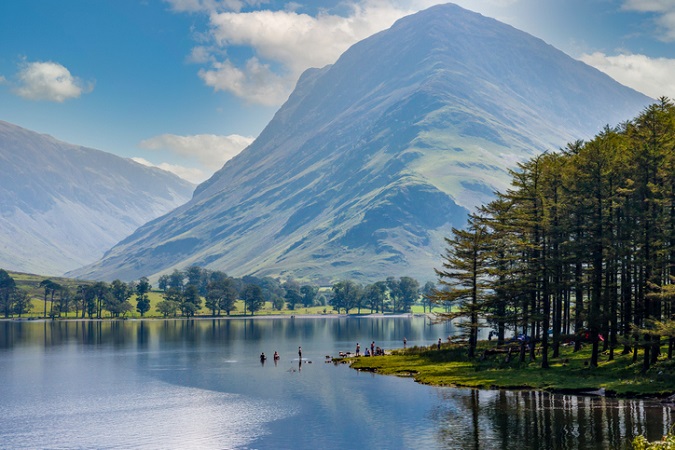
The UK’s National Parks represent a particularly diverse mix of stunning scenery from picturesque villages, to sand dunes and sandy beaches, through swathes of ancient woodland, moorland, and mountain backdrops. Receiving more than 90 million visitors each year, they offer a range of outdoor activities from horse riding, to trail hiking, and the studying of rare wildlife.
The UK currently has 15 National Parks; 10 are in England, 3 in Wales and 2 in Scotland.


Unlike in America, National Park status in the UK does not signify national ownership of the land inside the park’s boundaries. In the UK’s National Parks, the majority of land is owned by farmers, private landowners and conservation organisations such as the National Trust. The National Trust is said to own 25 per cent of the Lake District and 12 per cent of the Peak District National Park.
National Parks are required to give far greater weight than under normal planning procedures to the conservation of the natural beauty of the countryside, its wildlife and cultural heritage. Major developments are only permitted in ‘exceptional’ circumstances. In the event of a National Park Authority’s conservation and recreation goals coming into conflict, the ‘Sandford Principle’ rules that the former takes precedence.
According to a 2013 report by National Parks England, the economic activity taking place within the boundaries of England’s parks was equivalent to the UK’s aerospace industry. National Parks were said to contribute between £4.1bn and £6.3bn to the economy each year. The report claimed that there were some 22,500 businesses operating within the National Parks exuding a combined turnover of £10.4bn and employing 140,000 people.
There is speculation that the Johnson government may announce plans to extend the number of National Parks in the UK.
How are National Parks managed?
Each National Park is administered by its own National Park Authority – independent bodies funded by central government. Land use and economic development within National Parks is the responsibility of the relevant National Park Authority.
Each National Park Authority has a number of paid staff and a number of unpaid appointed members, selected by the Secretary of State and local and parish councils; these members provide leadership, scrutiny and direction for the relevant park authority.
All 15 National Park Authorities work together as the UK Association of National Park Authorities (UK ANPA), to manage joint training projects, public relations activities and special events, raising the profile of the Parks and promoting them as beacons for sustainable development.
The history of UK National Parks
In 1936, in response to calls for greater countryside access. representatives from the Rambler’s Association, the Youth Hostels’ Association, the Council for the Preservation of Rural England and the Council for the Protection of Rural Wales set up the Standing Committee on National Parks to argue the case for National Parks and urge the Government to act.
The Committee later became known as the Campaign for National Parks (CNP), currently the only national charity dedicated to campaigning to protect and promote all of the National Parks of England and Wales.
The CNP led the fight to secure the 1949 Act of Parliament that led to the creation of National Parks. The National Parks and Access to the Countryside Act 1949 was subsequently amended by the Environment Act 1995.
The Peak District, the Lake District, Snowdonia and Dartmoor were the first areas to be designated as National Parks in 1951.
The Pembrokeshire Coast and the North Yorkshire Moors were designated as National Parks in 1952, followed by the Yorkshire Dales and Exmoor in 1954, Northumberland in 1956, the Brecon Beacons in 1957 and the Norfolk Broads National Park in 1989.
Loch Lomond and the Trossachs became the first Scottish National Park in 2002, followed by the Cairngorms National Park in 2003.
On March 1st 2005 the New Forest became the first National Park in the south-east. The process of designating the South Downs began in 1999 and was completed on 31st March 2010 making the South Downs National Park the 10th designated National Park in England.
In 2010, the new Coalition government gave a commitment to “review the governance arrangements of National Parks in order to increase local accountability” and a public consultation held in 2011 produced suggestions for a wide range of improvements to the way in which National Park authorities operate.
Subsequently, a further consultation was held in 2012 inviting views on the proposed amendment of primary legislation, through use of a Public Bodies Act Order, to implement five specific changes.
The UK’s National Parks have come under funding pressure in recent years. According to a 2016 investigation by the Press Association, National Park funding was said to have fallen by a quarter between 2011 and 2016. The Campaign for National Parks pointed to how the Norfolk Broads had closed three out of six information centres, and Dartmoor had reduced staff by 35% during the period.
In May 2018 the government commissioned an independent review into whether the protections for National Parks and Areas of Outstanding Natural Beauty (AONBS) were still fit for purpose. In 2019 the report, known as the Glover Review, suggested that National Parks and Areas of Outstanding Natural Beauty be brought together as part of one family of national landscapes, served by a shared National Landscapes Service.
It has been speculated that as part of a pledge to protect 30% of the UK’s land by 2030, the government was interested in creating a number of new National Parks, and that proposals for new National Parks might be forthcoming.
In 2021, the charity Blue Marine Foundation argued that National Parks should be further created in the waters around the UK to help conserve fragile marine habitats. The charity specifically identified 10 areas around the coast that it believed should be protected in this way.
In March 2023, the government announced additional funding of £4.4 million to the country’s ten National Park Authorities to support services such as visitor centres and park rangers.
Controversies
The controversies common to all National Parks are generally disputes about initial designation, disputes about boundaries and questions of economic development within National Parks.
One contentious proposal for economic development in a National Park was the plan for the port at Dibden Bay. Associated British Ports wanted to construct an 800 acre facility on the western bank of Southampton Water, which some regard as part of the New Forest. The environmental impact of the port and its associated transport infrastructure led to a long and ongoing planning inquiry, with strong views on both sides.
Finally in May 2004, Transport Minister Tony McNulty announced that he had decided to refuse permission for the port development stating that “one important factor in the making of this decision was the environmental impact of the proposals on internationally protected sites.”
More recently, proposals to site new nuclear power stations in Cumbria raised particular concern. Three sites were nominated; Sellafield, next to the current power station, Braystones, 3km from the Lake District, and Kirksanton, 300m from the Lake District. Following vigorous campaigning by the Campaign for National Parks and others, the Braystones and Kirksanton nominations were removed.
Campaigners are also closely monitoring the debate on the future of the public forest estate in England, one third of which lies within National Parks, and, in light of the Government’s commitment to decentralise planning decisions, are watching out for any proposed changes to the planning protection currently enjoyed by National Parks.
For a number of years, campaigners waged a battle against the proposed development in the North York Moors National Park of the UK’s first potash mine for 40 years. The proposed area was designated as Special Protected Areas, with suggestions that s Site of Special Scientific Interest and the Heritage Coast could be adversely affected. Permission for the mine was though eventually granted and the new mine was expected to open in 2021 and create 1,000 jobs.
Quotes
“Our National Parks are the jewel in our cherished landscapes. They support thriving communities, economies, wildlife and are important places for health and wellbeing” – Environment Secretary Thérèse Coffey, March 2023.