Do the public support the monarchy?
The argument that the UK should abolish the monarchy and become a republic remains at the fringes of mainstream political debate. The British monarchy as an institution generally retains a large degree of public support.
According to a YouGov poll just prior to the coronation in April 2023, 58% said they supported the monarchy compared to 26% who said they would prefer an elected head of state.
This compared to a poll a year earlier at the time of the late Queen Elizabeth II’s 2022 platinum jubilee, where 62% of Britons thought the country should continue to have a monarchy in the future (down from 67% in October 2020), with only 22% saying the country should move to having an elected head of state instead.
While over-65s were the most likely to be supportive of the monarchy at 78%, those aged18-24 were the least likely:only 32% backed the monarchy. This younger group was more likely, at 38%, to prefer an elected head of state, although the remaining 30% didn’t know.


In 2023, support for the monarchy was strongest among those over 65 (78%). By comparison, only 32% of those aged 18 to 24 backed the continuation of the monarchy.
The 2022 poll showed support for the monarchy was highest amongst conservative voters (84%) compared to 48% of labour voters. Support for the royal family remains almost identical amongst different social classes, albeit there were regional variations. In 2020, just 58% of Londoners supported the continuation of the monarchy.
The case for a constitutional monarchy
The most frequent arguments made in favour of a constitutional monarchy revolve around:
Am impartial and symbolic head of state
A constitutional monarch is one who is above party politics or factional interests. The monarch is thus said to be a focus of national unity. Supporters of a constitutional monarchy stress the benefits of the head of government (the prime minister) being separate from the role of head of state.
A constitutional monarch is also able to give impartial, non-political support to the work of a wide range of different types of organizations and charities that would not be possible in the same way for a political figure.
This unifying non-political role of the royal family is something that spreads through the monarch’s annual Christmas Broadcast, attendance at ceremonial events like Trooping the Colour, and the dispatch of congratulatory telegrams to centenarians and couples marking their Diamond Wedding anniversary.
The Royal Family‘s Annual Report in relation to the Sovereign Grant in 2019/20 detailed how in that year, some 139,000 guests were welcomed by Queen Elizabeth II and other Members of the Royal Family at Royal Residences for events such as garden parties and investitures.
Queen Elizabeth II was said to have undertaken 296 official engagements in the year 2019/20, as part of 3,200 official engagements undertaken by members of the royal family.
A link with history
A constitutional monarch represents a constant and lasting connection to the country‘s past, with links that date back through history. The British monarch is also the Head of State of 15 other independent countries, as well as the head of the commonwealth of 53 Nations.
A powerful global representation of Britain
The international recognition of the British monarchy, with its associated foreign tours and state visits, is said to help support the influence of Britain around the world. This is said to bring notable benefits in terms of security, influence, and trade.
The Consultancy Brand Finance has estimated that the gain in trade, resulting from the Royal Family’s ambassadorial role could be worth as much as £150m a year.
A magnet for tourism
The Royal Family are said to represent a strong draw for tourists to visit Great Britain. The Organisation Visit Britain estimated that tourism linked to royal residences such as Buckingham Palace, Windsor Castle, and Balmoral Castle adds up to 2.7 million visitors a year.
The consultancy Brand Finance estimated that the Royal Family drew in £550 million of tourist revenues a year. Such figures are questioned by others, but supporters of the Royal Family pose the counterfactual question as to how many tourists would not visit Britain if the monarchy was abolished.
An asset to Britain’s ‘soft power’
Soft power is the ability to influence others without resorting to coercive pressure. This is generated from the extent of a nation’s cultural appeal, the strength of its diplomatic network, the global reputation of its higher education system, and the quality of the country’s political institutions. In a nuclear age, traditional methods of ‘hard power’ like brute force and threats are far less effective tools for achieving sustained influence – strengthening the importance of a nation’s soft power.
According to Brand Finance’s global soft power index 2023, the UK had a global rank of second (just behind the US). In its report, Brand Finance highlighted the importance of the monarchy in Britain’s impressive level of soft power, saying that Queen Elizabeth II’s “spectacular” funeral in 2022 “reminded the world of Britain’s greatest Soft Power assets”.
The case for abolishing the monarchy
The most frequent arguments made for the abolition of the monarchy are:
Democracy
It is argued that in a democracy, the public should be able to exercise democratic control over the Head of State. This relates to both electing the post, and having the instruments to check or even impeach whoever holds that role. None of this is possible if the head of state is a hereditary monarch.
Campaigners for the abolition of the monarchy, such as the campaign group, ‘Republic’, have argued that a monarchy is fundamentally undemocratic. They argue that only an elected head of state can change the political culture and the relationship with those in power.
The group also attack what they perceive as the Royal Family‘s use of their privileged status to regularly involve themselves in the country‘s politics. This is said to be evidenced by the volume of private letters written by the former Prince of Wales to government Ministers on a regular basis.
The Established Church
The continuing existence of the royal family also attracts criticism because of the way in which the monarch is both the head of the church and the head of state.
It is argued that having an established church, in the form of the Church of England, discriminates in favour of one religion above all. It is said that this is a piece of religious discrimination which is a dangerous anachronism in a multi-cultural, mainly secular society.
A similar argument is advanced around the automatic right of Bishops to sit in the House of Lords.
Costs
Campaigners for reform of the British royal family have pointed to the cost of the Royal Family.
At over £80 million per year, they argue that the British sovereign is the most expensive monarch in Europe. In comparison, the Spanish monarchy is said to cost £6.15m, and the Swedes reportedly pay £11.6m for their monarchy.
A forward-looking Britain
Campaigners for the abolition of the monarchy argue that having an elected head of state would give a global boost to brand ‘Britain‘. It is argued that such a change would project the image of a modern, confident, and forward-looking country abroad.
They also argue that the existence of hereditary power at the top of the country’s political, military and religious institutions, perpetuates a mentality which they describe as being defined by social class. This criticism is frequently tied to criticism of the honours system.
The role of the British monarch
The British monarch, King Charles III, is the sovereign and head of state of the UK and its overseas territories. The monarch, referred to in the abstract as ‘The Crown’, is the formal source of all legislative and executive power.
However in practice, the British political system is a ‘constitutional monarchy‘: the supreme power held by the monarch is largely ceremonial and formal, with actual political power exercised by others.
In the United Kingdom, the monarch has the following constitutional duties: the state opening of parliament; the appointment of the prime minister; the approval of parliamentary legislation; the approval of official appointments; the approval of secondary legislation through the privy council; representational duties as head of state such as paying and receiving state visits to and from other heads of state; receiving the credentials of foreign ambassadors; and regular confidential audiences with the prime minister.
In addition to these constitutional duties, the monarch is also the head of the armed forces; the head of the judiciary; and the head of the civil service. Since Henry VIII, the British monarch has been Supreme Governor of the Church of England.
The monarch is also the fount of honour, and all honours are awarded in his or her name (although, with notable exceptions, most are awarded on the advice of the government).
The British monarch is also the Head of the Commonwealth, and the head of state in 15 of the other 53 Commonwealth member countries.
How much does the royal family cost?
Direct funding to meet the monarchy’s official expenditure is now provided through what is called the ‘Sovereign Grant’. This replaced the Civil List and ‘grants in aid’ from the government in 2012. The grant is reviewed every five years.
In 2019-20 the Sovereign Grant was £82.4 million. These figures have risen from £47.4 million in 2017-18, largely to cover the refurbishments and reservicing required at Buckingham Palace.
Supporters of the monarchy and related royal duties equates to £1.23 a year for every person in the UK.
Separate to the Sovereign Grant, the Royal Family’s security bill is picked up by the Metropolitan police in London, while the costs of royal visits are borne by local councils.
Senior members of the royal family have private incomes from their private landed estates and financial assets. In 2016-17, Queen Elizabeth II received revenue of £19.1 million from a landed estate called the Duchy of Lancaster. In the same year, then Prince Charles earned £22.5 million from his estate, the Duchy of Cornwall.
Under the 1964 Continental Shelf Act, the Crown Estate was given the rights to the seabed around the UK, which allowed the royal family to earn £193 million from 2013 to 2023 according to a report by Prospect. The money was generated from the crown estate leasing seabed sites to energy companies for offshore wind.
Queen Elizabeth II voluntarily paid income and capital gains tax since 1992 on her private income and the revenues not used to finance her official work. King Charles III has also voluntarily paid income tax on his income from the Duchy of Cornwall since 1993.
According to the April 2023 You Gov poll on the royal family, 54% of the 4,592 UK adults surveyed said that the monarchy represents good value, compared with 32% who thought it represents bad value.
Quotes
“The monarchy is so extraordinarily useful. When Britain wins a battle she shouts, God save the Queen; when she loses, she votes down the prime minister.”. Winston Churchill
“The events that I have attended to mark my Diamond Jubilee have been a humbling experience. It has touched me deeply to see so many thousands of families, neighbours and friends celebrating together in such a happy atmosphere”…”I hope that memories of all this year’s happy events will brighten our lives for many years to come. I will continue to treasure and draw inspiration from the countless kindnesses shown to me in this country and throughout the Commonwealth. Thank you all.” The Queen‘s Diamond Jubilee Message – June 2012
“No. I am not a royalist. Not at all. I am definitely a Republican in the British sense of the word. I just don’t see the use of the monarchy though I’m fierce patriot. I’m proud proud proud of being English, but I think the monarchy symbolizes a lot of what was wrong with the country”. Actor – Daniel Radcliffe
“Canadians should realise when they are well off under the Monarchy. For the vast majority of Canadians, being a Monarchy is probably the only form of government acceptable to them. I have always been for parliamentary democracy and I think the institution of Monarchy with the Queen heading it all has served Canada well”, Former Canadian Prime Minister – Pierre Trudeau
The history of the British monarchy
Monarchy is rule by an individual who is royal, and the system is usually hereditary. The term monarchy derives from the Greek, monosarkhein, meaning ‘one ruler’.
King Charles III can trace his lineage back to King Egbert, who united England in 829. The only interruption to the institution of the Monarchy was its brief abolition from 1649 to 1660, following the execution of Charles I and the rules of Oliver Cromwell and his son, Richard.
The crowns of England and Scotland were brought together on the accession of James VI of Scotland as James I of England in 1603. The 1707 Act of Union joined the countries as the Kingdom of Great Britain, while the 1801 Act of Union joined this with the Kingdom of Ireland, to create the United Kingdom.
Over the last thousand years, political power in Britain has passed from the Monarch, who reigned and ruled by virtue of the ‘Divine Right of Kings’, to Parliament. Parliament began as a body of leading nobles and clergy that the Monarch consulted in the exercise of power, which gradually assumed more and more power at the expense of the Monarch – particularly during the upheavals of the 17th Century, which culminated in the ‘Glorious Revolution’ of 1689. The 1701 Act of Settlement, critically, passed the power to decide on succession to the throne to Parliament.
By the beginning of the 20th Century, power had passed almost entirely to Parliament. However, Parliament and the Government exercise their powers under ‘Royal Prerogative’: on behalf of the Monarch and through powers still formally possessed by the Monarch.
In 2011, the British Monarchy agreed an end to the primogeniture rule for descendants of the Prince of Wales. This means that if the first child of the Duke and Duchess of Cambridge had been a girl, she would succeed to the throne ahead of any brothers that she may have. The current line of succession is Prince William, and then Prince George.
It was agreed to abolish the rule which says that no-one who marries a Roman Catholic can become Monarch. However, the monarch must be in communion with the Church of England because he or she is the head of that church.
The early 2020s have seen the British Royal Family endure their most difficult period in the media spotlight since the divorce of then Prince Charles and Princess Diana in the early 1990s.
In early 2021, Prince Harry and his wife, Meghan Markel gave a TV interview with Oprah Winfrey in America. In the interview, Markel claimed that Harry had been asked by an unnamed family member “how dark” their son Archie’s skin might be. The comments came at a bad time for the Royal Family, with Prince Andrew facing regular questions around his relationship with the disgraced financier Jeffrey Epstein.
In 2021, Queen Elizabeth II’s husband Prince Philip, the Duke of Edinburgh, died aged 99. He had acted as royal consort between 1952 and 2021, making him the longest ever serving royal consort.
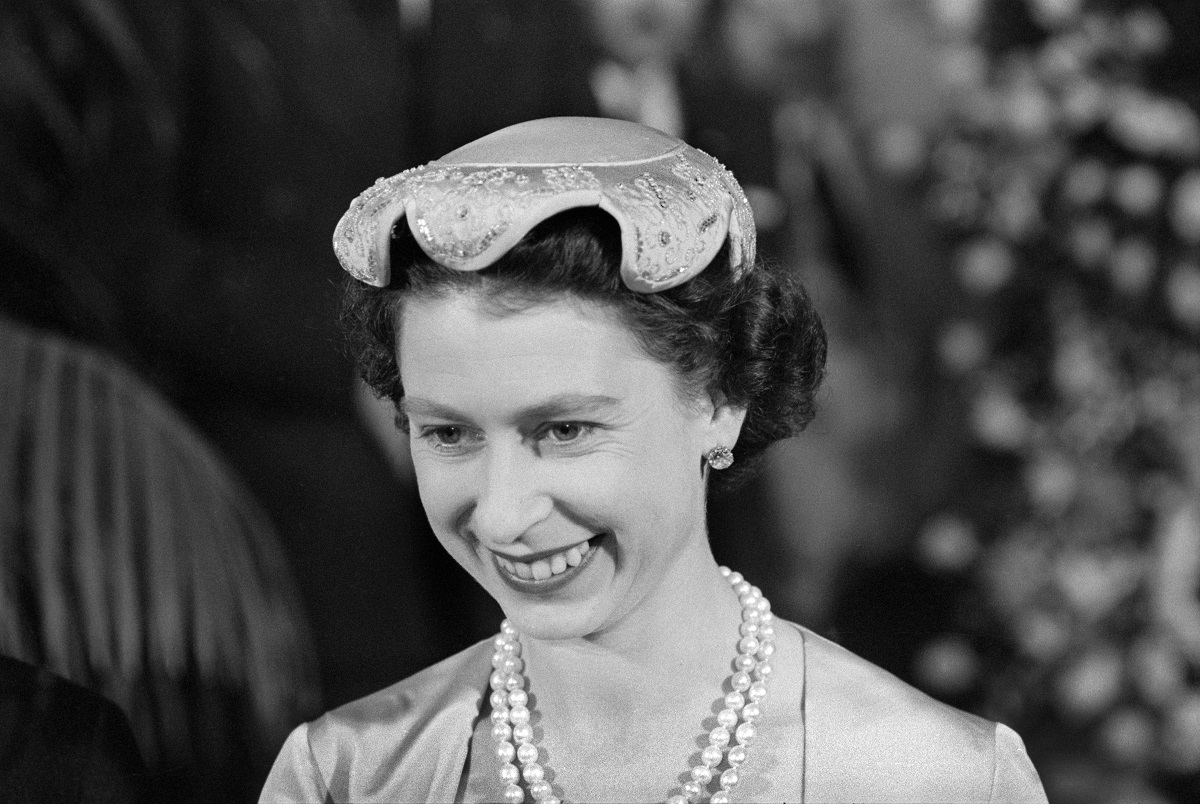
Queen Elizabeth II died on 8 September 2022.
Queen Elizabeth II was history’s longest reigning Monarch, having been Queen of the United Kingdom, Canada, Australia and New Zealand for 70 years between 6 February 1952 and 8 September 2022. Between 1952 and 2022, Queen Elizabeth II gave Royal Assent to more than 3,650 Acts of Parliament. Over her reign, Queen Elizabeth II appointed 15 Prime Ministers and 7 Archbishops of Canterbury.
Only five other kings and queens in British history have reigned for 50 years or more. They are: Queen Victoria (63 years), George III (59 years), Henry III (56 years), Edward III (50 years), James VI of Scotland (James I of England) (58 years).
There were seven Archbishops of Canterbury during Queen Elizabeth II’s reign: Archbishops Geoffrey Fisher, Michael Ramsey, Donald Coggan, Robert Runcie, George Carey, Rowan Williams, and Justin Welby.
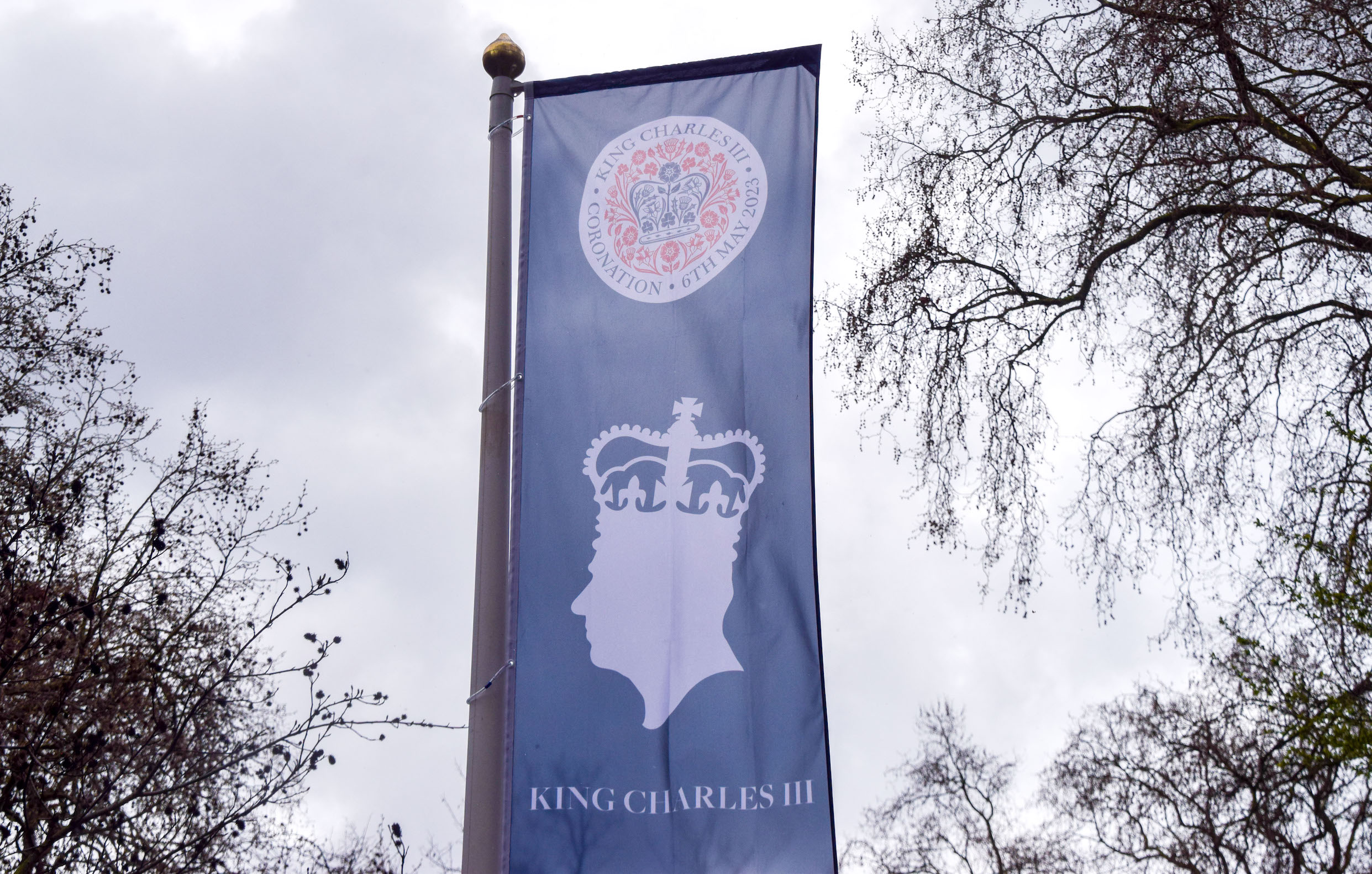
King Charles II was coronated, alongside Queen Camilla, the Queen Consort, on 6 May 2023 which focused on the importance of service. “I come not to be served, but to serve,” the King said in his first prayer after reaching the abbey. It was reported that the coronation was watched by more than 18 million people.