What is Bullying?
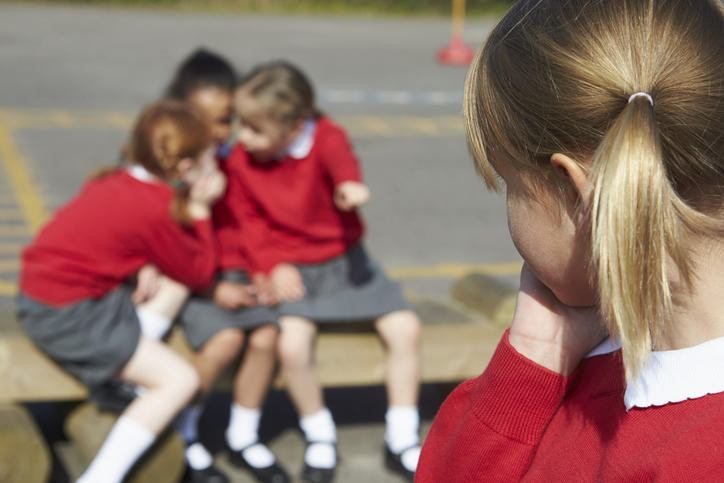
‘Bullying’ refers to physical or psychological chastisement or intimidation. It can be particularly prevalent in schools, where bullying thrives because of a variety of factors, such as immaturity and gang culture.
The fear and psychological damage that bullying can cause to a child has in the past been treated with relative disregard. However, in the last twenty years or so, bullying has been acknowledged to be a very serious problem, which in the worst cases can lead to severe depression and even suicide.
Bullying can also lead to increased truancy rates, which can have an adverse impact on educational achievement. All schools are required to have a behaviour policy with measures to prevent all forms of bullying.
According to a survey of headteachers in 2018, the UK had some of the worst bullying levels in Europe, coming second only to Finland. 29% of UK head teachers reported that physical and non-physical forms of bullying among students occurred at least weekly in their school. In France the figure was 27.2%, in the Netherlands it was 14.7%; in Spain it was 5.7%, and Italy it was 3.6%.


UK Bullying rates at school are the second worst in Europe.
Background
Bullying has always been present in UK schools, but although people were aware that it happened, it did not feature as a major issue of public concern until the late 1980s.
As bullying rarely manifests itself in serious physical abuse, it is not usually covered by the criminal law of assault. In addition, the fear engendered by bullying and the social stigmatisation that can follow has often made victims unwilling to speak out.
In recent years, increased access to the internet and greater use of mobile phones has led to a new kind of bullying. Cyber-bullying can be carried out anywhere, any time, making children even more vulnerable.
However, there are now a number of charities such as Childline, the Anti-Bullying Alliance, Beatbullying, Kidscape, and Childnet International which provide invaluable advice and effective help for the victims of bullying.
Although bullying is not a specific criminal offence in itself, different aspects of bullying may be. For example, harassment or threatening behaviour could be an offence under the Harassment Act 1997, and sending an offensive electronic communication could be an offence under the Malicious Communication Act 1988.
In addition, the Education and Inspections Act 2006 requires schools to have measures in place to encourage good behaviour and prevent all forms of bullying amongst pupils. The Act also gives head teachers a statutory power to discipline pupils for poor behaviour, including bullying, when they are not on school premises.
In December 2011, the Government published new advice on bullying for head teachers, staff and governing bodies. The document, ‘Preventing and Tackling Bullying’, is intended to “help schools prevent and respond to bullying as part of their overall behaviour policy.” It also outlines the Government’s approach to bullying, the legal obligations and the powers schools have to tackle bullying, and the principles which underpin the most effective anti-bullying strategies in schools. Under the Ofsted framework which came into force in 2012, schools will be expected to demonstrate the impact of anti-bullying policies.
In 2019, academic research across 12 countries published in the International Journal of Bullying Prevention, found that the most effective anti-bullying strategies were ones that had a ‘whole school approach”, where the whole school community, including support staff, governors and parents in addition to teachers and pupils, are involved in confronting bullying.
Cyber Bullying
According to the Office of National Statistics, in the year ending March 2018, 7% of children said that they had experienced cyber bullying.
The Education Act 2011 amended the Education and Inspections Act 2006 so that when an electronic device, such as a mobile phone, has been seized by a teacher, who has been formally authorised to do so by the headteacher, that staff member can examine the data on the device, and delete the data if there is good reason to do. Parental consent is not required to search through a young person’s mobile phone.
Department of Education guidance maintains that where material is found that provides reasonable grounds to believe that an individual has committed an offence, that material should be retained and passed to the police.
In 2019 the government’s Online Harms White Paper (April 2019) set out plans to further confront cyber bullying, including a new regulatory framework that would bring in a new duty of care on internet companies towards their users.
Out of School Bullying
Section 90 of the Education and Inspections Act 2006 provides for pupils to be disciplined for poor conduct outside of school premises, “but only to the extent that it is reasonable for the school imposing the penalty to regulate the pupil’s conduct at such a time.”
This may include bullying incidents, “occurring anywhere off the school premises, such as on school or public transport, outside the local shops, or in a town or village centre.” However, any disciplinary sanctions can only be implemented on school premises or when the pupil is under the lawful control of school staff.
Statistics
29.0% of English secondary school heads received reports of physical and non-physical bullying amongst students (OECD average 14.0%); 13.9% reported that a student or parent/guardian had reported hurtful postings on the internet about students (OECD average 2.5%) 27.1% reported that a student or parent/guardian had reported unwanted electronic contact amongst students (OECD average 3.4%) – Source TALIS Survey, 2018
In the year ending March 2018, it is estimated that 17% of children aged 10 to 15 in England were bullied in the previous 12 months in a way that made them frightened or upset. [Source – Office of National Statistics, 2018]
Bullying rates declined with age – 22% of 10 year olds stated that they had been bullied in the last 12 months compared to 8% of 15 year olds [Source – Office of National Statistics, 2018]
In the year ending March 2018, 60% of those respondents who had been bullied said they had experienced some kind of physical bullying (this includes people physically hurting or trying to hurt them, being pushed or shoved and threats to hurt them). 89% said they had suffered some kind of verbal bullying (this includes being called names, sworn at, insulted or ignored or having rumours spread about them). 18% said they had suffered theft or damage to their property (this includes people stealing their money or belongings, damaging their belongings or being made to give money). 32% said they were bullied at least once a week. [Source – Office of National Statistics, 2018]
Of those respondents who said they had been bullied in the last 12 month, 59% said that they were bullied by the same people. [Source – Office of National Statistics, 2018]
A poll carried out for the charity Anti-Bullying Alliance found that in 2019 11% of surveyed children said they missed school due to bullying, and 19% had avoided friends or online media because of bullying. [Source – Anti-Bullying Alliance]
The odds of frequent bullies having committed more than 5 crimes by the age of 26 [are] almost 7 times that of those not involved in bullying. [Source – JAMA Psychiatry, 2016, Sourander et al, ‘Association of bullying behaviour at 8 years of age and use of specialised services for psychiatric disorder by 29 years of age’].
Quotes
“Disciplinary measures must be applied fairly, consistently, and reasonably taking account of any special educational needs or disabilities that the pupils may have and taking into account the needs of vulnerable pupils. It is also important to consider the motivations behind bullying behaviour and whether it reveals any concerns for the safety of the perpetrator. Where this is the case the child engaging in bullying may need support themselves” – Department of Education, Preventing and tackling bullying: Advice for headteachers, staff and governing bodies, July 2017
“Schools must provide by 8am on the day of inspection: records and analysis of bullying, discriminatory and prejudiced behaviour, either directly or indirectly, including racist, sexist, disability and homophobic/biphobic/transphobic bullying, use of derogatory language and racist incidents” – Ofsted School inspection handbook, 2019
“A safe environment isn’t much to ask. But, all too often, it’s more than our children and young people enjoy. “We aim to eradicate the climate of fear and intimidation that many children and young people live under. ” – Anti-bullying alliance – 2012