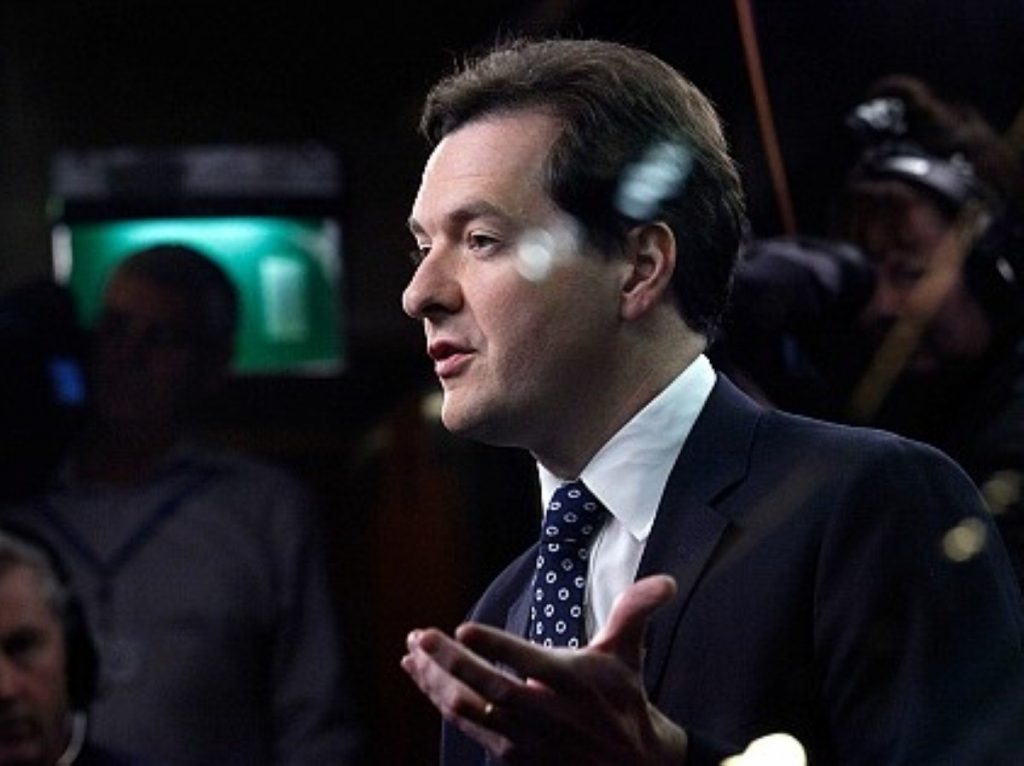
Corporation tax down, welfare spending up: Is Osborne doomed?
George Osborne faced serious questions about his deficit reduction plan after unexpectedly bad figures for July showed public finances plunging into the red.
In a traditionally strong month, income tax and corporation tax receipts were down while government spending grew 5.1%, mostly due to welfare payments.
"Today's figures continue to be disappointing, with further weak growth in receipts in July, particularly from corporation tax," Rowena Crawford, senior research economist at the Institute of Fiscal Studies (IFS) said.


"Relatively low growth in receipts so far this year, combined with relatively high growth in spending on net social benefits, has contributed to borrowing being £11.6 billion greater than over the first four months of 2011-12."
Labour Treasury spokesperson Rachel Reeves said: "The deficit is up by more than a quarter compared to the same period last year, despite the OBR [Office of Budget Responsibility] predicting a fall at the time of the Budget just a few months ago.
"His failed plan has delivered the exact opposite – a double dip recession which is leading to soaring borrowing. What more evidence does the government need that their plan has failed and they need to change course?"
The official figures showed a deficit of £600 million, compared to a £2.8 billion surplus on the same month last year.
Revenues from North Sea oil and gas firms were particularly low, accounting for approximately £1 billion of a £1.7 billion shortfall in corporation tax.
In a further blow to Osborne's reputation, net borrowing for April to June was revised up to £1.4 billion.
The figures unleashed a torrent of criticism of the chancellor, whose reputation as a master political strategist and trustworthy economist has not recovered from a disastrous Budget.
Those on the left argued the figures corroborated their argument that rapid cuts to public spending would hurt consumer confidence and trigger increases to unemployment benefits.
Other organisations suggested Osborne needed to cut red tape, boost infrastructure projects and reapply himself to ensuring lending to small businesses.
"It is still too early in the financial year to draw firm conclusions about the year as a whole," a Treasury spokesperson said.
"The government remains committed to the credible plan we have set out to deal with Britain's debts, and today's numbers emphasise how risky it would be to deliberately increase borrowing."
The government has managed to reduce the deficit by 25% since taking office, although this figure is at the level pledged by Labour at the last election – and below Osborne's much more aggressive timetable.