Health workers ready for NHS showdown
By Alex Stevenson Follow @alex__stevenson and Oliver Hotham
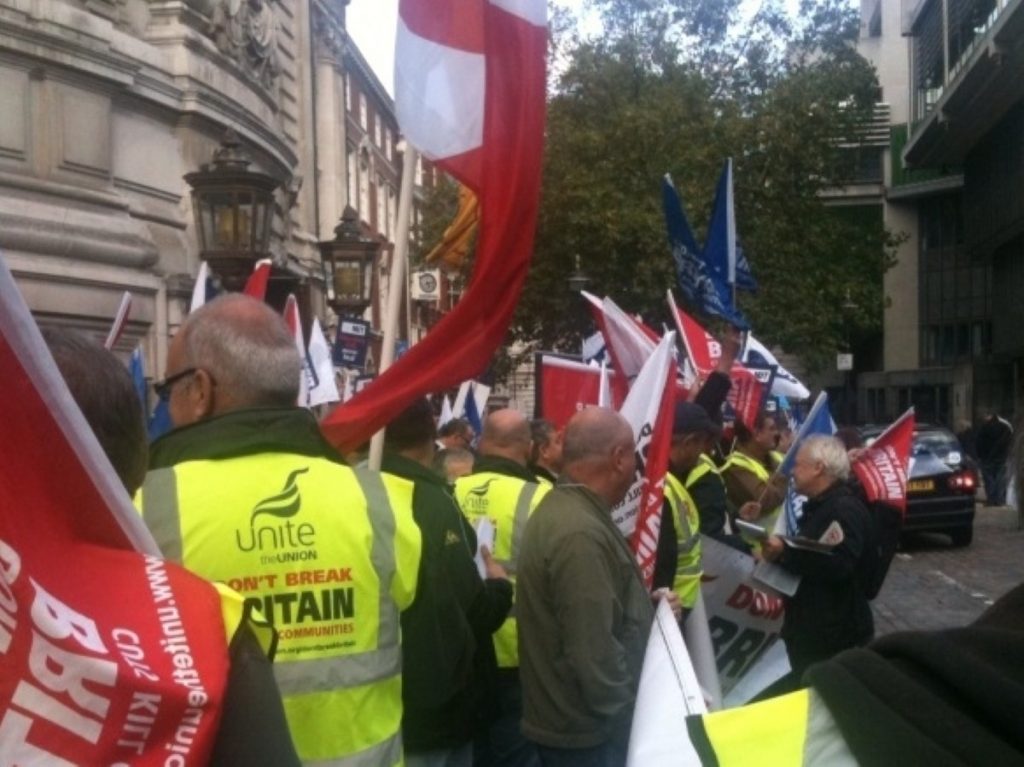
Over 2,000 medical workers are descending on Westminster later to protest against the government's NHS reforms.
Resistance to the health and social care bill in the Lords effectively came to an end last night as peers accepted the government's latest concessions.
Three Labour amendments were defeated as Liberal Democrats backed the changes jointly proposed in Nick Clegg and Shirley Williams' letter last week. Regulator Monitor will no longer have to assess the state of competition between health service providers, for example.

This evening's TUC-organised rally will see campaigners opposed to the coalition's proposed changes unite in Westminster’s Central Hall, however.
Around 30 speakers, including comedians, politicians, union leaders and senior health workers, will address the crowd.
TUC general secretary Brendan Barber will say that the protesters are speaking for the spirit of public service itself.
"The government's bill represents the biggest threat our NHS has ever seen," he is expected to say.
"It will mean £3 billion spent on change instead of care, NHS patients pushed to the back of the queue by those with fatter chequebooks, and a postcode lottery of provision.
"David Cameron said that the health service would be safe in his hands, but now we have the biggest, most dangerous upheaval in the 64-year history of our NHS.
"The NHS is one of Britain's defining achievements, and we will not allow this government to destroy what has taken generations to build."
The government has come under increasing pressure to improve the bill from the Liberal Democrats, and party activists are demanding their leader change his position on it.
Yesterday health minister Lord Howe announced further amendments to the bill, including more limits on the involvement of the private sector.
These changes are unlikely to satisfy protesters gathering in Westminster today. The TUC rally will start at 18:00 GMT, after health workers collectively bin copies of the draft legislation.
The coalition has suffered significantly from the unpopularity of its NHS reforms. A survey out yesterday by Ipsos Mori showed that Labour is overwhelming seen as the best party to be in charge of health policy by the public.
Thirty-seven per cent said the opposition had the best policies on the NHS, compared to only 19% for the Conservatives.
Ipsos Mori's head of public health Dan Wellings said Labour had traditionally been the party people trust on health, but that the Conservatives had made inroads before the 2010 election.
"However, since being in government and overseeing the start of major reforms to the NHS, this has been reversed as Labour have once again extended their lead over the Conservatives among the public on having the best health policies," he explained.
The survey showed the British people are still split on the issue of privatisation in the NHS, however.
Forty-four per cent said they would agree with it as long as services remained free of charge.