Analysis: What are our options in Syria?
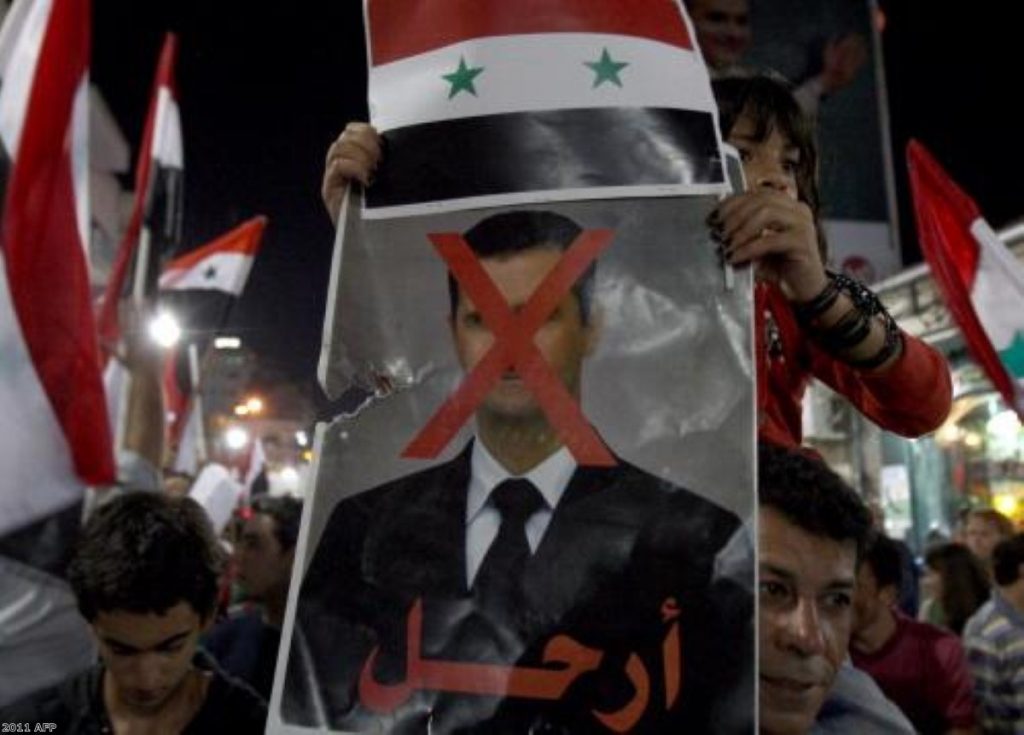
The situation in Syria currently seems to be spiraling out of control, on the brink between uprising and full on civil war.
By Dr Matthew Ashton
This leaves the west, and in particular the European Union and the United States, in a quandary as to what to do next. Some leaders would like to intervene using military force. But this doesn't seem a realistic possibility at the moment.
Russia and China both have a vested interest in blocking anything the UN proposes, making any intervention quasi-legitimate at best. As a result the west would face accusations from several quarters that this was neo-imperialism, and that they were there simply because of Syria’s oil. There is also the practical issue that our forces are stretched quite thin at the moment in several places round the world.


It's also unwise to try and compare Libya and Syria, even though there are superficial similarities.
Gaddafi intentionally kept his military forces relatively weak to prevent a coup attempt against himself. And because of the way Libya's army was structured his forces were spread out across a huge area.
Syria has a much larger coordinated military that would put up more of a fight. This isn't to say they couldn't be defeated, but it's unlikely this could be done without us employing 'boots on the ground', something that Western leaders are understandably wary of after the quagmires of Afghanistan and Iraq.
The other option is a no-fly zone, the policy that seemed to work so well in Libya. Again, the comparison is somewhat misleading: against Gaddafi it was less a 'no-fly zone' than a 'bomb everything that moves zone'. Something like this would be extremely difficult to attempt in a country like Syria that has a much more effective anti-aircraft infrastructure. And, while Libya has so far been a success for David Cameron and the coalition, I'm not sure they'd be willing to risk another military intervention like that again, especially with the huge costs that would entail. It’s also doubtful whether Russia or China would allow such a possibility to be approved by the UN.
Another alternative is supporting the rebels with information, weapons and training to help them overthrow Assad.
The advantage of this plan is that it's worked before in other countries and doesn't involve the loss of western lives. The problem with it is we'd be leaving ourselves open to claims that we were effectively igniting a civil war.
Giving the rebels more weapons could be like putting the match to a very large bonfire, further destabilising the Middle-East. Likewise further economic sanctions are a possibility, but as demonstrated in Iraq and elsewhere, these often harm the people more than the dictator.
Finally there's the option that we've used before in these situations, which is to do nothing and wring our hands from the sidelines.
This could lead to one of three scenarios. One is that Assad wins and there are brutal reprisals against those who rebelled against him. Apart from the obvious ethical and humanitarian issues, it would be difficult to go back to business as usual under these circumstances. Alternatively the rebels somehow manage to overthrow Assad and take control. This might lead to democracy and then again it might not; at this point no one really knows. Up until now Assad has provided relatively stable, if brutal leadership. If the rebels turns out to not be the liberty loving freedom fighters some in the press have portrayed them as, we could have potential chaos on our hands. Of course we might end up with this anyway if the country degenerates into a long drawn-out civil war. This could be the worst of all worlds as the confusion this would bring could create a breeding ground for Al-Qaida and the potential radicalisation of the population.
The situation looks pretty grim. Only clear and unequivocal evidence of massive and prolonged war crimes will change things. The question now is how far is Assad willing to go to control the rebellion – and are we prepared to intervene if the humanitarian situation does hit crisis point?
Dr Matthew Ashton is a politics lecturer at Nottingham Trent University. Visit his blog.
The opinions in politics.co.uk's Comment and Analysis section are those of the author and are no reflection of the views of the website or its owners.