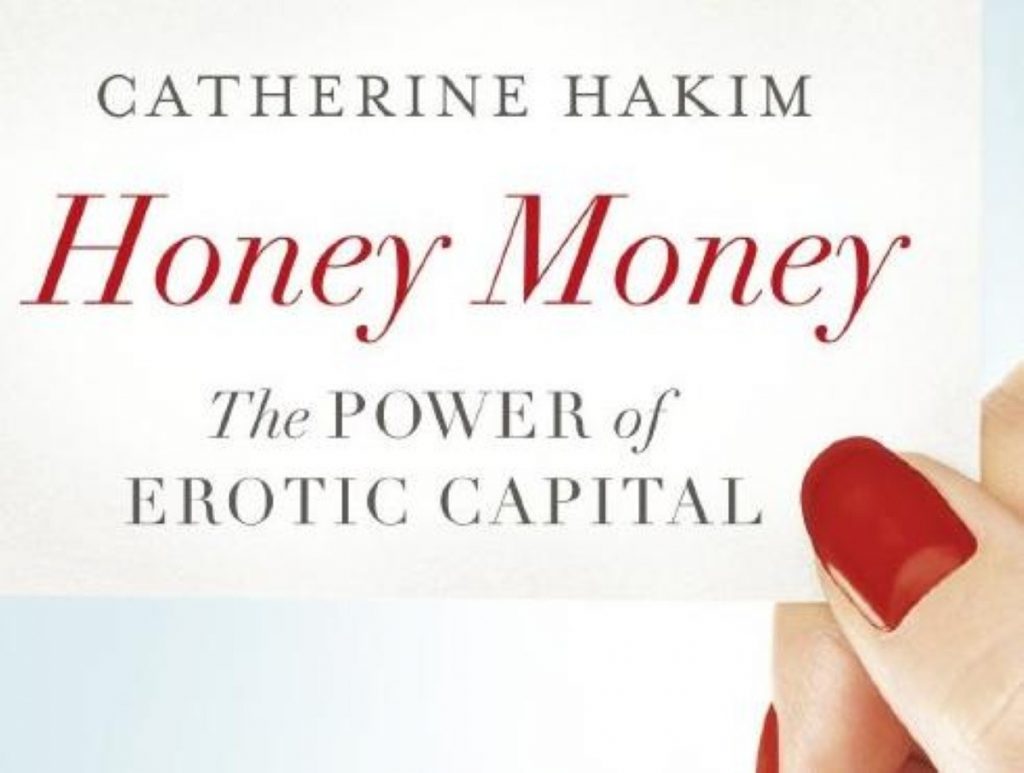
Review: Honey Money – The Power of Erotic Capital by Catherine Hakim
The suggestion that being well-presented, charismatic and attractive are key ingredients of success is nothing new. It's the implications of Catherine Hakim's concept which prove most surprising.
By Alex Stevenson Follow @alex__stevenson
The sexiness of MPs, or otherwise, is a topic which has popped up alarmingly frequently this summer. Francis Boulle, of Made In Chelsea fame, attracted headlines with the creation of the sexymp.co.uk website, which presents users with a picture of two randomly chosen parliamentarians and the eternal dilemma: "Which MP would you rather have sex with?" Unsurprisingly, the top ranks are filled with more photogenic female MPs.
Then came the comments of veteran Labour backbencher Paul Flynn, who is updating his 1997 book How To Be A Backbencher. He told the Telegraph newspaper that "for reasons that are inexplicable, MPs – even the most superficial, unattractive, mis-shapen ones – are attractive to the other sex… there is a magnetism to this".


Catherine Hakim's new book, Honey Money – The Power of Erotic Capital, offers an explanation to this conundrum. Her theory divides abilities into four categories, the first three of which are the size of your bank balance (economic capital), who you know (social capital) and what you know (human capital). The fourth, as you might have guessed, is erotic capital.
This isn't just about whether someone oozes sex appeal, although that is one of its components. "Beauty, liveliness, a talent for dressing well, charm and social skills and sexual competence" are the others. The point is well made by the sexymp.co.uk website. In my very considered opinion the MPs doing well on it are only doing so because they have an especially flattering picture. In fact the sexiest MPs – and let's repeat again, this is all relative – rely on much more than just a pretty face for their charm. The most alluring in real life are not always the ones with the best picture. It's what you do with it, Hakim suggests correctly, that matters most.
There is not much titillation to be gained from Honey Money. This is a relief, for the real interest from the political point of view must be its assessment of what really matters to get ahead. None of Hakim's findings are, on their own, especially surprising. Good-looking people tend to do better. Taller people tend to do better. People who smile lots do better.
Smiling helps, too. "It is said of Silvio Berlusconi that no one knows how to hold a smile as he does," Hakim writes. "He makes the effort for hours on end… candidates for political office learn early on that a willingness to smile, to look pleasant and approachable, to actually be pleasant and sociable with voters, is an essential part of the job." Even as a journalist I find my smile-muscles aching after the party conference season. This, Hakim says, is called "emotional labour". Air stewardesses get especially worked up about it.
The logic is undeniable. Hakim patiently takes the reader through the evidence backing up her claims with meticulous care. Only rarely do her claims become a little laughable. The suggestion that public sector workers are, in general, uglier than their private sector counterparts, a result of "'dynamic sorting' into jobs that offer the best rewards", is one example.
It's alarming to think of Nick Clegg as being especially high in erotic capital. But that is what Hakim suggests when she uses the Liberal Democrat leader as an example of "a charismatic young politician". His success in the first televised debates and the 'Cleggmania' which followed were, she claims, entirely down to Clegg being "tall, slim, elegant, confident, intelligent, handsome, well-dressed, with an easy charm as well as a mastery of the policy issues". High praise indeed. Although it is somewhat watered down when Hakim reminds readers that Hitler and Lenin were also charismatic.
"The key point here is that charisma draws on personality, social skills, liveliness and public images, elements three to five of erotic capital," Hakim explains. "Beauty and sex appeal are advantages, but not essential. Neither Hitler nor Lenin were handsome men."
As I read these words a great sense of relief seemed to rise from me. That explains it: erotic capital isn't just about sexy, at all. It's about those human qualities which, for politicians, are paramount. MPs know this instinctively, Hakim argues, because they've already come out on top in the 'winner-takes-all' culture of erotic capital. "Barely perceptible quality margins can spell the difference between success and failure," she argues. "High erotic capital can offer that marginal advantage." Take the leadership contest that never was between Tony Blair and Gordon Brown. Is it any coincidence that the man with the higher erotic capital came out on top?
Honey Money is genuinely thought-provoking, for the implications which arise from the fundamentally blunt nature of its argument. Hakim is obviously frustrated by the limitations of "brainwashed" feminist theories. She believes women aren't making the most of their erotic capital, which is usually higher than men's because they aren't as obsessed with sex. And she argues the reason women feel constrained is because of the mindset which men have created.
Hakim doesn't hold back when it comes to taking these arguments to their logical endpoint. She attacks a UK government report on sex trafficking for trying to place new legal restrictions on 'sexwork'. She demands the "complete decriminalisation of the sex industry, which should be allowed to flourish like other leisure industries". And she demands that laws controlling surrogate pregnancies and related contract should be rewritten, enabling women to charge as much as they like for the service rather than the current limit to just 'reasonable expenses'. In short, women need to ask for a better deal.
Politicians reading Honey Money will instinctively agree with the fundamentals of its claims. So why should they not also agree with the thoroughly controversial arguments which follow from them?
Honey Money: The Power of Erotic Capital, published by Allen Lane, £20, hardback, published September 1st 2011