Sketch: Disagreeing to the last
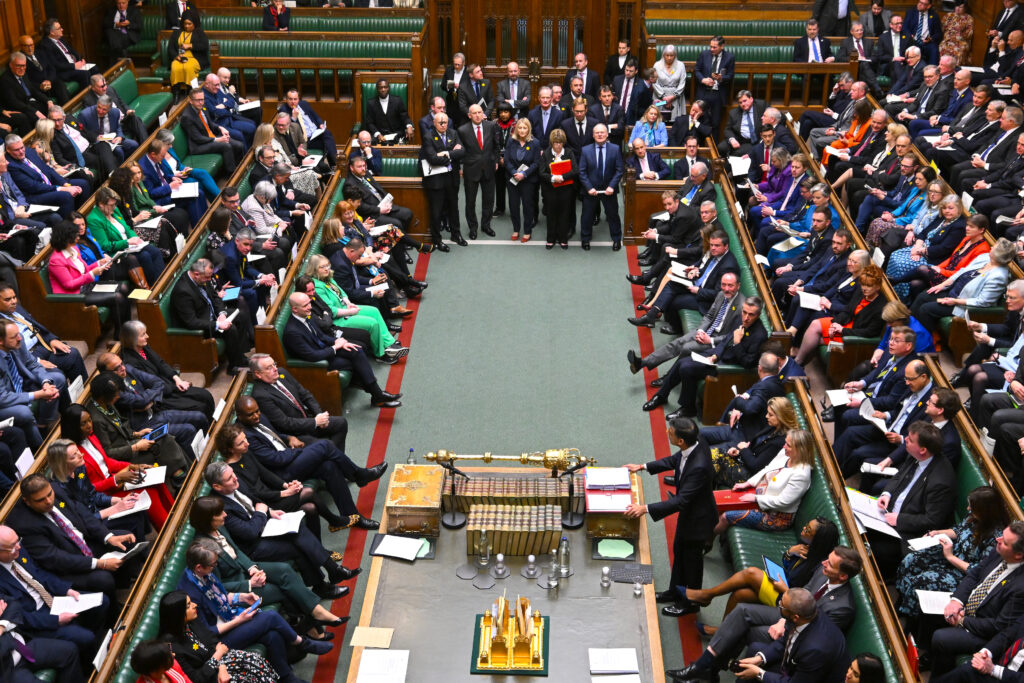
Even when the government caves in the Commons is filled with farcical discord. Is this the way Britain’s laws should be made?
The penultimate session of this parliament wrapped up on Thursday, leaving business managers in the Commons running around like headless chickens trying to ensure the few remaining bills make it through.
Initial focus was on the coroners and justice bill, which has proved an enormous headache for justice secretary Jack Straw and his miserable ministry.


Ministers spent the entire summer engaging in various tactical retreats on plans to give themselves power to make inquests secret where national security reasons made this necessary.
This controversial piece of legislation was full of so many divisive clauses there simply wasn’t time to debate them all.
The policy of removing the freedom of expression defence for “homophobic hatred”, for example, had to be quietly dropped after the Lords rejected the proposal yesterday.
And there was only an hour to review the climbdown Straw had ordered as the bill ping-ponged back and forth between the Lords and Commons.
The government amendment proposed giving the lord chief justice the power to refuse to appoint a judge to conduct the inquiry.
But the Tories smelled a rat. Shadow justice secretary Dominic Grieve laid an amendment of his own, seeking to get the government to clarify the situation. Was the veto a real one, or not? What if the government just repeatedly filed the application, eventually forcing Britain’s top judge to back down?
Grieve’s manner was apologetic as he explained why he wanted to resolve his “residual anxiety”. His tiny little amendment was “not going to cause any further trouble at all”, he said grovellingly. He merely wanted to see a “genuine judicial lock” in place. It was “just an added safeguarded and reassurance”.
Straw responded politely, and initially appeared as conciliatory as you could possibly want him to. “I understand the suspicions that are caused. I am no more comfortable with the principle than others,” he admitted.
And yet, as this veteran of U-turns carefully explained, he wasn’t going to budge from his already vast retreat. Give me at least a modicum of dignity, he appeared to plead. “The lord chief justice has a complete and absolute veto on this, and that is the way I want it to be… I’ve said this about 15 times.”
Not all were convinced – not even the chairman of the joint committee on human rights, Labour’s backbencher Andrew Dismore, who was worried by a “limbo” nightmare in which the inquest was suspended, but the judge not appointed. “If it’s turned down and there is no suspension, the inquest will then not happen,” Straw explained impatiently.
The session collapsed into further backbiting as the last speech was left to former minister Denis MacShane, a master U-turner himself. “I feel I did vote the wrong way on Monday, but I’m a serial loyalist and sometimes that overwhelms me,” he explained in mock-apology, before explaining why he was about to rebel against the government. His justifications were dampened somewhat by the abuse hurled at him from the Tory frontbenchers, when he accused the party of “obfuscations”, amongst other things. “Pathetic! Outrageous,” the Conservatives yelled. “The millionaire says I’m boring!” MacShane yelled back. “Prepare to be bored!”
On this spirit of dissent, the House divided. Of course the government got its way; as Straw had told the Tories, “you’re wasting your time”. Despite months of work, disagreement remained to the last.