Sketch: Bipeds at the dispatch box
Cameron and Brown used their best tricks on each other this week, but both came across a little primitive.
By Ian Dunt
Something about politicians makes me come over all anthropological.
Not because they are simple beasts, not entirely anyway. It’s because of their setting. These odd environments they trap themselves in and the importance given to them prompts the observer into a sort of David Attenborough mentality. The locations and etiquettes are so alien one instantly adopts a professional curiosity, like a Victorian traveller capturing tribesmen for the civilised world to gawp at.

Conference speeches, and the importance given to them, are absurdly anthropological. The biped enters the stage and hammers away with its noises and limbs while the watching bipeds regularly engage in the calculated decision to stand up and hit their limbs together, partly as a sign of agreement, and partly out of an unspoken group-think which insists everything must look good for the cameras.
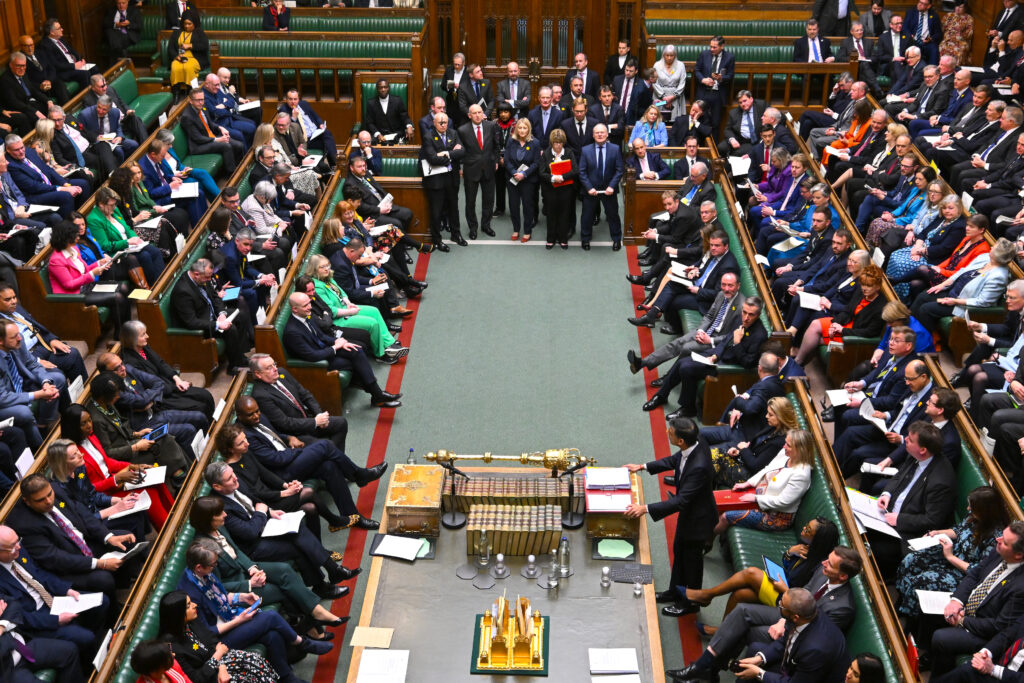
PMQs is similar. One biped stands, puffs out its chest and attempts to command respect through posture and the tone and content of the noises it emits. The bipeds around it react furiously, wailing their arms and shouting obscene nonsense in the safe knowledge the public are protected from their filth by a plate of bullet-proof glass. Put simply: normal people would never dream of behaving in this way. No other adult in Britain makes funny faces and shouts obscenities at someone else when they’re making a point.
And then something unique happens. The bipeds use complex thought processes for bad reasons.
This was Cameron today. He began by asking about the Royal Mail strike. Would the PM join him in condemning it? Brown did. That’s hit one, right there. The leader of the Labour party is now joining the leader of the Tory party in condemning a union. That isolates Brown from Labour’s moral heart, and from the people who supply its financial heart, which was bigger under Blair, and now of equal size to the moral heart. Cameron mentioned the finances later (unions have been Labour’s main source of funding since the cash for peerages mess) and received a particularly vocal display of irritation from the opposite benches.
Next, Cameron brought up the bill to privatise Royal Mail. Where had this little brain child of Peter Mandelson gone, he wondered? Was there any chance it had disappeared because of the promised backbench rebellion if it ever reached the House?
It’s political genius. Isolate him from the principles of his party. Isolate him from the financial backers of his party. Reveal his isolation from the backbenchers of his party, and then, once he’s stood there alone, empty out your rhetorical guns on him with lots of “appalling weakness” and “not having the guts”. And this on an issue the two men agree on.
Brown, for his part, adopted a different, but equally vicious, political tactic.
He chastised Cameron for bringing the Royal Mail strike into ‘the political arena’. Now, there are few things in this world more political than a strike. A party election broadcast, perhaps, or a general election, maybe. But strikes are an innately political act. Brown has form in this regard. Tory complaints about the devaluation of sterling and equipment for our armed forces in Afghanistan were met with complaints that the opposition was not being patriotic – another way to remove the current debate entirely from the political arena.
This goes to a bad place. It takes perfectly legitimate issues and turns them into something which cannot be discussed, like religion or genitals. And then the government gets to do whatever it wants.
What strange, unruly animals politicians are. Primates engaged in bizarre and primitive rituals in their natural habitat, and yet capable of producing highly complex pieces of malevolent reasoning at a moment’s notice.
They are one part beast to one part Machiavelli. The only bit missing is the normal.