Review: An Elegy for Easterly
A painful and powerful vision of Zimbabwe through anticipation and agony.
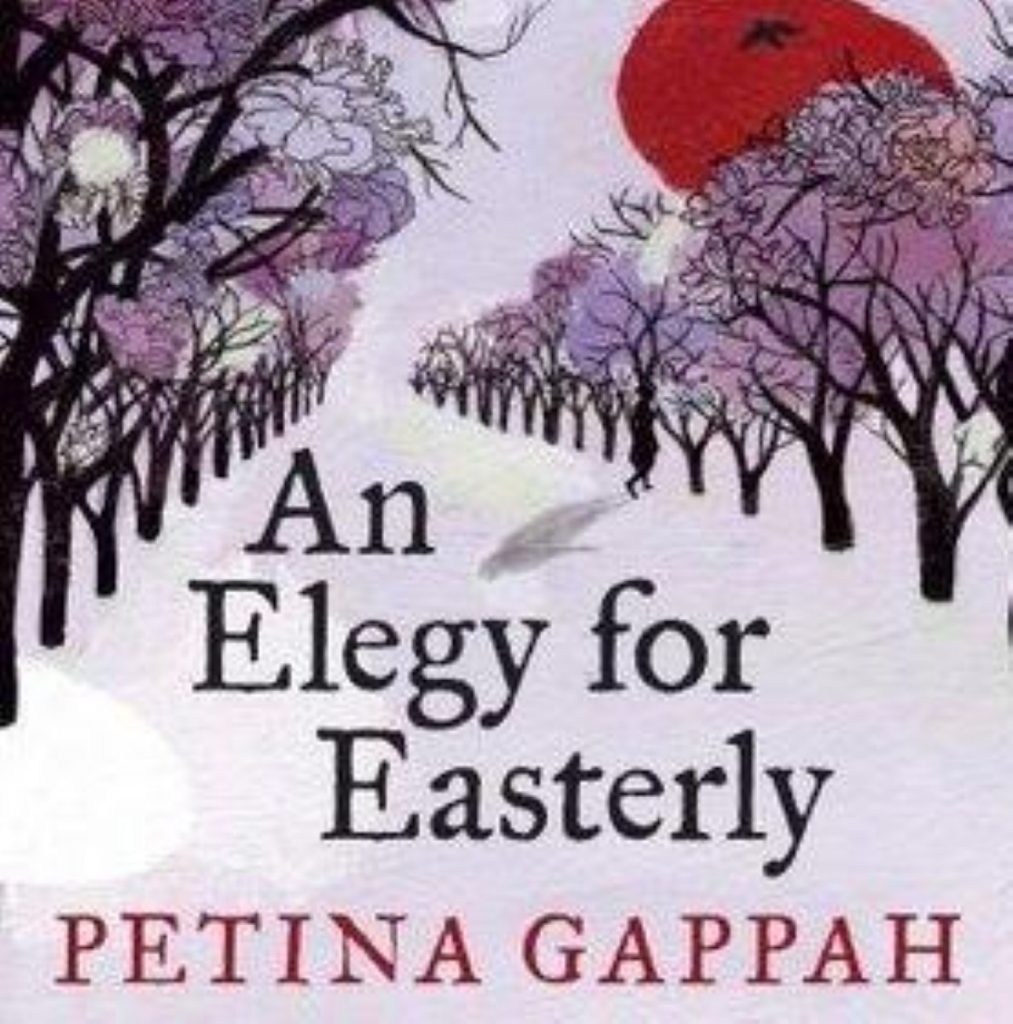
Petina Gappah: An Elegy for Easterly
Faber, 16th April 2009, 12.99
Review by Stephen Jones


Almost daily, 24-hour newsreels offer us a brief and shattering glimpse into the increasingly anarchic, maniacal state of modern Zimbabwe. For every extra zero latched on to already ludicrous inflation figures, we are greeted with the disheartening news of cholera outbreaks, tortured opposition and widespread poverty, matched with images of a defiant president, damning a Western colonial threat that has long since perished.
It should be little surprise then, that thoughts on the country’s desperate situation pervade Petina Guppah’s debut release, An Elegy for Easterly. Indeed, it is noteworthy that each and every character across these thirteen miniature tales is deeply affected in some way by their nation’s traumas; whether it be the implied doom of Rosie’s bridegroom’s reddened lips, or young Rambanai’s desperation to escape at any cost.
Mugabe is, as in life, integral to the narrative here, looming large over all those who clamour desperately for hope in a hopeless society. The opening story, At the Sound of the Last Post, sees the president orating at the funeral of a so-called fallen comrade. While our narrator draws light to Mugabe’s mortality (“an old man still”), this does not detract from the ruin the country has suffered in his hands. The bitter irony of the statement “this country will never, a trillion trillion times never, be a colony again” will be missed by few as the country continues to suffer from uncontrollable inflation.
Control, itself, or a lack of it, is a key theme throughout. The stories examine characters of a variety of creeds, genders and classes, yet the story remains the same. However grand their ambitions, no-one here successfully manages to escape the grips of circumstance, of being in the wrong place at the wrong time.
While many of us may feel that government does not affect our lives, each story is a reminder that, although traditions and history may differ, there is a fundamental humanness that links us all. Gappah’s characters could just as easily have been born on the streets of Wigan or in a comfortable London suburb, an intentionally frightening reminder that our future is not always in our own hands.
This isn’t just a sombre obituary of a Zimbabwe now passed, however. There are moments of real vibrancy, lightness and laughter, of character that endures through hardship. First there is the genuinely heart-warming story of M’dhara Vitalis, a pensioner robbed of his savings, who finds belated fame as the oldest dance champion in Mupandawara. Soon after, we are also introduced to the hapless diplomat who travels to Amsterdam in search of an emailed promise of riches.
Some interesting themes are also dealt with. The position of women in a quasi-polygamist culture is a key thinking point, one of a number of clashes in Africa between the traditional and the modern. Several of the men described are keen to embrace all that suits them of modern, Western culture, yet continue to cling onto outdated views on women that merely stand as an excuse for the expression of their libido.
In the main, though, the ideas presented here do not only resonate in a society where corruption is rife while bread is quite the opposite. The isolation of mental illness, the constant struggles of marriage and infidelity, and disenchantment and disappointment are all too relevant on either side of the hemisphere.
Gappah’s storytelling draws on a fine tradition that will no doubt be tirelessly compared to the likes of Chenua Achebe, though a less obvious and slightly more accurate comparison might be found with the folksy charm of Zora Neale Hurston. Like Hurston, Gappah is able to invest in all her characters a vim and vitality that bursts from the page while also expressing the frustration and despondency of a class of people unable to rule their own destiny. Most importantly, she makes each short tale feel more like a brief lesson in life.
What is perhaps most compelling and important about Elegy for Easterly is that it can speak to us all. With this collection she has produced a painful and powerful vision of a nation throughout its stages of anticipation and agony, while reminding us all that the pictures we see on news screens are not quite as distant and irrelevant as we might sometimes imagine.